
真空包装機購入ガイド:シングルチャンバー vs ダブルチャンバー vs ローリング
Choosing a sauce filling machine starts with the product, not the brochure. Ketchup, chili sauce, mayonnaise, and jam all flow differently, and the machine that fills one cleanly can splatter another down the side of the bottle. This guide walks through the three paste fillers we build: the dual-head, the 4-head, and the semi-automatic. It shows how to match each to your sauce, your bottle, and your daily volume. Read it and you will know which one to ask a quote for.
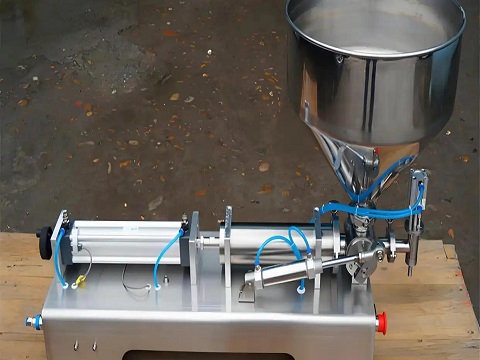
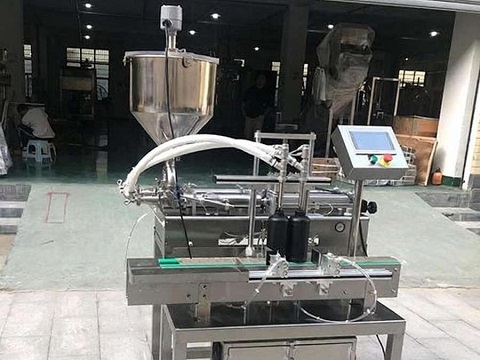
What sauce filling machine does
Sauce filling machine measures a set volume of thick, slow flowing product and drops it into a bottle or pouch. Paste fillers handle products that a thin liquid filler would struggle with: anything with body, bits, or oil. They use volumetric metering, which means the machine measures by volume rather than by weight, so a gear pump or piston pushes a fixed amount each cycle. The result is a consistent fill level bottle after bottle, which matters for both cost and shelf appearance.
The pastes it handles
Paste fillers take a wide range of products. Tomato sauce, ketchup, chili sauce, and barbecue sauce are the everyday ones. Thicker items like peanut butter, mayonnaise, jam, and honey also fill well when the machine is set for them. The 4-head model we build lists tomato sauce, chili sauce, honey, jam, and peanut butter among its uses, and the semi-automatic unit is rated for ketchup, mayonnaise, jam, and butter. If your product sits somewhere between water and paste, tell us the viscosity and we will set the pump or piston to match.
Dual-head paste filling machine
Dual-head paste filling machine uses two servo driven stainless steel gear pumps working on volumetric metering. It runs up to 60 bottles a minute for fills at or below 100 ml, with an accuracy of 0.5 percent to 1 percent. All contact parts are 304 stainless steel, the power is 220V at 5 kW, and the body measures 1800 by 850 by 1400 mm at 80 kg. A useful detail: you can switch off either head, so if one product needs a single stream you are not forced to run both. See the デュアルヘッドペースト充填機 詳細な仕様については、こちらをご覧ください。
4ヘッドペースト充填機
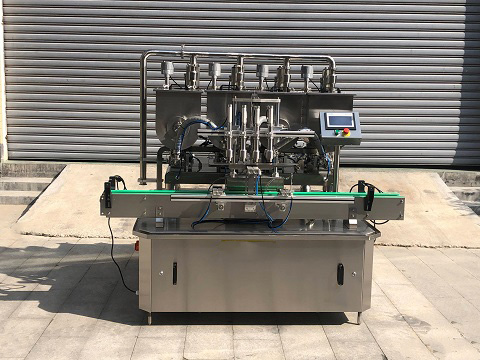
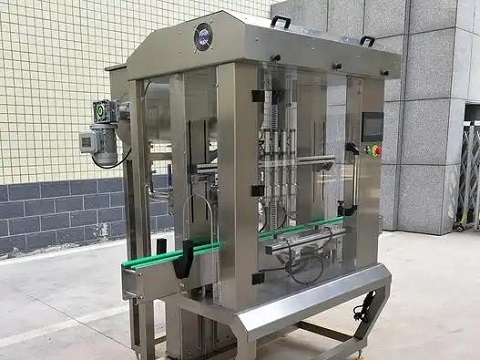
The 4-head paste filling machine, model GT-4T, uses piston volumetric metering run by a PLC with pneumatic control. Speed runs 10 to 40 bottles a minute with an accuracy of plus or minus 1 percent. It handles bottle heights from 10 to 500 mm and neck sizes from 3 to 200 mm, with fill volumes from 10 ml to 5000 ml as options. The anti-drip nozzle and rotary blade agitator keep the product moving and the nozzle clean, and it is built for 24 hour operation. Applications include tomato sauce, chili sauce, honey, jam, and peanut butter. See the 4ヘッドペースト充填機.
半自動ペースト充填機
A semi-automatic paste filling machine is the lower cost start. It comes in models WZ-100 through WZ-5000, covering fill ranges from 5 to 120 ml up to 800 to 5300 ml. It runs one head as standard, with 2 or 4 heads optional, at 10 to 30 bottles a minute and an accuracy of 1 percent or better. Power is 220V at 50W and the drive is a pneumatic piston. It is rated for ketchup, mayonnaise, jam, and butter, which makes it a common first machine for a small sauce maker. See the semi-automatic paste filling machine.
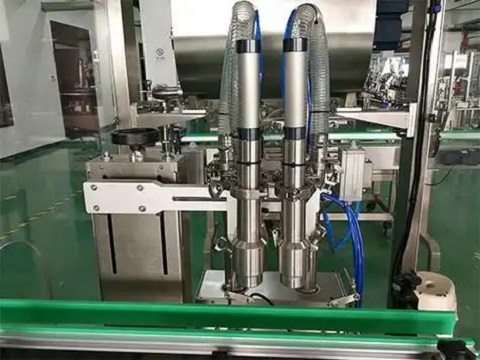
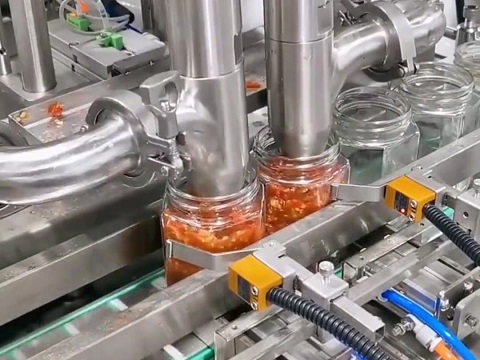
Dual vs 4-head vs semi-auto: comparison
| タイプ | ベスト | 速度 | 精度 | Notes |
|---|---|---|---|---|
| デュアルヘッド | Mid volume, fast small fills | up to 60/min (100 ml or less) | 0.5パーセント1 | Servo gear pump, either head can shut off |
| 4頭 | Mixed products, 24h runs | 10 to 40/min | プラスマイナス1パーセント | Piston and PLC, neck 3 to 200mm, 10 to 5000ml |
| セミオート | Start small, low budget | 10 to 30/min | 1 percent or better | Pneumatic piston, 1 head (2 or 4 optional) |
The short version: semi-automatic if you are starting and run a few hundred bottles an hour, dual-head if you fill small sauce cups fast, 4-head if you run mixed products around the clock.
選び方:購入チェックリスト
Start with daily bottles, not price. Work out your busiest day and size for that. Then match the fill volume to your bottle, because small sauce cups and 5 litre jugs need different heads. Then check the product: thin runny sauce, thick ketchup with bits, or paste like peanut butter each need a different pump or piston. Then decide on automation: a semi-automatic unit is enough under a few hundred bottles an hour, while the dual-head or 4-head earns its place once you run steady shifts. The 充填機 pillar lists all three side by side.
購入前に確認すべきこと
Check the fill accuracy against your bottle size, because a 0.5 percent spec on a 100 ml fill is tighter than the same spec on a 5 litre drum. Check the bottle range, height and neck, so the machine takes your real container, not just the sample. Check the contact material is 304 stainless steel with food grade seals. Check the anti-drip nozzle if you fill ketchup or anything that strings. And check spares and service, because a filler that stalls stops the whole bottling run.
Viscosity, anti-drip, and the ketchup problem
Ketchup is the classic hard fill. It is thick, it strings, and it stains if it drips. The fix is a nozzle built to cut the stream cleanly and a piston or gear pump tuned to the viscosity. The 4-head and semi-automatic units both use anti-drip nozzles, and the rotary blade agitator on the 4-head keeps thick sauce from settling in the hopper. If your sauce has chunks, like a chunky salsa or a seeded jam, tell us before we size the head, because bits change the metering. The aim is a clean neck and a level fill, not a bottle you have to wipe by hand.
Hygiene and food safety
All food contact parts on these machines are 304 stainless steel, which resists the acid and salt in tomato and chili products and washes clean between runs. For a line that packs for resale, build your process around a documented food safety plan. The FDA食品プログラム sets the baseline for handling and packaging in the US market, and most buyers ask for the same controls wherever they sell. The principle behind safe storage, slow the things that spoil, is the same one covered under 食品保存.
購入者が犯すよくある間違い
Buying on price per head instead of bottles per hour. Sizing for the average day instead of the peak. Forgetting chunks in the sauce when choosing the head. Skipping the anti-drip nozzle on a ketchup line, then wiping bottles by hand all shift. And buying a filler with a bottle range too narrow for the jug you plan to launch next year. Most of these show up in the first week, which is why the checklist above is worth a few minutes before you order.
結論
Pick by volume and product first. Small and starting, the semi-automatic paste filling machine gets you bottling. Busy and fast on small fills, the dual-head pays for itself. Mixed products and 24 hour runs, the 4頭 is the steady choice. If you are building a wider line, our guide to starting a small peanut butter production line shows how a paste filler fits with roasting, grinding, and cooling. Tell us your sauce, your bottle, and your daily volume, and we will size the head, pump, and nozzle and quote the machine with the rest of your line.
お問い合わせ
最新の記事
最新の製品
製品カテゴリ
ステンレススチール製のタンク
食肉加工機
果物・野菜加工機械
油圧プレス機
コロイドミル
抽出機
包装機械
お問い合わせ
- モバイル/微信: +8618595716541
- Whatsapp: +8618736065220
- Email: お問い合わせ
- 住所: 中国河南省鄭州市二七区二七センターBビル10階