
UHT Sterilization vs Pasteurization: What’s the Difference?
Buyers ask us for a “UHT pasteurizer” as if the two were the same box. They are related, but they are not the same process. Both heat a liquid to kill harmful microbes, yet they sit at opposite ends of the temperature scale, and that gap changes your shelf life, your cold chain, and the taste in the cup. Pick the wrong one and you either spend on refrigeration you did not need or ship a product that spoils before it reaches the shelf. This guide walks through how each works, where each one does better, and how to settle on the right one for your product.
What the two terms mean
Both are heat treatments. The goal in each case is to knock down the bacteria and enzymes that spoil food or make people sick. The split is in how hard you heat and how long you hold.
Pasteurization uses moderate heat. It kills the pathogens that cause illness and slows spoilage, but it leaves some harmless and heat resistant microbes alive. That is why pasteurized milk still needs the fridge and still goes off in a week or two.
UHT sterilization pushes heat much higher for a few seconds. The result is near sterile, with almost everything dead including most spores. Packed aseptically, the product stays safe at room temperature for months with no preservative and no cold chain.
How UHT sterilization works
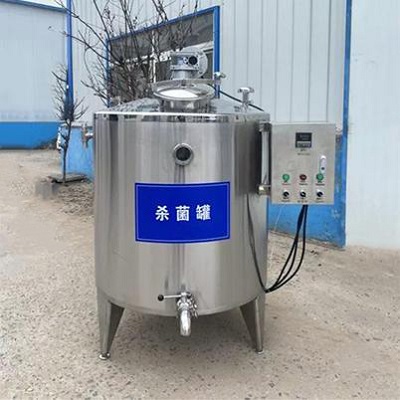
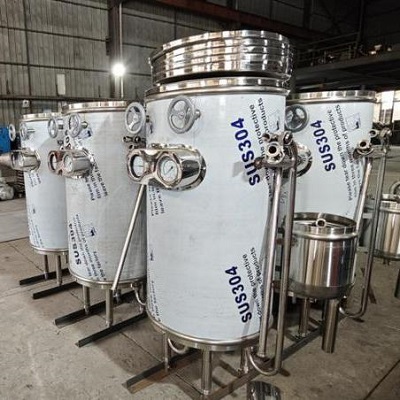
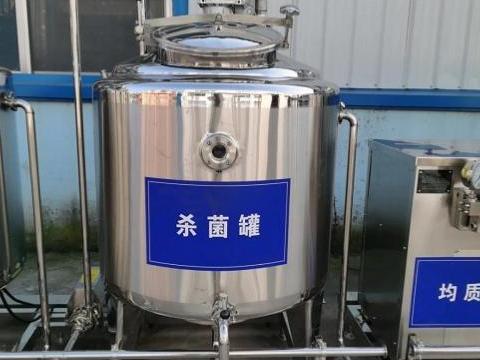
A UHT line heats the product to 135 to 150°C and holds it for 2 to 5 seconds, then cools it fast in an aseptic section. In a batch UHT sterilization tank the heat comes from a steam jacket or electric heater around a coil, with the product held and agitated until it reaches temperature. In a continuous unit the liquid flies through a tubular or scraped coil heat exchanger at 500 to 10,000 liters per hour.
The key step is what happens after heating. The product is cooled and filled in a clean aseptic loop, so no new microbes get in. That is what gives UHT milk, long life juice, and ambient soy milk their months long shelf life without a fridge.
How pasteurization works
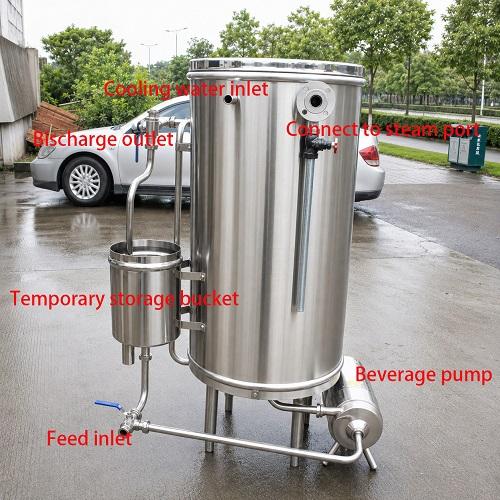
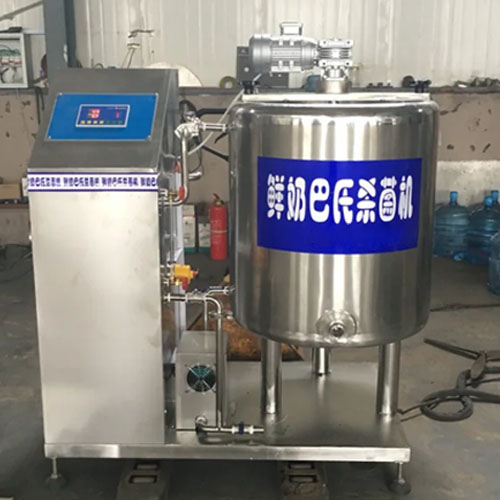
Pasteurization runs cooler and, in most plants, for longer. The common HTST method heats to 72 to 95°C and holds 15 to 30 seconds as the product passes through a plate heat exchanger. A batch vat type, like our fresh milk pasteuriser, holds 63 to 65°C for 10 to 30 minutes while a paddle stirs the milk.
Either way the product is chilled right after and kept cold. Pasteurization keeps more of the fresh flavor and nutrients than UHT, but it does not sterilize, so the clock starts the moment it leaves the machine. Most pasteurized milk stays good for 3~7 days (Refrigeration at 2-6 ℃) under refrigeration. Products using ultra clean filling technology can have their shelf life extended to 10-21 days, but strict cold chain transportation is required.
The difference in plain terms
Think of it as two heat levels with two different outcomes. Pasteurization is a gentle clean that keeps the product close to fresh but still perishable. UHT is a hard, near total kill that lets the product sit on a warm shelf for months. Pasteurization needs the cold chain all the way to the customer. UHT needs a clean fill and then almost nothing.
If your have reliable refrigeration and want a fresh taste, lean pasteurization. If you ship long distances, sell into warm markets, or want a product that survives the shelf without a fridge, lean UHT.
UHT sterilization vs pasteurization at a glance
| Factor | UHT sterilization | Pasteurization |
|---|---|---|
| Temperature | 135 to 150°C | 72 to 95°C (HTST), 63 to 65°C batch |
| Hold time | 2 to 5 seconds | 15 to 30 seconds (HTST), 10 to 30 minutes (batch) |
| Microbes left | Near sterile, most spores gone | Pathogens gone, some harmless microbes remain |
| Shelf life | 6 to 12 months at room temperature | 7 to 21 days refrigerated |
| Refrigeration | Not needed after aseptic fill | Required from fill to sale |
| Taste and nutrients | Slight cooked note, more loss | Closer to fresh, more retained |
| Typical products | Long life milk, ambient juice, cream, soy milk | Fresh milk, chilled juice, yogurt base |
Which one fits your product
Milk and juice sold through normal chilled retail almost always want pasteurization. The fresh milk pasteuriser and the milk pasteurizer machine cover small batch and continuous lines, and the taste stays close to fresh, which is what most drinkers expect.
Products meant for ambient shelf life want UHT. Long life milk for export, shelf stable cream, ambient juice, and sterile soy milk all rely on a UHT sterilization tank plus an aseptic filler. If you ship to markets with weak cold chains, UHT is often the only safe option.
Sauces and dairy bases sit in the middle. A sauce that will be cooked again before eating may only need pasteurization. A sauce packed for a pantry shelf needs UHT plus aseptic filling. When a line makes both, plants often run pasteurization for the fresh range and UHT for the shelf stable range, sharing the same mixing tank and filler.

Material and build quality
Both processes run on stainless that touches food, and the grade matters. 304 is the common workhorse for most dairy and juice duty. 316L adds molybdenum for better resistance to corrosion, salt, and the cleaning chemicals in a CIP cycle, which is why many plants choose it for the contact path on lines that run acidic or salty product. We cover the grade choice in our 316 stainless steel sheet notes and our 304 stainless steel coil reference, and we match the steel to what flows through the machine rather than defaulting to one grade.
Frames and non contact structure can be 304. The harsher the cleaner and the more acidic the product, the more 316L earns its place on the parts that touch food.
Mistakes to avoid when choosing
The first mistake is buying by the label. A machine called a “sterilizer” may only reach pasteurization temperatures, and a “pasteurizer” may not give you room temperature shelf life no matter how you pack it. Check the actual temperature and hold time against the shelf life you need.
The second is ignoring the cold chain. A pasteurized product is only as safe as the fridge it sits in. If your market cannot keep it cold, UHT is the honest choice even if the taste is a touch different.
The third is forgetting the filler. UHT only stays stable if it is filled aseptically. Pair the tank with a clean fill line and a CIP cleaning tank, or the shelf life you paid for disappears.
Still deciding between UHT sterilization and pasteurization?

Tell us your product, your target shelf life, and where you sell. We build both, and we would rather spec the right one than sell you the bigger one. Talk to our engineering team and we will match the process to your line.
FAQ
UHT heats to 135 to 150°C for 2 to 5 seconds and leaves the product near sterile, so it keeps at room temperature for months when filled aseptically. Pasteurization heats to 72 to 95°C for seconds to minutes and only knocks down pathogens, so the product stays perishable and needs refrigeration. They share a goal but run at different temperatures with different outcomes.
It depends on how you sell. Chilled retail milk wants pasteurization because the taste stays closer to fresh. Export or warm market milk wants UHT because it survives months at room temperature with no cold chain. Both are common, and the right one follows your distribution, not the process itself.
Yes, slightly. The higher heat gives UHT milk a cooked note and removes a bit more of the fresh flavor and some heat sensitive nutrients. Pasteurized milk tastes closer to raw fresh milk. Most drinkers notice the difference, which is why chilled markets often prefer pasteurization.
Not on its own. Pasteurization leaves some microbes alive, so the product still spoils without refrigeration. True ambient shelf life comes from UHT plus aseptic filling. A pasteurized product kept warm will spoil within days.
For a complete environmental shelf life, yes. UHT requires a sterile filler and a clean circuit so that no microorganisms can re-enter after sterilization. After pasteurization, the product is filled and kept at a low temperature, so there is no need for sterile filling. Of course, clean filling can extend the shelf life. Plan the filling material around the process you have chosen.
Inquiry Form
Latest Articles
UHT Sterilization vs Pasteurization Difference
Colloid Mill vs Homogenizer: Which One Do You Need?
Fruit and Vegetable blancher
Double channel pulping machine
Single Channel Pulping Machine
Latest Products


Product Categories
Stainless Steel Tank
- Stainless Steel Wine Tanks
- Stainless Steel Water Storage Tank
- Stainless Steel Fermentation Tanks
- Stainless Steel Jacketed Kettle
- Pasteurizing Machine
Meat Processing Machine
Fruit and VegetableProcessing Machinery
Oil Press Machines
Colloid Mill
Extraction Machine
Packaging Machinery
Contact Us
- Mobile/Wechat: +8618595716541
- Whatsapp: +8618736065220
- Email: info04@wanzhisteel.com
- Address: 10F, Building B, Erqi Center, Erqi District, Zhengzhou City, Henan Province, China