
Stainless steel meat slicer machine: what it is and how to choose one
Introduction
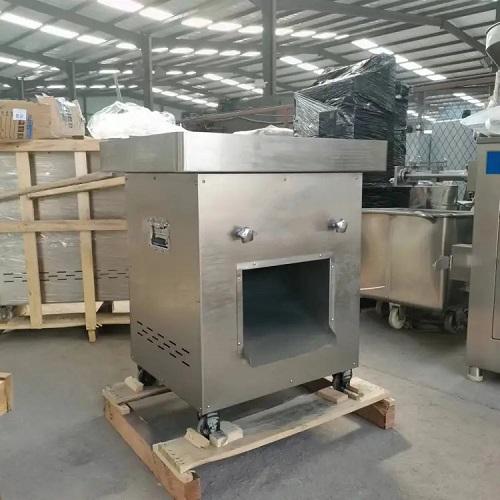
Stainless steel meat slicer machine turns blocks of fresh, frozen or bone-in meat into even strips or slices without a person holding a knife to the blade. The cut comes from one blade group built from two interlocked disc-blade rolls that turn inward together: the block is drawn down between them and leaves as uniform strips or slices, and you set the thickness by the blade spacing. If you need cubes or dice, you run those first-cut strips or slices back through the same machine, so the unit also covers cubing and dicing when you need it. If you run a meat plant, a central kitchen, or a butcher line that needs consistent slice thickness at volume, this guide covers what the machine does, what sits inside it, the specs that matter, and how to pick the right one.
We build these at Wanzhi Machinery, and the questions buyers ask are usually the same: will it cube frozen meat, how even are the cubes, and what power does the floor need. Our fully automatic meat cube cutter and the wider meat slicer and dice machine range cover most of those jobs, and both sit inside our food processing solutions and the wider meat cutting machine range.
Read to the end and you will know which blade set, throughput, and footprint fit your line before you ask for a quote.
what is a stainless steel meat cube cutter
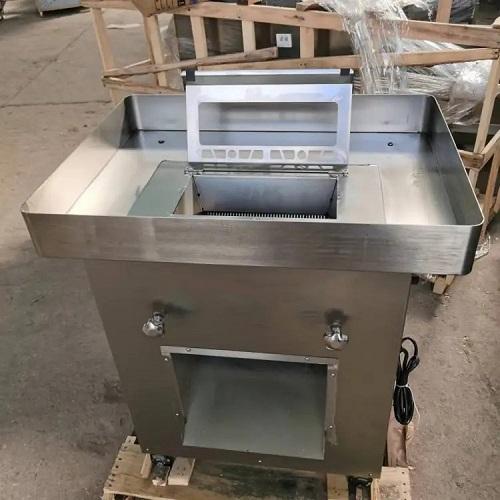
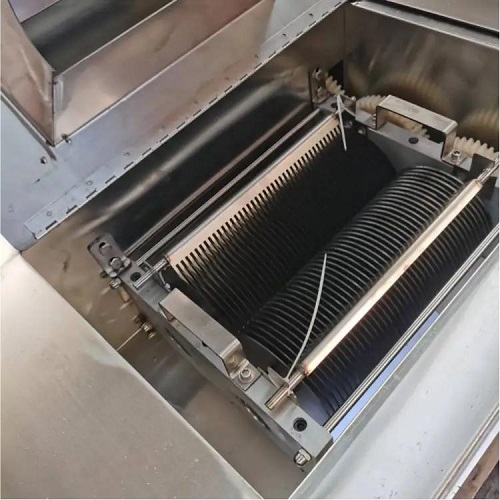
The Stainless steel meat slicer machine is a bench or floor machine built around one blade group. That group is made of two sets of disc blades crossed and interlocked, and the two rolls turn inward together so meat is drawn down and cut as it passes between them. The “stainless steel” part is not cosmetic. The body, the belt, and every part that touches food are stainless, so the unit rinses clean, resists rust, and meets the hygiene rules a meat room lives under. The cut is the point: the first pass turns a block into even strips or slices, and the thickness you get is set by the blade spacing. If you need cubes or dice, you run those first-cut strips or slices through the machine a second time, and the same inward-turning blades cross-cut them into cubes, with a wider spacing, or dice, with a lower spacing. Cubing and dicing are a second pass, not what the machine was built to do first.
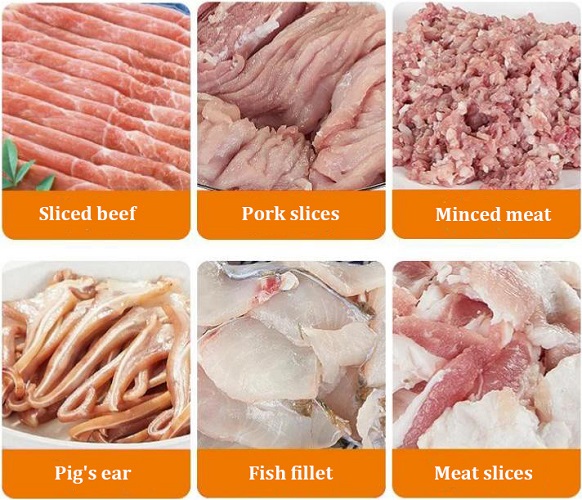
Most units handle more than one meat. Fresh pork, beef, and lamb slice cleanly. Frozen blocks that have thawed to a workable temperature slice without smearing. Bone-in chicken and duck slice because the blade group is built to cut through soft bone without shattering the meat. A FoodSafety.gov food safety guide is worth a read before you set up the line, since slice thickness and chill state change how you store the output.
how a meat slicer machine works
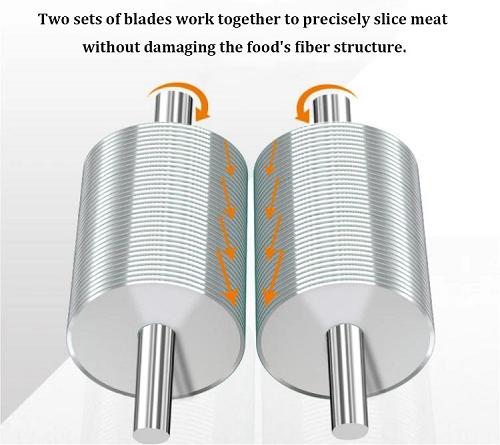
A stainless steel meat slicer machine works on a simple method: the blade group is two interlocked disc-blade rolls that turn inward together and cut the block into strips or slices, and a second pass on the same machine cross-cuts those pieces into cubes or dice.
- The operator puts large chunks of meat into the feed inlet.
- The two blade rolls turn inward and draw the block down between them, cutting it into even strips or slices at the spacing set by the blade group.
- For cubes or dice, collect the first-cut strips or slices and feed them back into the machine for a second pass; the same inward-turning blades cross-cut them into cubes, with a wider spacing, or dice, with a lower spacing, and those pieces fall through the discharge chute into a pan.
Blade spacing sets the strip or slice thickness. Fit a blade group with a different spacing and you change the first-pass thickness, then run the pieces through again to make cubes or dice, without changing the machine. FDA food handling guidance is clear that clean, food-grade surfaces and a quick teardown matter for meat equipment, which is why the belt and blade group come out for washing.
key parts of a meat slicer machine
Stainless steel meat slicer machine is simple on purpose, because fewer parts means fewer places for meat to jam or hide.
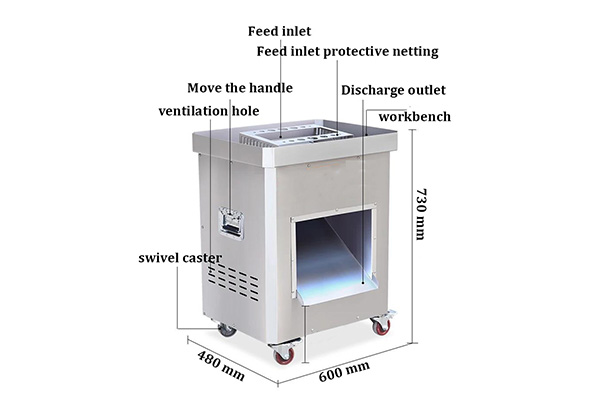
- Feed conveyor: a food-grade belt that moves meat into the blade group at a constant speed, which keeps slice thickness even batch to batch.
- Blade group: one set built from two interlocked disc-blade rolls that turn inward together, cutting the block into strips or slices at the spacing you set, and removable for sharpening. Run the first-cut pieces through again to cube or dice.
- Motor and drive: the power source that turns the blade group; on the unit covered here it is a 2.2 kW motor running on 220V or 380V.
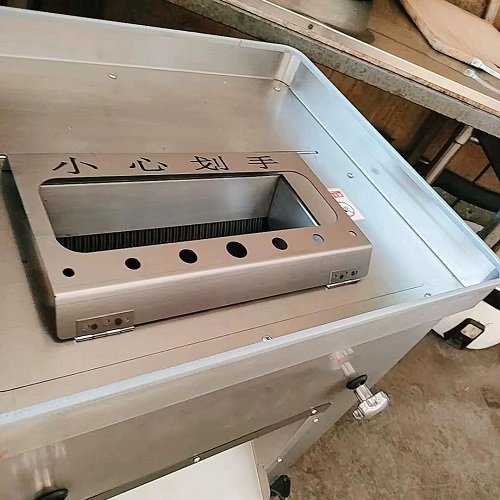
- Control and safety: a start and stop button plus an emergency stop, and a guard that covers the cutting area.
- Discharge chute: a sloped outlet that drops sliced meat into a pan without backing up the line.
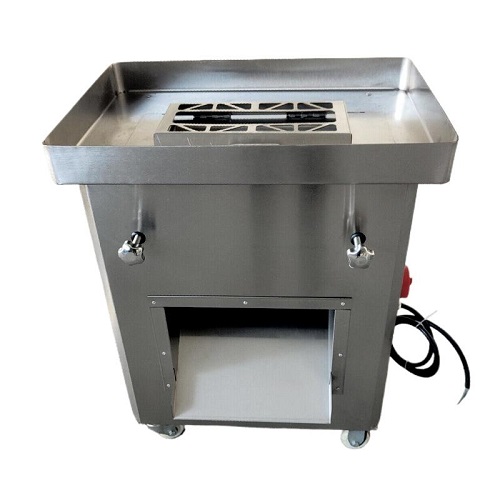
The body is stainless steel throughout, with a brushed finish that wipes down and a frame that takes daily hosing.
stainless steel meat slicer machine specifications
| Specification | Value |
|---|---|
| Model | WZ-S08 |
| Material | Food-grade stainless steel (304) |
| Voltage | 220V / 380V |
| Power | 2.2 kW |
| Throughput | 600 kg/h |
| Dimensions (L x W x H) | 480 x 600 x 730 mm |
| Blade group | One set, specified per order; sets slice thickness |
| Cutting size | Blade spacing sets strip or slice thickness; a second pass on the same machine cubes (wide spacing) or dices (low spacing), e.g. 10 / 20 / 30 mm |
| Use | Fresh, semi-thawed and bone-in meat |
Throughput of 600 kg/h suits a small to mid line: a central kitchen, a hot pot meat prep station, or a butcher packing sliced product. The 480 x 600 x 730 mm footprint fits where floor space is tight, and the dual voltage means it runs on a standard supply or a three-phase line.
why choose a stainless steel meat slicer
This stainless steel meat slicer earns its place in a working meat room: it cuts even slices, breaks down for clean teardown, and handles many meats and a second-cut cube or dice on one machine.
Even slices are the reason buyers switch from hand cutting. The blade group holds the thickness, so a 20 mm order stays 20 mm across the run, and that matters for cooking time and pack weight. Clean teardown matters more in a meat room than almost anywhere: stainless surfaces, a removable belt, and a blade group that lifts out mean you can rinse the whole machine between products. One machine for many jobs means the same unit slices chicken, pork, beef, and semi-thawed blocks, and with a re-feed pass it also cubes or dices, so you are not buying a separate dicer per product. The result is less labor per kilogram than a person with a knife, and a cleaner, more even slice.
what a meat slicer machine is used for
Wanzhi stainless steel meat slicer machine shows up wherever meat needs to be the same thickness before it cooks or packs, and the second cut adds cubing and dicing when a recipe calls for it.
- Hot pot and barbecue: sliced beef, lamb, and chicken portion evenly and cook at the same rate on the grill or in the pot.
- Pre-cooked meals: central kitchens slice meat to a set thickness so each pack weighs and cooks the same.
- Butchers and delis: sliced pork and beef for skewers, sandwich platters, and frozen ready meals.
- Frozen food: pre-cut filling meat for dumplings and buns at a uniform particle size, or diced meat when the second pass is used.
- Bone-in poultry: chicken and duck portion into slices or chunks for stews and fast-food lines.
Because the machine takes fresh, semi-thawed, and bone-in cuts, and a re-feed pass adds cubes or dice, one unit covers most of a meat room’s slicing and light cubing work without a second dicer.
meat slicer machine vs meat slicer and dicer
The purpose of stainless steel meat slicer and a slicer-dicer looks very similar, often placed on the same floor, but they are not the same buy.
| Point | Meat slicer machine | Meat slicer and dicer |
|---|---|---|
| Output shape | Strips or slices first pass, cubes or dice after re-feed | Slices, strips, or cubes |
| Blade change | Blade group swap for slice thickness | Interchangeable assemblies |
| Best for | Even slices at volume, light cubing | Mixed slicing, stripping and dicing |
| Throughput | Steady, set by feed | Adjustable per assembly |
| Footprint | Compact bench or floor | Larger, often two belts |
Pick the slicer when slices are the product and you only occasionally need cubes or dice from a second pass. Pick the slicer and dicer when the same line also needs strips and you switch assemblies between runs, or pick the fully automatic meat cube cutter when cubes are the only output you sell.
how to choose a stainless steel meat slicer machine
Use this checklist when you spec a stainless steel meat slicer machine for your line:
- Start with the slice thickness you sell. That sets the blade group, so a 20 mm hot pot order needs the 20 mm group plus spares for the sizes you switch between.
- Decide if you need cubes or dice. The machine cubes or dices by re-feeding the first-cut strips or slices through a second pass, so confirm whether that second run is part of your line before you quote.
- Match throughput to your peak hour, not your average day. Meat arrives in batches, and a bottleneck at the slicer backs up the whole room.
- Check voltage before you order. The unit here runs on 220V or 380V, so confirm your panel matches.
- Confirm teardown. Belt off, blade group out, rinse down should take minutes, not a crew.
our stainless steel meat slicer machine range
We build the stainless steel meat slicer machine and the wider slicing and dicing line so a buyer can scale from a single bench unit to a two-machine cell. The fully automatic meat cube cutter is the dedicated unit when cubes are the only product, and the meat slicer and dice machine covers lines that also strip and dice. For a full room, our food processing solutions team lays out washing, cutting, and packing as one flow. Tell us the slice thickness, the hourly volume, and the meat types, and we return a machine and the blade groups to match.
frequently asked questions
It slices fresh, semi-thawed, and bone-in meat into even strips or slices for hot pot, barbecue, pre-cooked meals, butcher packs, and frozen fillings. A re-feed pass adds cubes or dice when a recipe calls for them. The uniform thickness keeps cook time and pack weight steady across a run.
Yes, within limits. It slices semi-thawed blocks and cuts through soft bone in chicken and duck when fitted with the bone-in blade group. Fully frozen hard blocks should be tempered first so the blade group cuts clean instead of smashing.
Uniform, because the blade spacing sets the thickness and holds it for the whole run. A 20 mm setting stays 20 mm from the first pan to the last, which is the main reason plants switch from hand cutting.
Pick the blade group by the strip or slice thickness you sell, then order spares for the spacings you switch between. Fresh meat and bone-in poultry use different blade groups, so tell the supplier both meat types when you quote.
Yes. The body is stainless, the belt lifts off, and the blade group removes for washing, so you can rinse the machine between products. That teardown is what keeps a meat room passing hygiene checks.
Tell us your slice thickness, hourly volume, and meat types, and we will quote the machine and blade groups that fit your line.
Related Products
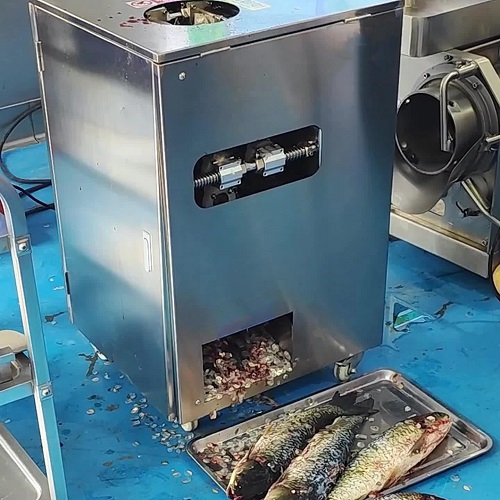
Fish killing machine with open back
Fish killing machine with open back Fish killing machine with open back Introduction The vertical…

Commercial electric chicken cutting machine
Commercial electric chicken cutting machine chicken cutting machine Introduction All Stainless steel casing, easy to…
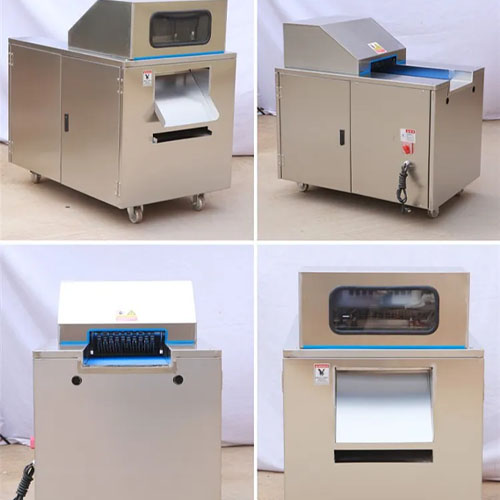
Fully Automatic Meat Cube Cutter
Fully Automatic Meat Cube Cutter Introduction This commercial fully automatic meat cube cutter efficiently processes…

Meat Slicer and Dice Machine
Meat Slicer and Dice Machine Introduction This is a professional-grade, fully automatic meat slicing and…

Meat Slicer and Shredder Machine
Meat Slicer and Shredder Machine Introduction This commercial meat slicer and shredder is a versatile…
Contact Us