
Parallel roller cleaning machine: how it works in one pass
Introduction
After harvest, potatoes and carrots come out of the ground with mud caked onto the skin, and a quick rinse in a tub does nothing about the dirt stuck in the eyes and creases. Washing a pallet of root crops by hand takes hours. A parallel roller cleaning machine was built for exactly this job. Instead of soaking and hoping, it scrubs every piece mechanically while water rinses the loosened soil away, so a two-person job becomes a one-operator step that keeps pace with the rest of the line.
what a parallel roller cleaning machine is
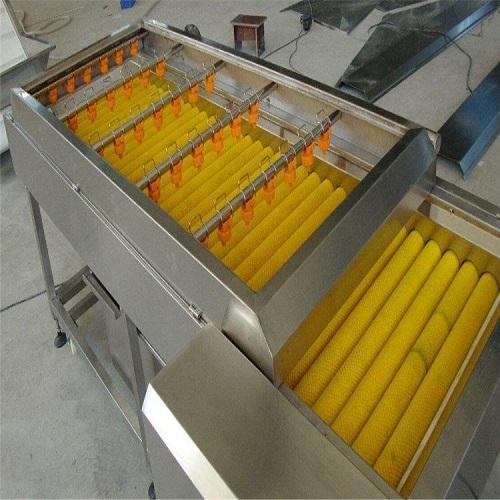
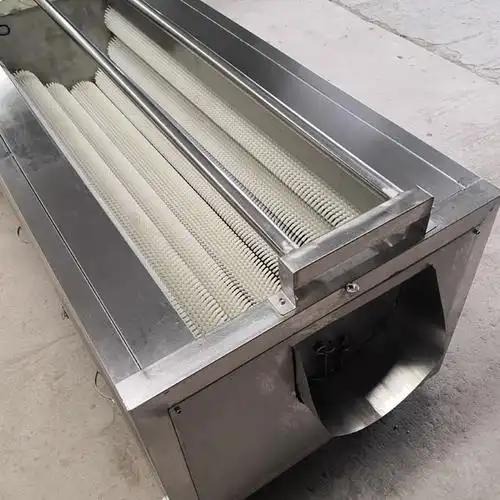
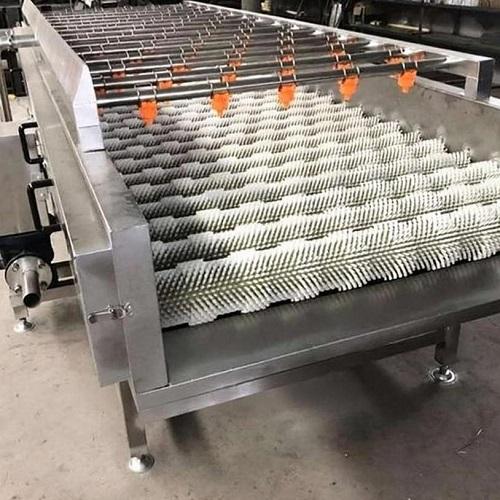
Parallel roller cleaning is a continuous washing method built around a row of brush rollers set side by side inside a stainless steel chamber. The machine is sold under several names, including bristle roller washing machine, brush roller washer, and roller type vegetable washer. The working idea is a flow, not a batch. Produce enters at the feed end, is brushed as it travels along the rollers, and leaves at the discharge end already clean.
That flow is what sets it apart from the batch-fed roller brush washer many plants already own. A batch machine is loaded with a set amount, washed, then emptied before the next load. A parallel machine keeps material moving end to end, so there is no waiting between loads. A unit of this type commonly runs six to twenty rollers depending on capacity, and the adjacent rollers turn against each other so the crop tumbles and is scrubbed from both sides. Wanzhi Machinery builds both layouts: the batch-fed bristle roller washing machine for fixed loads, and the continuous parallel layout for steady, higher volume lines inside the wider fruit and vegetable washing machine range.
how the machine runs as a continuous line
the feed end brings material in
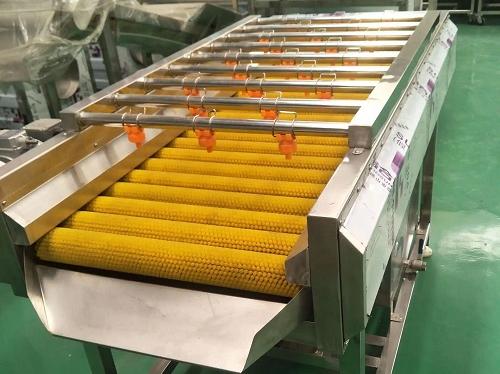
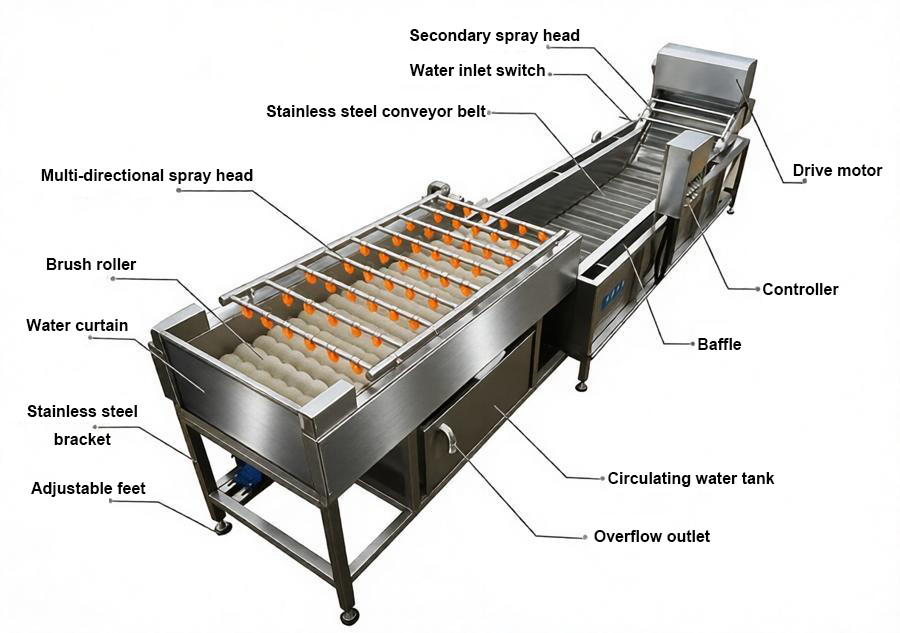
Operators drop produce into the feed inlet at one end of the chamber, choosing the inlet by crop size. From there the rollers take over. There is no timed soak and no batch to wait for. Material is accepted continuously as the upstream equipment feeds, which is why it slots into a line rather than standing alone.
the cleaning zone in the middle
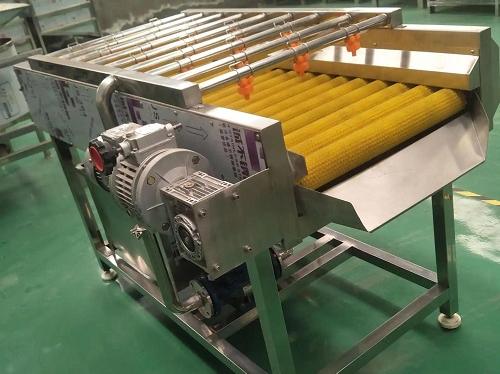
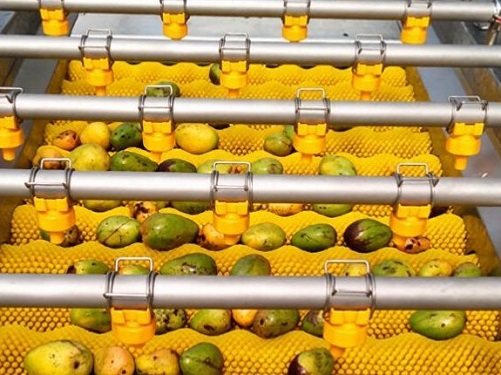
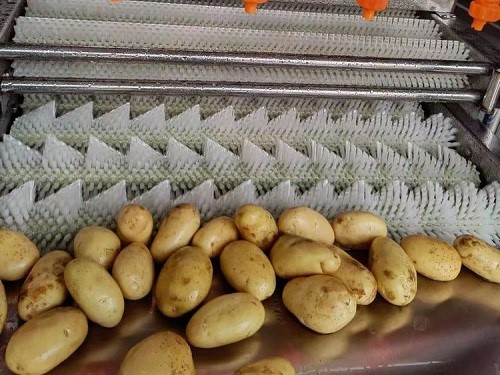
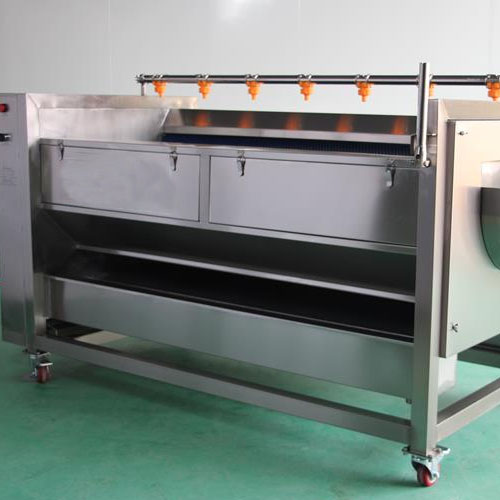
The middle rollers carry the produce forward while scrubbing both sides at once. Because the adjacent rollers run against each other, the crop is pushed into a constant tumble and soil is lifted out of creases and eyes. Above, spray pipes rinse the loosened mud and peel fragments away and keep the bristles from gouging the flesh. The roller speed is set on a variable frequency drive, so the same machine handles delicate citrus and firm potatoes with one change.
the discharge end sends clean product out
Clean produce reaches the far end and drops onto the next conveyor or into a collection bin without anyone opening a port or emptying a basket. That is the part a batch machine cannot match: the outfeed is steady, so the peeler, slicer, or grader downstream never waits. The discharge end is sized to the line speed so product leaves at the same rate it enters.
how residue leaves the water
Below the rollers sits a settling tank. Heavy soil and peel fragments drop to the bottom and are drained through a valve, while light debris rides out through an overflow. The water that leaves the machine is already partly cleared, which keeps the drain load down and makes the end-of-shift cleanup short.
the main parts and what they are made of
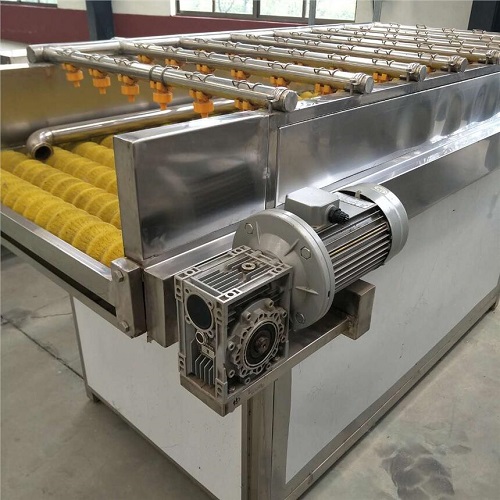
Food machinery lives or dies on its materials, and this machine is built almost entirely from 304 stainless steel. The frame, chamber walls, and support tubes are all 304, which handles the constant wet environment without rusting, and the surface is smooth enough to wash down at the end of a shift. Where a line runs salty or acidic products, a 316 stainless steel sheet upgrade resists pitting better, and the 304L stainless steel bar stock from the Wanzhi steel side of the group goes into the roller shafts and machined parts.
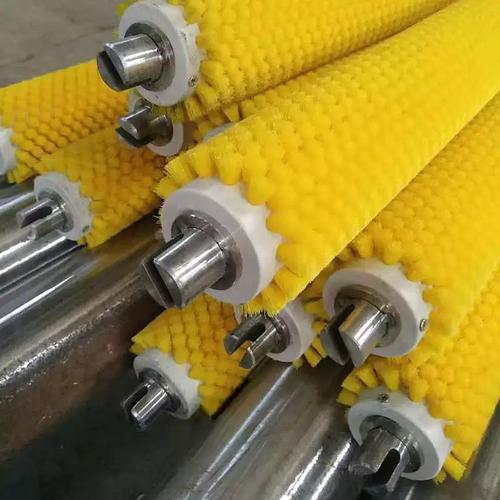
The wear parts are the roller assemblies. Each roller is a tube dressed with dense bristles, and the bristle material is chosen for the crop: nylon and food grade PP for general root vegetables, pig bristle for a firmer scrub, and stainless steel wire only for hard, resistant surfaces where softer bristles would wear out fast. The drive is a motor, reducer, sprockets, and chain, with a variable frequency drive that sets the roller speed. The spray system runs off a water pump, and the settling tank at the bottom handles the residue screen and the drain.
what a parallel roller cleaning machine cleans
The machine is built for firm, surface-textured crops that arrive with soil or grime bonded on. Root and tuber vegetables lead the list: potatoes, sweet potatoes, cassava, yams, carrots, daikon, lotus root, taro, onions, ginger, and garlic. These come out of the field with soil stuck to the skin, which is the same reason FoodSafety.gov guidance tells home cooks to scrub firm produce with a clean brush before cutting. The FDA’s tips for cleaning fruits and vegetables make the same point: friction plus running water removes dirt and surface residue.
Beyond roots, the continuous layout also handles firm fruit such as citrus, lemon, apple, pear, kiwi, and tomato, and it is used for shellfish like scallops, clams, and oysters where the surface needs scrubbing rather than a soak. Root herbs in the traditional medicine trade are washed the same way. What it should not clean is anything soft. Lettuce, spinach, berries, and thin-skinned fruit get bruised and torn by bristle friction, and the damage shows up as brown edges a day later. Send that product to an industrial fruit and vegetable bubble washer or a vortex bubble washer instead. Britannica’s overview of vegetable processing places washing as one of the first post-harvest steps, before sorting, cutting, and packing, and that is the slot this machine fills on a line.
parallel roller cleaning vs batch roller brush washing
The naming trips people up, so the difference is worth a clear line. A batch-fed roller brush washer, the type already listed in our catalog, is loaded with a fixed amount of produce, runs the wash cycle, then the operator opens the port and empties it before loading the next batch. It suits low or uneven volumes and a single operator who can tend several machines.
A parallel roller cleaning machine is the continuous version of the same idea. Produce feeds in one end and discharges the other with no loading and emptying cycle in between. The throughput is steadier and higher because the line never stops, and it pairs naturally with an upstream lifter or pre-wash and a downstream peeler, slicer, or grader. The trade-off is that a continuous line wants a steady feed and a planned water and drainage route, while a batch machine tolerates gaps in supply. If your volume arrives in steady waves, the parallel layout pays for itself; if it comes in odd batches, the batch-fed bristle roller washing machine is the simpler fit. We quote both.
parallel roller cleaning vs other washing methods
against a bubble washer
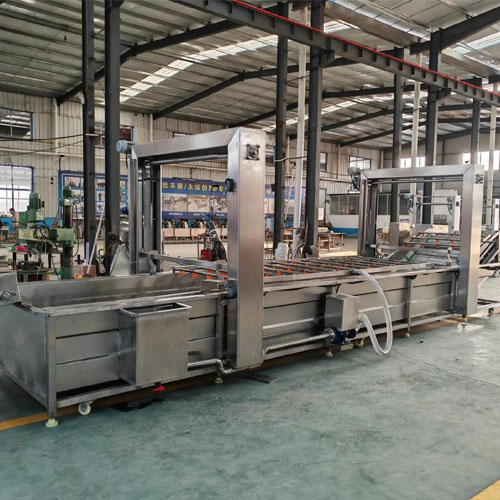
A bubble washer tumbles produce in aerated water with nothing solid touching the skin, which is perfect for leafy greens and berries and useless against caked mud on a potato. The brush rollers supply the friction that bubbles cannot. If your line runs both crop types, the usual setup is brush first, bubble second: firm roots get scrubbed, then take a final gentle rinse in the bubble stage. The full trade-off is laid out in our bubble washing machine vs brush washer comparison.
against manual washing
Hand washing with a hose and a scrub table cleans produce, but throughput collapses once you pass a few hundred kilograms per hour, and consistency depends on who is standing at the table that day. A parallel roller machine holds a steady rate with one operator feeding and one unloading, and the scrubbing pressure is the same on the last crate of the night as the first.
against a single-drum washer
A single rotating drum turns the whole load at once, so product in the middle gets less contact than product at the wall. Parallel rollers give every piece its own scrubbing surfaces, and the open chamber lets the spray reach the crop instead of a closed drum surface.
how to choose the right size for your line
Size against your peak day, not your average week. Produce arrives in waves after harvest, and a machine that just covers the average will bottleneck exactly when the trucks line up. Leave roughly 15 to 20 percent headroom above your busiest day, and size the roller count and chamber length to match that peak rather than the quiet months.
Check the power supply before you order. Most units run on 220V or 380V at 50 Hz and use a variable frequency drive to set roller speed, and the larger lines need the right feed and starter panel. Then check the route into the building and through it: a long continuous line takes floor length and a straight path from the feed end to the discharge end, so measure the door, the corridor, and the floor loading, not just the space in the wash room.
Budget for two consumables. Bristle roller sets wear and need replacement, and the machine sprays continuously, so it uses more fresh water per hour than a recirculating bubble washer and puts a heavier load on your drain. A CIP cleaning tank is worth planning into the layout for the end-of-shift washdown.
common mistakes to avoid
Running soft produce through it. The most expensive mistake on this list, because the damage shows up in the cooler, not on the line, and by then the whole batch gets discounted. Greens and berries belong in a bubble washer.
Treating it like a batch machine. The parallel layout earns its keep only when feed and discharge stay continuous. If you load it in stops and starts, you lose the throughput advantage and may as well run the simpler batch unit.
Buying on price alone. The cheapest quote is usually the one where the frame is thin sheet, the bristles are low-grade nylon, or the support tubes are not stainless. Ask what grade the rollers and frame are and what the brush replacement interval is.
Undersizing for harvest peaks. A machine that idles in October and bottlenecks in September is worse than a slightly bigger machine that runs comfortably all season.
Ignoring water and drainage. Continuous spray means a real fresh water supply and a drain that can take soil-laden water. The settling tank helps, but the site still needs to be planned for it.
Skipping the upstream and downstream steps. The washer works best as part of a chain. Roots usually arrive from a lifting feeder or pre-wash, and they leave for a commercial vegetable slicer or a potato chip production line. Our food processing solutions team designs the full line, not just the washer.
why source it from Wanzhi
Wanzhi Machinery is the machinery arm of Wanzhi Group, and we have been building food processing equipment for more than 15 years, with exports to over 100 countries. The plants run ISO 9001, ISO 14001, and ISO 45001, the equipment carries CE, and every machine ships with a factory acceptance test report. We build both the batch-fed bristle roller washing machine and the continuous parallel roller cleaning line, so we can match the layout to your actual volume instead of pushing one design. Our food processing solutions team designs the full line, not just the washer, so the wash stage matches the cutting, blanching, and packing stages around it. If you tell us the crop and the volume, we will quote the right layout with the supporting equipment. Reach us through the contact page.
frequently asked questions
It is a continuous washing machine where produce feeds in at one end, tumbles between parallel rotating brush rollers while water sprays from above, and discharges clean at the other end. The friction plus rinse removes soil and thin skins in one pass, and it is often called a bristle roller washing machine or brush washer.
A batch washer is loaded with a set amount, washed, then emptied before the next load. A parallel machine keeps material moving end to end with no loading and emptying cycle, giving steadier and higher throughput for continuous lines.
Firm, surface-textured crops: potatoes, sweet potatoes, cassava, carrots, daikon, taro, onions, ginger, garlic, plus firm fruit like citrus, lemon, apple, and kiwi, and shellfish such as scallops and clams. Soft produce like lettuce, spinach, and berries should go to a bubble washer instead.
Throughput scales with roller count and chamber length. A small unit with six to eight rollers handles a few hundred kilograms per hour, while a plant line with sixteen to twenty rollers clears well over a tonne per hour. Size against your peak harvest day with 15 to 20 percent headroom.
The frame, chamber, and support tubes are 304 stainless steel, with 316 as an option for salty or acidic products. Bristles come in nylon, food grade PP, pig bristle, or stainless steel wire depending on the crop. A variable frequency drive sets the roller speed for different produce.
Related Products

Fruit and Vegetable blancher
stainless steel Vegetable blancher stainless steel Vegetable blancher Introduction If you run a frozen vegetable…
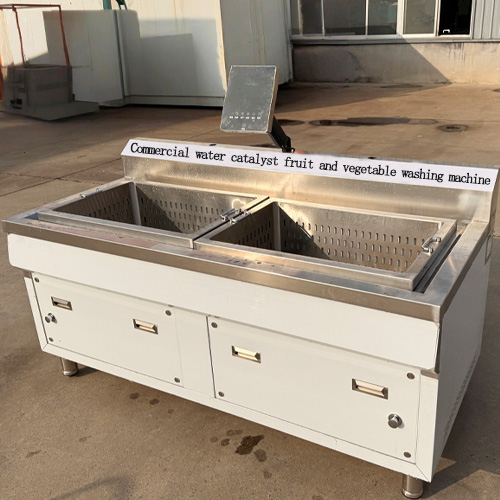
Water Catalyst Fruit and Vegetable Washer
Water Catalyst Fruit and Vegetable Washing Machine water catalyst fruit and vegetable cleaning machine Introduction…
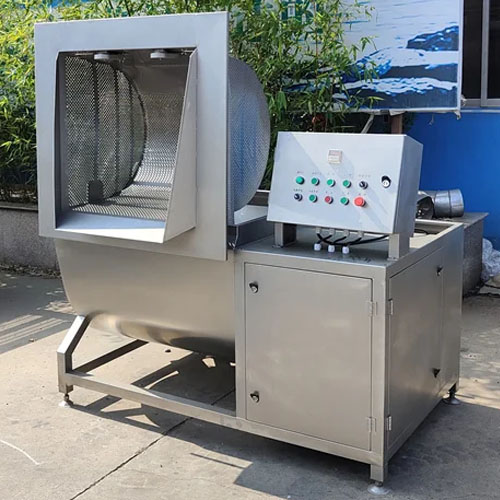
Tipping-Bowl Fruit Vegetable Washer
Tipping-Bowl Fruit Vegetable Washing Machine Fruit Vegetable Washing Machine Introduction This commercial tipping-bowl fruit and…
Bristle Roller Peeling and Washing Machine
Bristle Roller Peeling and Washing Machine Introduction The Bristle Roller Peeling and Washing Machine is…
Industrial Fruit Vegetable Bubble Washer
Industrial Fruit and Vegetable Bubble Washer Introduction This fruit and vegetable bubble washer, also known…
Contact Us