
stainless steel Vegetable blancher

Introduction
If you run a frozen vegetable line, a cannery, or a dehydration plant, a vegetable blancher is probably the single most important machine between washing and freezing. It is the step that decides whether your green beans come out bright green or muddy olive, whether your diced carrots hold their shape, and whether your product passes a buyer’s peroxide test for enzyme activity. Skip it or get the time-temperature wrong and the rest of the line does not matter much.
A vegetable blancher is a short heat-treatment unit. Product moves through hot water or steam at a controlled temperature for a controlled time, then gets cooled just as fast. That quick heat knocks out the enzymes that cause color fade, texture softening and off-flavors after harvest, and it takes the microbial load down at the same time. This piece covers what the machine is made of, how it runs, why plants use it, and the points that actually matter when you are choosing one.
What a vegetable blancher actually is
Blanching is a brief thermal step, not cooking. You hold the vegetable at 70–100 °C for anywhere from 30 seconds to several minutes, depending on the product, then stop the heat immediately by cooling. The goal is enzyme inactivation, not doneness.
The enzyme everyone cares about is peroxidase. As long as it stays active, the vegetable keeps browning, softening and losing flavor in storage and during freezing. A proper blanch stops it. Food scientists confirm the kill with the peroxidase test (a drop of hydrogen peroxide and guaiacol on a sample), and on an industrial line that test record doubles as your HACCP documentation for the critical control point. So the blancher is not just a quality machine, it is a compliance machine.
Two heating media dominate. Hot water blanchers immerse or shower the product; steam blanchers surround it with saturated steam in an enclosed tunnel. Both show up as continuous belt machines in big plants, while basket and drum types handle smaller or more delicate batches.
Core structure of a vegetable blancher
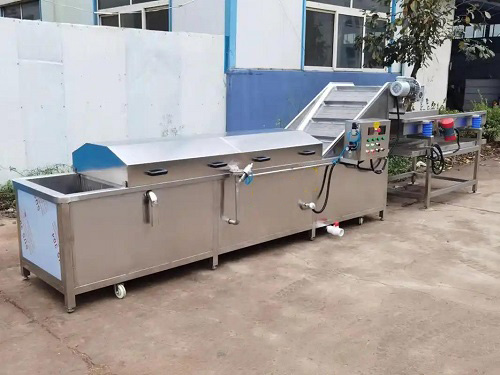
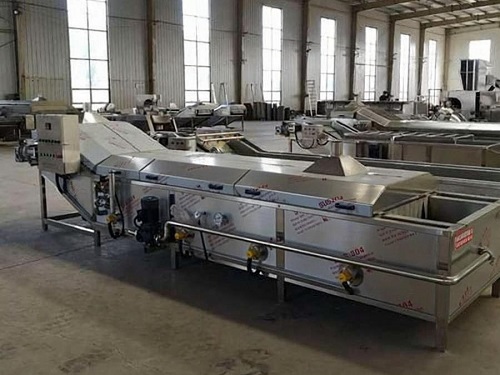
Most industrial blanchers share the same building blocks. The table below lists the parts you will find on almost any mesh belt unit, and what each one is doing.
| Component | What it does |
|---|---|
| Feeding system | Spreads raw product evenly onto the belt so it does not clump or pile up in uneven layers |
| Conveyor belt / mesh | Carries product through the heat and cooling zones; stainless mesh or perforated plate lets water or steam hit all sides |
| Blanching tank or chamber | Holds the hot water or steam and keeps a controlled environment for the thermal treatment |
| Heating system | Steam injectors, electric heaters or a heat exchanger hold the set temperature; steam is cheaper where a boiler exists, electric is simpler to install |
| Temperature and time control | Sensors, a PLC and the operator panel set and watch the process parameters; belt speed sets residence time |
| Cooling section | Chilled or ambient water, sometimes air, drops the temperature fast so cooking stops |
| Water circulation and filtration | Recirculates process water, strips particles and keeps things hygienic while cutting water and energy use |
| Discharge system | Moves product to the next stage (dewatering, freezing, packing) with minimal damage |
| Cleaning and drainage | CIP nozzles, sloped bottoms and easy-access panels for deep cleaning and fast changeovers |

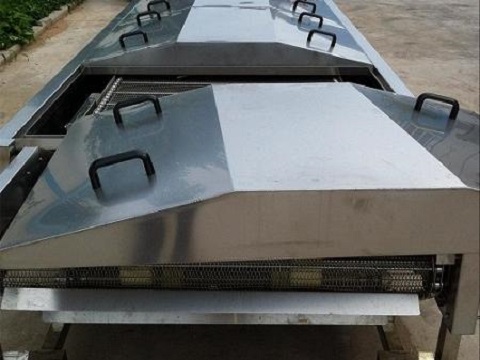
The body is food-grade stainless steel, almost always SUS304 for the frame and contact parts, with SUS316L where chloride exposure is high (think saltwater rinse or coastal plants). Corners are rounded and welds are smooth so biofilm and cleaning chemicals have nowhere to hide. That is not cosmetics, it is what lets you pass an audit.
How a vegetable blancher works
The path is straightforward, and on a continuous line the five steps run at the same time on different parts of the belt.
- Feed. A belt or hopper lays raw product onto the mesh evenly.
- Heat. Steam injectors or electric heaters bring the water or steam to the recipe temperature.
- Blanch. Product travels through the chamber. Showers or steam wrap every piece. Belt speed sets how long it stays; the tank temperature sets how hard the heat hits.
- Cool. Cold water or air in the same line pulls the temperature down fast so the vegetable does not keep cooking.
- Discharge. Product leaves the blancher and moves on to dewatering, freezing, drying or packing.
Residence time is the lever most plants underuse. A variable-frequency drive on the belt motor changes it without touching the machine, so one blancher can handle peas at 2 minutes and broccoli at 4. That single feature is why a mid-size plant can run multiple vegetables on one line instead of buying a machine per crop.
Hot water or steam: which heating method
This is the first real decision, and it changes your utility bill and your product quality.
| Hot water blancher | Steam blancher | |
|---|---|---|
| Heating medium | Heated water, immersion or spray | Saturated or superheated steam in an enclosed tunnel |
| Best for | Diced veg, whole beans, peas, leafy product | Low water contact, flavor and nutrient retention |
| Water use | Higher; needs recirculation to stay sane | Lower effluent load |
| Nutrient loss | Some water-soluble loss into the bath | Minimal leaching |
| Utility need | Electric heater, or steam to heat water | Reliable steam supply, or a steam generator |
If you already have a boiler, steam is usually the cheaper running option and it heats fast. If you do not, electric heating avoids the boiler entirely and simplifies install, at a higher power draw. Spray (cascade) hot water sits between the two: gentle on delicate leaves, less water than full immersion. Some lines run a hybrid, steam in the first zone for a fast start and hot water in the second to even out temperature and wash off surface residue.
Typical specifications
Builders differ, but a competent continuous belt blancher lands in this band. Treat the table as a starting point, not a catalog.
| Parameter | Typical range |
|---|---|
| Processing capacity | 300–12,000 kg/h (product- and belt-dependent) |
| Blanching temperature | 70–100 °C water; 90–105 °C steam |
| Residence time | 30 s to 10 min, set by belt speed |
| Cooling temperature | 0–20 °C, chilled or ambient water |
| Belt width | 600 / 800 / 1,000 / 1,200 / 1,500 mm |
| Machine length | 2.5–10 m, calculated from output and time |
| Power | Electric models 9–360 kW; steam models 0.75–5 kW for drives |
| Voltage | 380 V / 50 Hz |
| Body material | SUS304 stainless steel |

Time and temperature move together: hotter means shorter, cooler means longer. A few reference points plants actually use: green peas at 95 °C for 2–3 min, edamame at 95–98 °C for 3–5 min, carrot dice at 95 °C for 4–6 min, broccoli at 90 °C for 3–4 min, leafy greens at 75–90 °C for 30 s to 2 min. Your own trials and the peroxidase test should confirm the final numbers.
What a vegetable blancher is used for
Blanching is a preprocessing step, so it shows up wherever vegetables (or anything vegetable-like) get frozen, canned, dried or cooked later.
- Frozen vegetable lines. Peas, sweet corn, broccoli, green beans and carrots are blanched before the freezer. This is the biggest use by far.
- Ready-to-eat and salad lines. Leafy mixes get a light blanch to stay crisp and safe.
- Fruit processing. Sliced apples, peaches and berries keep color before drying or canning.
- Seafood plants. Shrimp, squid rings and mussels are cleaned and lightly set.
- Meat and poultry. Chicken strips and beef cubes are blanched before stir-fry kits.
- Dehydrated foods. Potatoes, herbs and mushrooms are blanched to fix color and shorten drying time.
How to choose a vegetable blancher
Eight points cover most buying decisions. Get these right and the machine will still fit your line in five years.
- Capacity first. Work back from your freezer or packer throughput, not the other way around. A 500 kg/h blancher feeding a 2,000 kg/h freezer is the bottleneck you will feel every shift.
- Heating method. Boiler on site points to steam; no boiler points to electric. Hybrid units cost more up front and save on both.
- Belt width and length. Width sets how much sits on the belt; length sets residence time at a given speed. Long blanch times need a longer machine or a slower belt.
- Belt material. Stainless mesh, stainless plate or nylon plate. Small particles that fall through mesh need plate or a finer mesh.
- Temperature precision. PID control to ±0.5 °C matters for export specs. Cheap on-off control drifts and your peroxide test starts failing.
- Cooling method. Chilled water is fastest and most consistent; ambient water is cheaper but slower. Match it to your line speed.
- Hygiene and access. Rounded corners, CIP nozzles, sloped bottoms, lift-up hood. If you cannot clean it in ten minutes, you will not clean it often enough.
- Integration. The blancher is never standalone. It needs a washer upstream and a dewatering or freezing step downstream, and the belt heights have to line up.
Why buy from Wanzhi
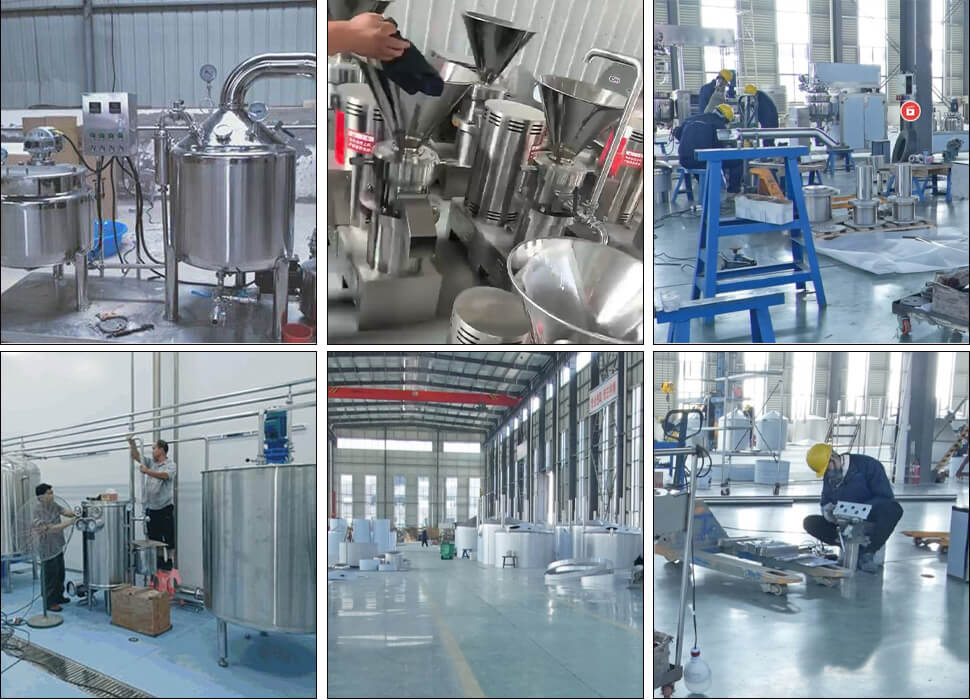
Wanzhi Machinery builds food-grade stainless steel equipment for processors in more than 100 countries, and blanchers are part of the same line family we engineer end to end: washers, cutters, blanchers, tanks, pasteurizers. That matters because the blancher has to talk to the machines around it, and we design them together.
Our blanchers are SUS304 throughout, with SUS316L contact parts available for corrosive duty. PID temperature control, variable-frequency belt drive, insulation with optional heat recovery, and lift-up hoods for CIP come as standard. Each unit is built to ISO 9001 and CE, run-tested before it leaves the plant, and backed by 24/7 engineering support. Tell us your product, your throughput and your available utilities, and we return a sized proposal with a process flow, usually within a day.
Frequently asked questions
It gives vegetables a short hot-water or steam heat to switch off the enzymes that cause browning, softening and off-flavor, and it lowers the microbial load. Product is cooled immediately after so it does not keep cooking.
Product rides a stainless mesh belt through a heated chamber, then through a cooling zone. Belt speed sets how long it stays; the tank or steam temperature sets how hard the heat is. Feed, heat, blanch, cool and discharge all happen at once on different parts of the belt.
Steam is cheaper to run where you have a boiler and it leaches fewer water-soluble nutrients. Hot water is simpler and gentler on delicate pieces. Electric hot water avoids a boiler entirely. Many plants run a hybrid of both.
Rough starting points: peas 95 °C for 2–3 min, edamame 95–98 °C for 3–5 min, carrot dice 95 °C for 4–6 min, broccoli 90 °C for 3–4 min, leafy greens 75–90 °C for 30 s to 2 min. Confirm with your own trials and the peroxidase test.
SUS304 covers most lines. Move to SUS316L for contact parts when you rinse with saltwater, run high-chloride product, or operate in a coastal or humid plant where pitting is a real risk.
Yes, if it has a variable-frequency belt drive and stored recipes. The same machine runs peas and broccoli by changing belt speed and temperature, no mechanical change needed.
Size it to your freezer or packer, not your washer. A 500 kg/h blancher feeding a 2,000 kg/h freezer is the bottleneck you will feel every shift. Continuous belt units run from roughly 300 kg/h up to 12,000 kg/h.
It should. Belt heights, speeds and control signals have to match the machines upstream and downstream. Give us your current models and we size the blancher to drop into the line.
Talk to our team
If you are scoping a blancher, send us your product, target throughput and the utilities you have on site. We will size the unit, pick the heating method and lay out the line around it. Reach us through the contact page, or read more about the company and our case studies.
Related Products
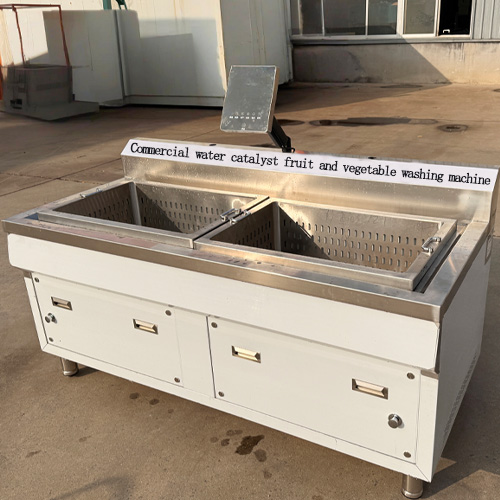
Water Catalyst Fruit and Vegetable Washer
Water Catalyst Fruit and Vegetable Washing Machine water catalyst fruit and vegetable cleaning machine Introduction…
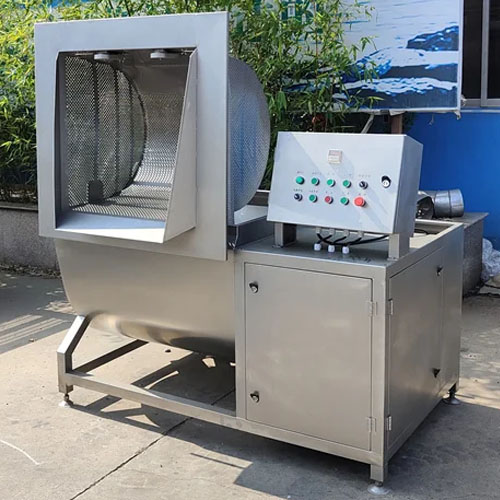
Tipping-Bowl Fruit Vegetable Washer
Tipping-Bowl Fruit Vegetable Washing Machine Fruit Vegetable Washing Machine Introduction This commercial tipping-bowl fruit and…
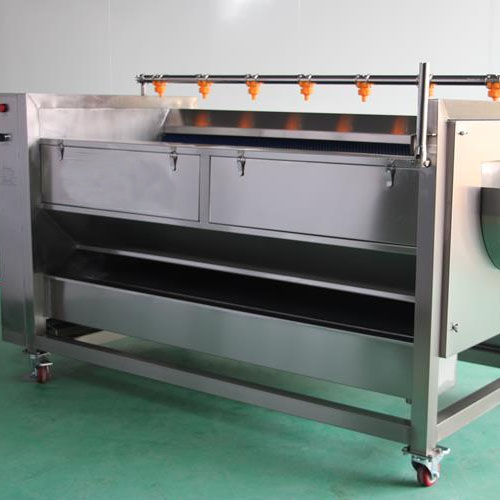
Bristle Roller Peeling and Washing Machine
Bristle Roller Peeling and Washing Machine Introduction The Bristle Roller Peeling and Washing Machine is…
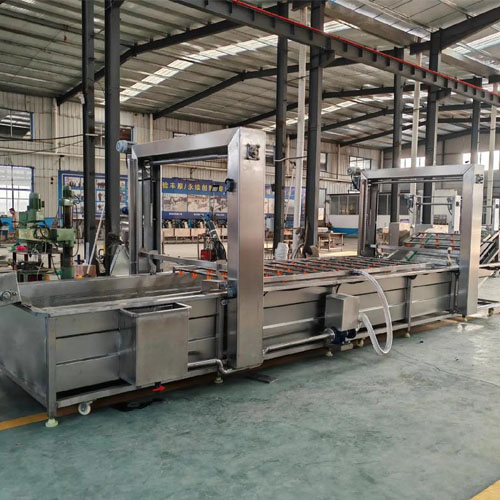
Industrial Fruit Vegetable Bubble Washer
Industrial Fruit and Vegetable Bubble Washer Introduction This fruit and vegetable bubble washer, also known…
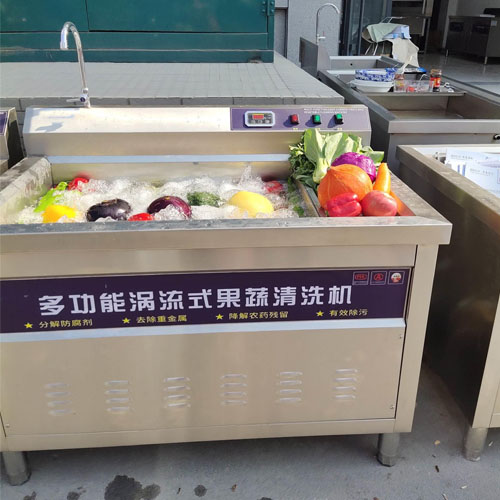
Vortex Bubble Fruit and Vegetable Washer
Vortex Bubble Fruit and Vegetable Washer Introduction The vortex bubble washer is a high-efficiency commercial…
Contact Us