
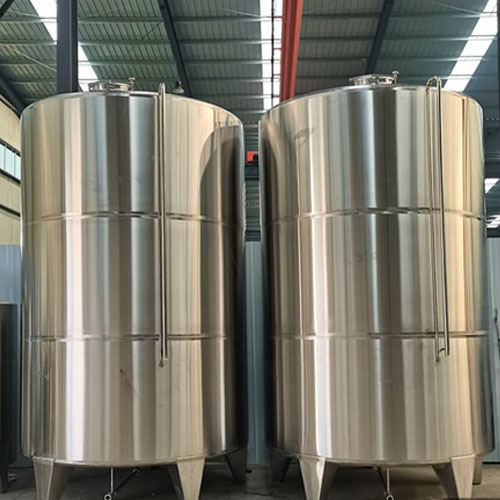
vacuum degassing tank
Introduction
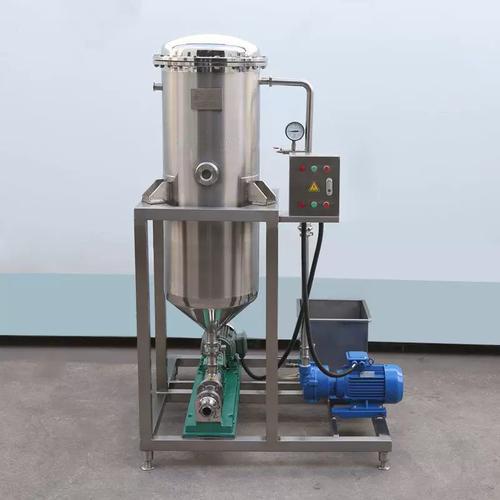
If you run a juice, dairy, or soy-milk line, a vacuum degassing tank is probably the one machine you didn’t know you needed — until you tasted the difference it makes. Put simply, it’s a stainless-steel vessel that pulls dissolved air and oxygen out of your liquid product under vacuum. Do that before filling or sterilization and you stop oxidation, browning, flavor loss, and the foam that ruins a clean pack. We’ve seen product color hold weeks longer after adding one.
Most plants put it right after the homogenizer and just before sterilization or filling. That’s where it earns its keep.
What a Vacuum Degassing Tank Actually Is ?
The names get thrown around loosely — vacuum degasser, vacuum deaerator, deoxygenation tank — but they describe the same job. In a dairy plant they’ll usually say “deaerator”; in a juice plant it’s “degassing tank.” Either way, it’s a sealed, sanitary vessel where liquid food meets a vacuum and the entrained gases (mostly oxygen) get pulled out.
A few aliases worth knowing:
- Vacuum deaerator / vacuum deaerator tank — common in dairy
- Vacuum degasser / vacuum degassing machine — common in juice
- Deoxygenation tank — same thing, used when the spec is about oxygen removal
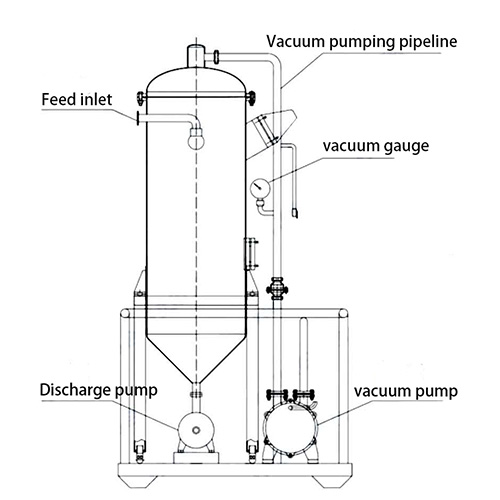
One thing that trips up first-time buyers: the tank alone isn’t the whole machine. The real vacuum degassing unit is three parts working together:
- The tank itself — where the product sits under vacuum
- A vacuum pump — creates and holds the vacuum
- A slurry or centrifugal pump — moves product in and out
Strip any one of those out and you don’t have a working system.
How It Works (and Why It’s Not Complicated)
The principle is vacuum-suction deoxygenation:
The loop holds. The vacuum pump keeps yanking the freed gases out, so the system stays stable.
Pull the vacuum. Start the matched vacuum pump and it draws the air out of the tank — you’re aiming for 0.064–0.087 MPa.
Product self-feeds. Under vacuum, liquid gets sucked in through the inlet on its own. You don’t need feed pressure at the entry.
Level finds its balance. When product climbs to a set height, the control valve throttles the feed automatically. There’s a sight glass with a light so the operator can watch and nudge the feed speed if needed.
It spreads thin. Inside, the product hits a spray pipe and breaks into a film or fine mist. More surface area means the dissolved oxygen escapes fast.
Out it goes. Once the vacuum hits target, product drains from the outlet. Keep the vacuum and the in/out flow balanced and it runs all day.
What Degassing Actually Buys You
We get asked “is this necessary?” often. Here’s what removing oxygen does, in plain terms:
| What it fixes | Why it matters |
|---|---|
| Oxidation | No oxygen means no browning, no faded pigment, no lost vitamins or aroma. Shelf life goes up. |
| Floating particles | Gas clinging to suspended solids is what makes pulp float to the top. Strip it and the product looks cleaner. |
| Foaming | Less foam at the filler and during retort — fewer rejects, better heat penetration. |
| Corrosion | Lower dissolved oxygen means less attack on your tank walls and downstream equipment. |
In juice specifically, deoxygenation is done by the vacuum method: spread the juice into a film or mist under vacuum and the oxygen just leaves. The treated juice oxidizes far slower and holds its color and taste.
What’s Inside the Tank (internal structure) ?
Every part that touches product is stainless steel with food-grade rubber seals — nothing painted or plated ever sees your food.
| Part (EN) | What it does |
|---|---|
| Tank body | Holds product under vacuum; mirror-polished inside |
| Top cover | Seals the vessel and carries the fittings |
| Check valve | Stops product or gas flowing back |
| Spray pipe | Breaks liquid into film/mist for fast degassing |
| Control valve | Auto-throttles the feed level |
| Sight glass + light | Lets the operator see level and feed |
| Vacuum pump | Makes and holds the vacuum |
| Discharge pump | Moves product in and out |
Technical Specifications
These are the numbers we quote against most often. They come from the standard KLZT series. Capacity runs from a 500 L/H pilot unit up to a 15,000 L/H plant-scale machine, and every model holds the same 0.064–0.087 MPa working vacuum.
| Model | Capacity (L/H) | Working Vacuum | Motor Power | Dimensions (mm) | Weight |
|---|---|---|---|---|---|
| KLZT-0.5 | 500 | 0.064–0.087 MPa | 2.25 kW | 1000 × 730 × 2750 | 180 kg |
| KLZT-1 | 1,000 | 0.064–0.087 MPa | 2.25 kW | 1035 × 750 × 2840 | 270 kg |
| KLZT-2 | 2,000 | – | 3.95 kW | 1135 × 780 × 3040 | 350 kg |
| KLZT-3 | 3,000 | – | 4.5 kW | 1185 × 800 × 3140 | 450 kg |
| KLZT-10 | 10,000 | – | 8.0 kW | 1600 × 1700 × 3250 | 600 kg |
| KLZT-15 | 15,000 | – | 9.5 kW | 1750 × 1500 × 3500 | 800 kg |
Working vacuum is 0.064–0.087 MPa across the whole range; we just didn’t repeat it on every line to keep the table readable.
If your line needs a non-standard capacity, vacuum, or footprint, we design to your spec rather than forcing you into a catalog number.
304 or 316L? (Pick Based on What You’re Running)
This is the question we answer on almost every call. Quick version:
| Grade | Use it for | Why |
|---|---|---|
| SUS304 | Juice, soy milk, most liquid food | Cheaper, and more than enough for low-corrosion products |
| SUS316L | Milk, dairy, salty or acidic product | The extra molybdenum resists corrosion — worth it for long-life dairy lines |
Both get a mirror-polished interior and food-grade silicone or EPDM seals. If you’re unsure, tell us what you’re processing and we’ll spec it for you.
Configuration and Heating
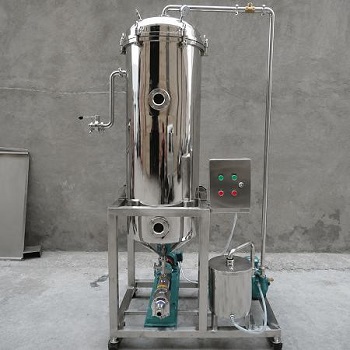
The units we see most are skid-mounted and vertical — they show up pre-piped, so installation is mostly “set it down, hook it up.” Heating is your call:
- Steam heating if you already have a steam header
- Electric heating if you don’t, or want simpler controls
One tank can cover a system up to 150 m³, and the degassing time and cycle are adjustable — so it works for both batch and continuous runs. That flexibility is the main reason we recommend the skid-mounted vertical layout over a custom-built standalone.
Where It Gets Used
A vacuum degassing tank for food shows up in more places than people expect:
- Fruit and vegetable juice — the obvious one. Run it after homogenization and oxidation, browning, and off-flavor all drop.
- Milk and liquid dairy — deaeration before sterilization or filling is just standard practice now.
- Soy milk — pulls the beany off-odor and keeps the emulsion from splitting.
- Jam, sauce, puree — less foam means cleaner hot-fill and retort.
- Blood-tofu — sanitary deoxygenation in a specialized line.
- Any liquid food where dissolved oxygen is quietly shortening shelf life.
The common thread: do it after homogenization, before sterilization or filling. That window is where degassing pays off.


Where It Sits in Your Line
Picture a juice line. The degasser is the quiet middle step:
Fruit crusher → Colloid mill / homogenizer → Vacuum degassing tank → Sterilizer (UHT / pasteurizer) → Filling machine → Storage tankThe machines around it that we also build:
- [Colloid mill (split type)] — does the homogenizing before degassing; the JMF-140 has been a workhorse in West African lines
- [Stainless steel vacuum mixing tank] — holds and mixes under vacuum
- [Jacketed stainless steel mixing tank] — heats or cools and blends on either side of the degasser
- [Stainless steel fermentation tank] — for fermented dairy and drinks
- [Fruit & vegetable crusher] — the first step upstream
- [Automatic paste filling machine] — the step after sterilization
- [Electric heating jacketed kettle] — batch cooking for sauce and jam
The whole family is in our [stainless steel tank category].
How to Size and Specify One
When a customer asks us for a quote, the fastest path is to send us these details. The more we get, the closer the first proposal is to what you actually need:
- What’s the product? Juice, milk, soy milk, sauce — plus viscosity and acidity.
- How fast? Capacity in L/H, matched to your homogenizer and filler.
- Any special requirements? Target vacuum, heating method, skid vs. standalone, CIP needs.
- Material grade — SUS304 (standard) or SUS316L (dairy/corrosive).
- Utilities on site — steam pressure available, electric supply (usually 380V / 3-phase / 50Hz).
- Space — skid-mounted saves install time if the floor is tight.
- Automation — manual, semi-auto, or full PLC control.
- Hygiene level — mirror polish, sanitary fittings, CIP compatibility.
- Certifications for your market — CE, and so on.
Honestly, even if you only know items 1 and 2, send it over. We can usually fill the rest in from experience.


Installation and Upkeep
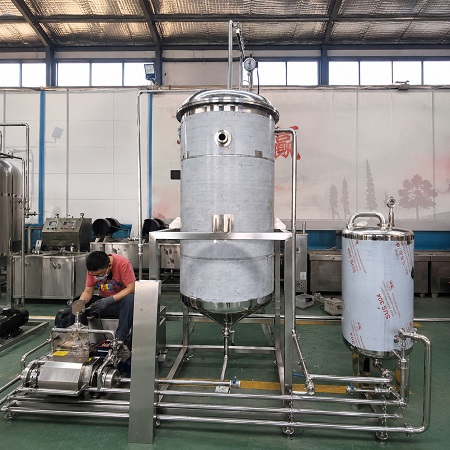
Skid-mounted vertical units arrive pre-piped. Set them on a level floor, connect the vacuum pump, the feed/discharge pumps, and your utilities, then commission with a vacuum leak test and a water trial before product goes through.
Day to day it’s not demanding:
- After every run: rinse with clean water; run a CIP cycle on dairy or juice lines.
- Weekly: check the sight glass, seals, and check valve for wear; confirm vacuum pump oil is where it should be.
- Monthly: verify the tank still holds vacuum at the 0.064–0.087 MPa setpoint and that the spray pipe is dispersing properly.
- Yearly: swap gaskets and seals as preventive maintenance.
The failures we actually see are almost always a worn seal letting vacuum leak, not the tank itself. Catch it monthly and you won’t notice.
Why Buy From Wanzhi
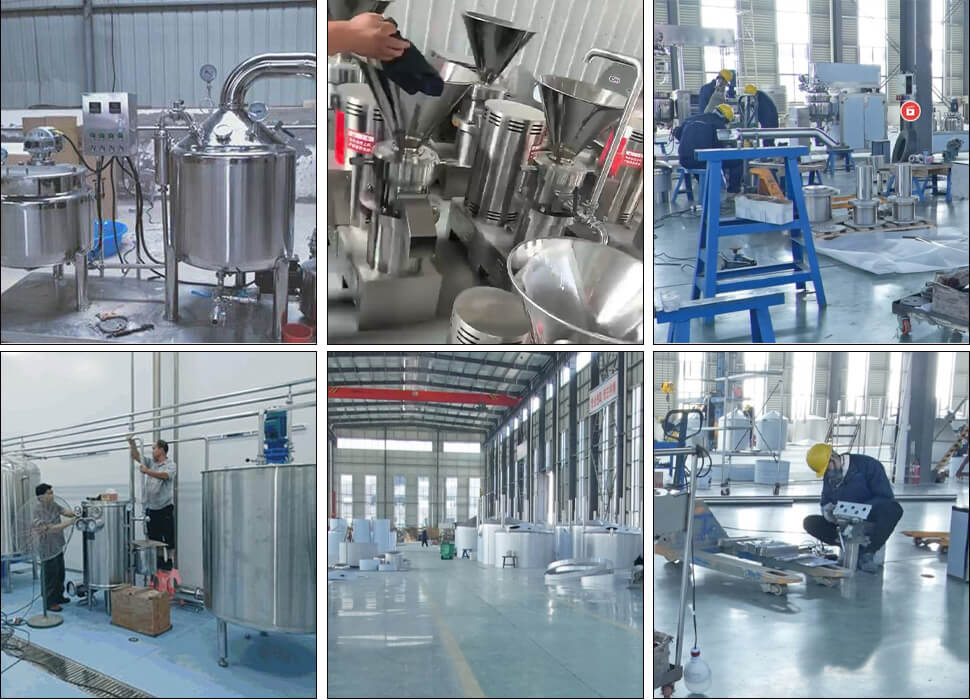
We’re Wanzhi Machinery, based in Zhengzhou, Henan, building sanitary stainless-steel food equipment and shipping to 100+ countries for 15+ years. A few reasons customers stay:
- Certified — ISO 9001 and CE in our manufacturing.
- Material choice — SUS304 or SUS316L, mirror-polished, with the right seals for the job.
- We design to spec — off-catalog numbers are a starting point, not a limit.
- One line, one supplier — crushers, colloid mills, degassers, kettles, tanks, fillers.
- FAT and after-sales — factory acceptance test, install guidance, and engineers who answer.
Read about real installs in our [case studies], or get to know the team on our [about page].
Frequently Asked Questions
A: Same machine, different word. “Tank” points at the vessel; “degasser” or “deaerator” means the whole unit with its pumps. The complete vacuum degassing unit includes the vacuum pump and the feed/discharge pump.
A: Match it to your homogenizer and filler. The KLZT series spans 500 L/H (pilot) to 15,000 L/H (full plant). A 3,000 L/H unit (KLZT-3) covers most mid-size juice lines; big dairies run 10,000–15,000 L/H.
A: SUS304 for juice, soy milk, and most liquid food. SUS316L for milk, dairy, and anything salty or acidic where corrosion is the real enemy.
A: After homogenization (the colloid mill) and before sterilization or filling. That’s the window where deoxygenation actually protects the product.
A: Standard working vacuum is 0.064–0.087 MPa. At that level the product spreads into a film/mist and the dissolved oxygen leaves quickly.
A: Yes — capacity, vacuum, footprint, heating (steam or electric), skid vs. standalone, and automation level all get built to your parameters.
A: A vacuum pump (usually included), a feed/discharge pump, and power — 380V / 3-phase / 50Hz for industrial models. Steam heating needs a steam source; electric heating just needs power.
A: It’s standard there. The vacuum degassing tank for milk and soy milk lines strips off-odor, stabilizes the emulsion, and cuts fouling during sterilization.
Get a Quote
Send us your product, target capacity, and whether you’d rather heat with steam or electricity. Our engineering team comes back with a proposal — layout, process flow, options — usually within 24 hours.
👉 [Contact us] for a quote on a stainless steel vacuum degassing tank (KLZT series, 500–15,000 L/H).
Related Products

Stainless steel sterilization tank
Stainless steel sterilization tank Stainless steel sterilization tank Introduction If your line handles anything a…
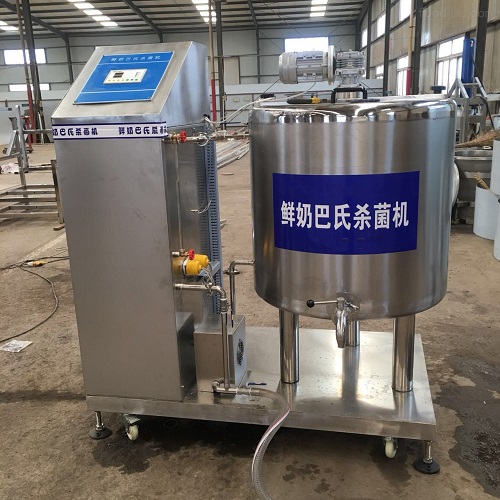
Fresh milk pasteuriser
Fresh milk pasteuriser Milk pasteurizer machine Introduction Stainless steel pasteurizers are core equipment widely used…
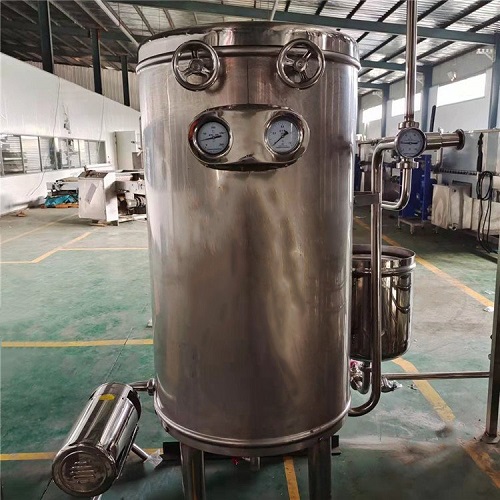
UHT sterilization tank
UHT sterilization tank UHT sterilization tank Introduction Every liquid food line eventually hits the same…
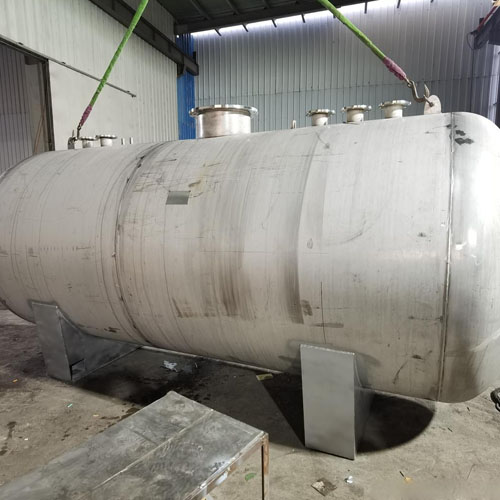
Stainless Steel Pressure Water Tanks
Stainless Steel Pressure Water Tanks Horizontal stainless steel pressure tank Introduction Stainless steel pressure water…
Vertical Stainless Steel Water Storage Tank
Vertical Stainless Steel Water Storage Tank Introduction Vertical stainless steel water storage tanks are the…
Contact Us