
Stainless steel sterilization tank

Introduction
If your line handles anything a microbe can spoil, a stainless steel sterilization tank is usually the piece of equipment that decides whether your product ships safely or gets recalled. Dairy, juice, pharmaceutical fluids, biotech media, sauces, wine: they all share the same problem. You need to kill what is in there without cooking the product or leaving a corner where bacteria hide.
Wanzhi Machinery builds these vessels in 304 and 316L, from 50 liters up to 5,000 liters, for food, beverage, and pharma plants in 20+ countries. This guide walks through what a sterilization tank actually does, how the methods differ, which grade to specify, and how to size one without collecting quotes you cannot compare.
What a Sterilization Tank Actually Does
A stainless steel sterilization tank is a sealed vessel built to heat a liquid product to a temperature that kills pathogens and spoilage organisms, then hold it there under control, then cool and discharge it, all inside one sanitized shell. The point is not just heat. It is controlled, repeatable heat in a vessel you can clean between every batch.
Two things get confused, so here is the split:
- A sterilization tank actively treats the product: steam, hot water, or indirect heating to a sterilization set point, then cool.
- An aseptic (sterile) storage tank sits downstream. It holds already-sterilized product in a contaminant-free environment until filling. It does not heat the product; it just keeps it clean.
Most lines need both. You sterilize in one vessel, then park the result in an aseptic tank until the filler is ready. We cover UHT sterilization tanks as a specific product on its own page; this article stays on the broader category.
The Sterilization Methods, and Why They Differ
You will hear several terms used almost interchangeably. They are not the same, and picking the wrong one wastes money.
| Method | Temperature | Hold | What it is for |
|---|---|---|---|
| Steam sterilization | 121°C (≈15 psi / 0.1–0.15 MPa) | 15–30 min | Equipment and vessel sanitizing; also batch product sterilization |
| SIP (Sterilize-in-Place) | 121–130°C steam | Per cycle | Automated vessel sanitizing between batches, no teardown |
| UHT (Ultra-High Temp) | 135–150°C | Few seconds | Commercial sterility with room-temp shelf life, minimal flavor loss |
| Pasteurization | 72–85°C | 15–30 s to min | Kills pathogens, leaves some spoilage organisms, still needs cold chain |
| Retort / batch thermal | 105–125°C | Minutes | Low-acid shelf-stable products in container or vessel |
The number buyers fixate on is the temperature. It is the wrong number. What decides safety is the combination of temperature and hold time, because a few seconds at 140°C does roughly what half an hour at 121°C does. A good tank lets you set both per recipe and holds the temperature to about ±0.5°C. Drift a couple degrees low and you under-sterilize; drift high and you cook the batch. Neither is free.

304 vs 316L: Picking the Right Grade
This is the same call you make on any stainless vessel, and most buyers default to the cheap one without thinking. For a tank that sees steam, acid, and chlorine sanitizer every day, the grade is not a line item. It is the difference between a tank that lasts and one that pits at the welds in year three.
| Property | 304 | 316L |
|---|---|---|
| Chromium (%) | 18–20 | 16–18 |
| Nickel (%) | 8–10.5 | 10–14 |
| Molybdenum (%) | 0 | 2–3 |
| Chloride resistance | Low | Good |
| Weld sensitization risk | Some | Minimal (low carbon) |
| Relative cost | Baseline | +20–55% |
| Best for | Standard milk, juice, neutral beverages | High-acid, pharma, coastal/chloride water, aggressive CIP |
The short version: 304 is fine for standard milk, most juices, and neutral beverages. It shrugs off organic acids and routine CIP chemistry. 316L earns its price when you run high-acid products, coastal or high-chloride water, or aggressive chlorine sanitizers. The molybdenum in 316L resists the pitting that 304 starts at weld seams, and weld seams are exactly where tanks corrode first.
For any welded tank, specify the “L” grade. Low carbon (≤0.03%) stops chromium depletion at the weld seam, the failure mode called sensitization. Skip it and the strongest-looking part of the tank becomes the weakest. Our 304 vs 316 grade breakdown for brewery tanks covers the full logic; the same reasoning applies here.
The steel itself comes from our group. Wanzhi Group produces the 316 stainless steel sheet (including the low-carbon 316L form) and 304 stainless steel sheet we roll the contact shells from, all to ASTM A240 with mill test certificates. For food-grade duty, 18/10 stainless steel (the 304 equivalent) is the common choice.
Surface Finish Is Where Sterility Lives
You can buy the right grade and still fail an audit if the inside is rough. Bacteria colonize microscopic valleys, and a pitting site becomes a biofilm site. The spec that matters is Ra, the average surface roughness, measured in micrometers.
| Finish | Ra (µm) | Use |
|---|---|---|
| 2B (mill) | 0.2–0.5 | Structural, non-contact |
| No.4 (brushed) | 0.3–0.8 | Visible, general contact |
| Mirror polish | ≤ 0.4 | Food, most pharma |
| Electropolished | 0.05–0.2 | Highest hygiene, easiest to clean |
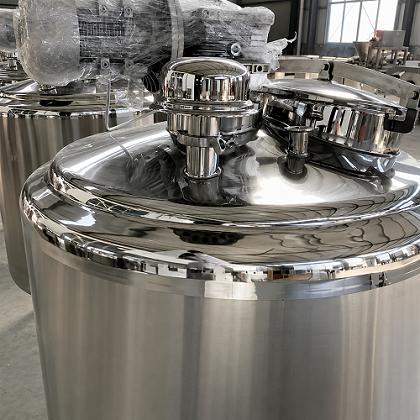

For a sterilization tank, the product-contact surface should land at Ra ≤ 0.8 µm, and Ra ≤ 0.4 µm for pharma. Electropolishing is the better finish when you can get it: it smooths the peaks and valleys where microbes hide and leaves a passive, chromium-rich layer that resists corrosion. We build to ASME BPE surface criteria on request for biopharma duty.
Two design details matter as much as the finish:
- No dead legs. Every branch, fitting, and sensor port should drain. A pocket that holds product is a pocket that grows bacteria. Sanitary tri-clamp fittings, not threaded joints, are the standard.
- Full-penetration welds, then passivate. Welding disturbs the passive layer. Citric-acid passivation (ASTM A967) rebuilds it. Skip this and even 316L seams will stain and pit.
Core Components
| Component | What it does |
|---|---|
| Inner shell | Product-contact wall, 304 or 316L, polished (Ra ≤ 0.8 µm typical) |
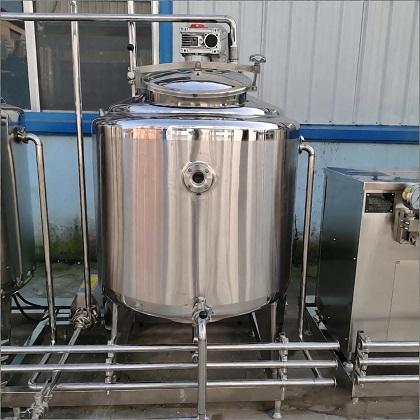
| Heating jacket | Steam or electric; wraps the shell for indirect, even heating |
| Agitator | Keeps temperature even, no scorched wall or cold pocket |
| Temperature control | PID / PLC, ±0.5°C accuracy, programmable hold per recipe |
| Insulation | Polyurethane foam; cuts heat loss, protects operators |
| CIP / SIP system | Automated clean and steam sanitize between batches |
| Valves & fittings | Sanitary tri-clamp, no dead legs |
The part that fails first is almost never the shell. It is a jacket seal or a valve seat that lets the heating medium creep where it should not. That is why sanitary tri-clamp fittings and a real SIP cycle matter more than the brochure implies.

Typical Specification Table
| Parameter | Details |
|---|---|
| Product type | Stainless steel sterilization tank (batch / semi-batch) |
| Available grades | SUS304, SUS316L |
| Capacity range | 50 L – 5,000 L (larger on request) |
| Sterilization temp | 60–95°C |
| Hold time | Adjustable, seconds to minutes per recipe |
| Heating method | Steam jacket or electric heating |
| Cooling method | Chilled water or glycol loop through jacket |
| Temperature accuracy | ±0.5°C |
| Inner surface finish | Ra ≤ 0.8 µm (≤ 0.4 µm pharma), mirror or electropolished |
| Insulation | Polyurethane foam, ~20–30% energy saving vs open heating |
| Control | PLC + touchscreen, programmable recipes, data logging |
| Cleaning | CIP automated; SIP (≈121°C steam) between batches |
| Fittings | Sanitary tri-clamp, no dead legs |
| Standards | GMP, FDA, 3-A Sanitary, EHEDG, ASME BPE (per spec) |
| Pressure rating | Up to ~0.6 MPa for steam sterilization |
| MOQ | 1 unit (custom build) |
| Processing | Drawing design, custom fabrication, on-line install support |
Where They Get Used
| Industry | Typical duty | Preferred grade | Finish |
|---|---|---|---|
| Dairy | UHT milk, cream, yogurt base | 304 / 316L | Mirror, Ra ≤ 0.4 |
| Beverage | Juice, functional drinks, soy milk | 304 | No.4 / mirror |
| Pharmaceutical | Sterile water, injections, prep fluids | 316L | Electropolished, Ra ≤ 0.2 |
| Biotech | Cell media, reagents | 316L | Electropolished, ASME BPE |
| Food | Sauces, purees, ready-to-eat liquids | 304 / 316L | Mirror |
| Cosmetic | Creams, emulsions | 316L | Electropolished |
For upstream prep and blending, the same line usually pulls in a jacketed mixing tank or a vacuum mixing tank, and a heating and cooling tank for temperature steps. Dairy lines add a milk cooling tank and fermentation tanks downstream.
How to Size and Specify One
Write these down before you ask for prices, or you will collect quotes you cannot compare:
- Daily volume — Size to 4–6 hours of processing, not your peak hour. Peak-hour sizing wastes capital.
- Product list — This decides grade and how much agitation you need.
- Target temperature and hold — UHT band or pasteurization band, per product.
- Heating source — Steam on site, or do you need electric?
- Cooling method — Chilled water, glycol, or ambient?
- Automation level — Manual, semi-auto, or full PLC with recipe memory and data logging.
- Hygiene standard — Surface finish (Ra), CIP/SIP requirements, sanitary fittings.
- Integration — Will it feed an aseptic filler or a jacketed mixing tank downstream?
Hand a supplier these eight points and the quotes line up. Skip them and every shop quotes a different assumption, so you end up comparing ghost numbers.
Maintenance: What Actually Keeps It Clean
A sterile tank is not install-and-forget. The habits that hold up:
- Run CIP and SIP every changeover. Skipping a cycle to save time is how a line goes down for a recall, not a cleaning.
- Passivate after any weld or grind. Field modifications disturb the passive layer; rebuild it.
- Watch the jacket seal and valve seats. They fail before the shell. Inspect on the schedule the manual gives you.
- Log every cycle. Data logging is not bureaucracy. It is your evidence the tank did its job when a batch is questioned.
- Keep chlorides off the surface. Salt and chlorine sanitizer residues, left to dry, concentrate and pit. Rinse and passivate.
How to Size and Specify One
Write these down before you ask for prices, or you will collect quotes you cannot compare:
- Daily volume — Size to 4–6 hours of processing, not your peak hour. Peak-hour sizing wastes capital.
- Product list — This decides grade and how much agitation you need.
- Target temperature and hold — UHT band or pasteurization band, per product.
- Heating source — Steam on site, or do you need electric?
- Cooling method — Chilled water, glycol, or ambient?
- Automation level — Manual, semi-auto, or full PLC with recipe memory and data logging.
- Hygiene standard — Surface finish (Ra), CIP/SIP requirements, sanitary fittings.
- Integration — Will it feed an aseptic filler or a jacketed mixing tank downstream?
Hand a supplier these eight points and the quotes line up. Skip them and every shop quotes a different assumption, so you end up comparing ghost numbers.
Why Wanzhi Machinery
We build stainless steel sterilization tanks in 304 and 316L contact-surface builds, with electric or steam jackets, variable-speed agitation, PU insulation, and PLC control holding ±0.5°C.
The part worth knowing: we are not only a tank fabricator. Wanzhi Group runs both a steel division (wanzhisteels.com) and this machinery division, so the 316L contact shell starts as coil we rolled ourselves and gets welded, polished, and SIP-tested here. That keeps traceability tight from raw material to finished vessel, which is what auditors and your own QA team want to see. When a buyer needs a 316L vessel with a certified chloride-resistant interior, we can supply the sheet and build the tank, so the grade is right from coil to commissioning.
We have put sterilization and tank systems into food, beverage, and pharma plants across 20+ countries, and the habit that serves buyers best is matching the grade and size to the actual duty. The expensive option is only the right option when your product demands it.
FAQ
It heats a liquid product to a temperature that kills pathogens and spoilage organisms, holds it under control, then cools and discharges it inside one sanitized vessel. Plants use it for milk, juice, sauces, pharmaceutical fluids, and biotech media where microbiological safety decides shelf life and compliance.
A sterilization tank actively treats the product with heat or steam. An aseptic (sterile) storage tank sits downstream and just holds already-sterilized product in a contaminant-free environment until filling. Most lines need both: sterilize in one, store in the other.
304 is fine for standard milk, juice, and neutral beverages. Specify 316L when you run high-acid products, coastal or high-chloride water, or aggressive chlorine sanitizers, because the molybdenum resists pitting at the welds. For any welded tank, use the low-carbon “L” grade to avoid sensitization.
Yes, if it runs regulated product. CIP cleans the shell between batches without teardown; SIP steams it sanitize before the next batch. Spec both as standard. Shops that charge extra for SIP tend to have tanks that quietly fail hygiene audits.
Size it to 4–6 hours of daily processing, not peak hourly output. Batch tanks commonly run 50 L to 5,000 L. If you need steady 1–10 t/h throughput, a continuous UHT sterilizer fits better than a batch tank.
The product-contact surface should be Ra ≤ 0.8 µm, and Ra ≤ 0.4 µm for pharma, with electropolishing (Ra 0.05–0.2 µm) for the highest hygiene. Finish matters as much as grade, because rough surfaces harbor biofilm.
Pharma duty typically calls for GMP and FDA compliance, 3-A or EHEDG hygienic design, and ASME BPE surface criteria. These are met through material certs, finish records, weld maps, and passivation proof, not a single certificate.
Related Products
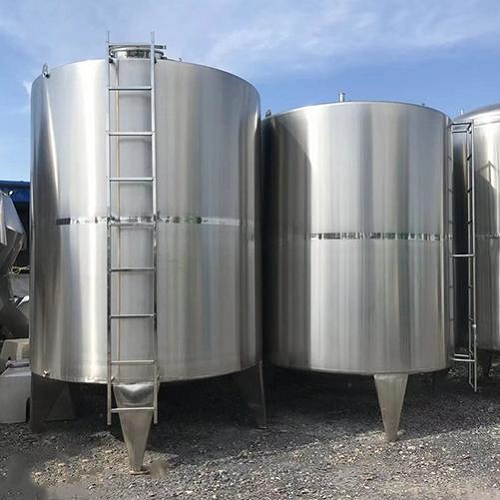
SS water storage tank
SS water storage tank: Types, Specs and How to Choose SS water storage tank Introduction…

CIP cleaning tank
Stainless Steel CIP cleaning tank CIP on-site cleaning tank Introduction A CIP cleaning tank, short…
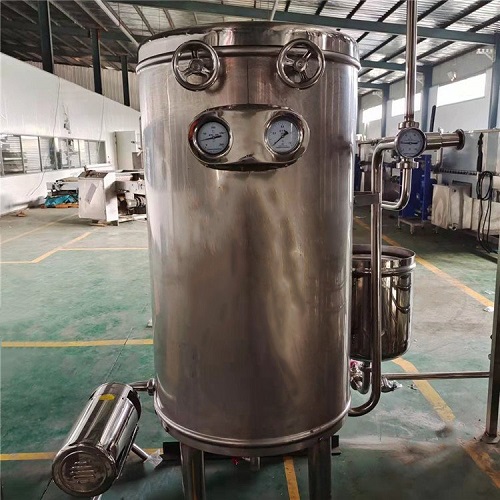
UHT sterilization tank
UHT sterilization tank UHT sterilization tank Introduction Every liquid food line eventually hits the same…
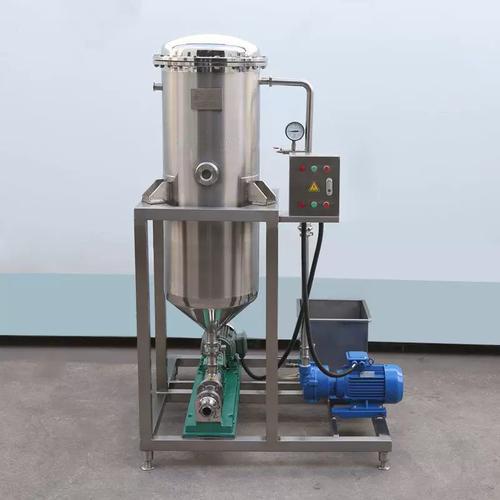
Vacuum degassing tank
vacuum degassing tank vacuum degassing tank Introduction If you run a juice, dairy, or soy-milk…
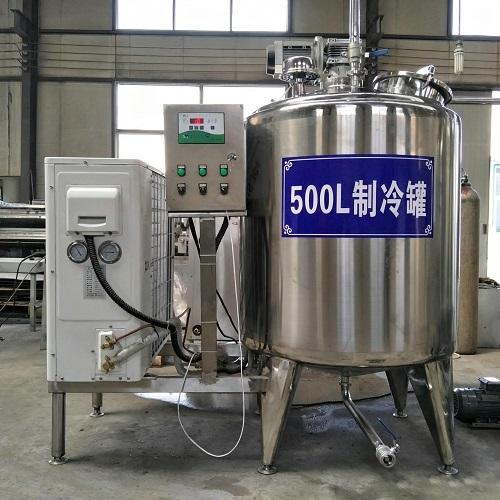
Stainless Steel Vertical Cooling Tank
Stainless Steel Vertical Cooling Tank Stainless Steel Vertical Cooling Tank Introduction A stainless steel vertical…
Contact Us