
How to Choose the Right Stainless Steel Tank: 304 vs 316L, Capacity and Jacket
A stainless steel tank looks simple from the outside. Pick a size, pick a grade, done. The trouble shows up about six months later, when the wrong grade starts pitting under your brine, or the tank you sized for peak season will not fit through the door, or the product never reaches the temperature your recipe needs because there is no jacket. This guide walks through the three decisions that decide the rest: material grade, capacity, and jacket. Get those right and the rest is detail.
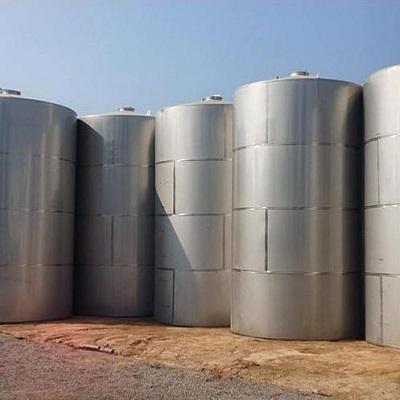
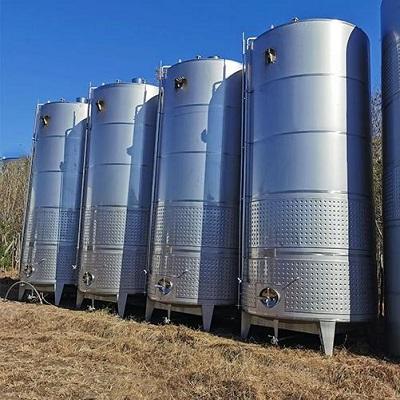
What a stainless steel tank is for
Most food and beverage lines need a vessel that does at least one of three jobs: hold a liquid, mix it, or change its temperature. A storage tank just holds. A mixing tank adds an agitator. A jacketed tank wraps the shell in a second chamber so you can heat or cool the product without touching it directly. Wanzhi builds all three, from 50 liter pilot units up to 10,000 liter production tanks, in 304 or 316L stainless steel. Start by naming which job your tank has to do, because that one answer decides most of the rest of the spec sheet. You can see the full range on our stainless steel tank page.
Grade is the first decision, and the one people skip
The two grades you will be quoted are 304 and 316L. Both are food safe. The difference is one element: 316L carries molybdenum, which makes it far more resistant to chlorides and acidic products.
304 is the workhorse. It handles water, milk, most fruit juices, and neutral pH liquids without complaint, and it costs less. If your product is forgiving and your cleaning water is not heavily chlorinated, 304 gets the job done.
316L earns its price when the product is aggressive. Brine, soy sauce, tomato paste, citrus, wine, and anything with salt or acid will eventually mark 304. 316L shrugs those off. The L means low carbon, which matters for welded tanks because it resists the corrosion that can start at a weld seam.
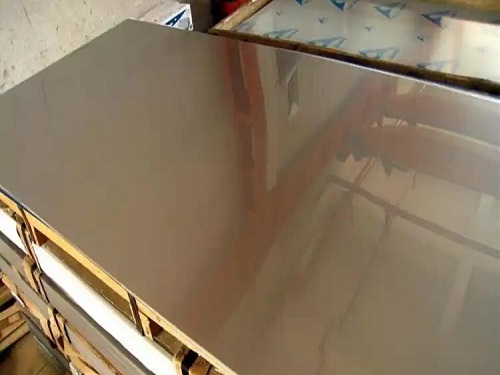
This is where our sister company comes in. Wanzhi Steel supplies the food grade sheet and tube we fabricate from, and their 316 stainless steel sheet spec and 304 stainless steel bar reference are worth a read if you want the metallurgy behind the grade choice. For a broader look at the material family, the stainless steel tube page covers the grades we source.

| Grade | Best for | Avoid | Relative cost |
|---|---|---|---|
| 304 | Water, milk, neutral juices, CIP cleaned lines | Brine, soy, citrus, wine, high chloride water | Lower |
| 316L | Salt, acid, wine, coastal and humid plants | Budget only projects with a neutral product | Higher |
Sizing capacity without overbuying
Capacity looks like a simple number, but two mistakes are common. People buy too small and run out mid batch, or buy too large and pay for steel and floor space they never use.
Work from batch, not guess. Take your largest single batch volume, add headspace of about 15 to 20 percent so it does not boil over or aerate, and that is your minimum working volume. If you run several batches a day into one tank, size for the daily total plus a buffer.
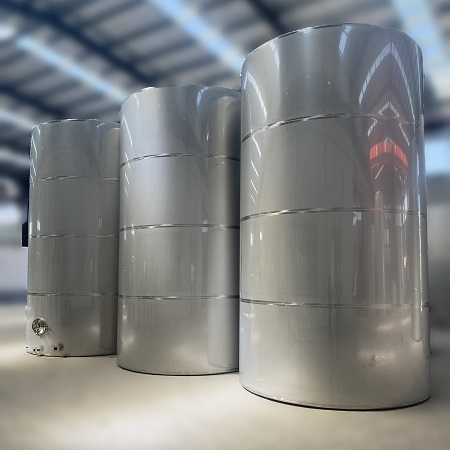
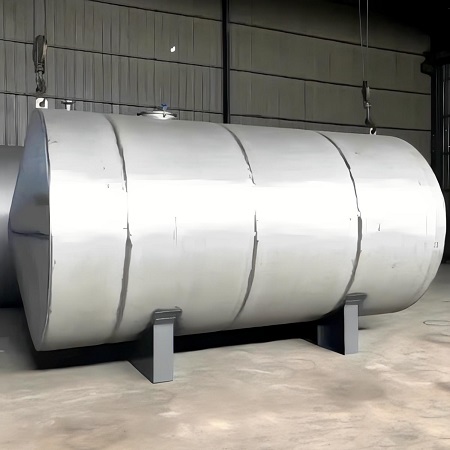
Do not forget the footprint. A 5,000 liter tank is tall, and a tall tank may not clear your doorway or your mezzanine. Our 5,000 L storage tank ships as a welded unit, so check the route from truck to install point before you commit. For sites with low ceilings, a horizontal tank often fits where a vertical one will not.
The jacket question
A jacket is the second chamber wrapped around the tank shell. It lets you heat or cool the product through the wall instead of dropping in a coil or a heating element. You need one any time temperature is part of the process: pasteurization, crystallization, fermentation control, or simply holding a product at a set point.
There are three jacket styles. A dimple jacket is the common choice, cheap to make and good for most heating and cooling. A limpet coil jacket wraps a pipe spiral around the shell and handles higher pressures and faster heat transfer. A half pipe jacket is the heavy duty version for demanding duties. If your product just sits and stays cold on its own, skip the jacket and save the money.
The jacketed stainless steel mixing tank is the model most food lines end up with, because it both agitates and controls temperature in one vessel. For heating only duties like a kettle, our steam jacketed kettles and electric jacketed kettles cover the smaller batch range.
The specs that quietly decide your result
Beyond grade, capacity, and jacket, a few details separate a tank that lasts from one that annoys you.
Surface finish. A 2B mill finish is fine for storage. For products that stick or need sanitary cleaning, a polished Ra 0.8 or better interior cuts cleaning time and residue.
Insulation. An insulated tank holds temperature and saves energy. Our cylindrical insulated water tank is the obvious example for hot water duty.
Agitator type. A slow anchor agitator suits thick pastes. A high shear head emulsifies. The high shear emulsifying tank and the high and low speed mixing tank cover opposite ends of that range.
Pressure rating. If you are degassing or running CIP at pressure, the vacuum degassing tank and pressure rated designs matter. Confirm the rating before you buy, because retrofitting is not an option.
How we build them
Every Wanzhi tank is fabricated from food grade stainless sheet and tube, with material certificates on request. We offer both 304 and 316L, ISO 9001 certified, and we build to your drawing, including custom nozzles, agitators, and jacket configurations. Because we source steel through our own group, we can trace the material back to the mill, which matters if your buyer or auditor asks. More on the group behind the steel is on the Wanzhi Steel about page.
Cleaning and maintenance
A tank is only as clean as its last CIP cycle. Design for it from the start: sloped bottom for full drain, rounded corners, and accessible manways. Polish the wetted surface so product does not trap. Most of our tanks are built for CIP, but a periodic manual pass with the right cleaner keeps the finish intact. If you run 316L in a salty duty, a quick post clean rinse stops chloride sitting on the surface.
Conclusion and next step
The tank you need comes down to three answers: 304 or 316L, how much batch volume plus headspace, and whether temperature is part of the process. Nail those and the model almost chooses itself. If you want help sizing one for your line, our team quotes within 24 hours and can build to your drawing.
Browse the full stainless steel tank range, or look at the jacketed mixing tank and stainless steel mixing tank to see the most common configurations.
Need a quote? Tell us your product, batch volume, and whether you need heating or cooling. We reply with details and price within 24 hours.Inquiry Form
Latest Articles
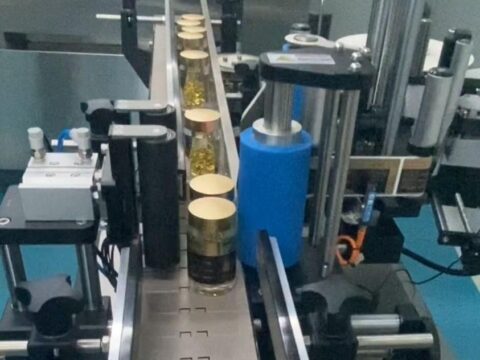
Round bottle labeling machine: how it works and how to choose
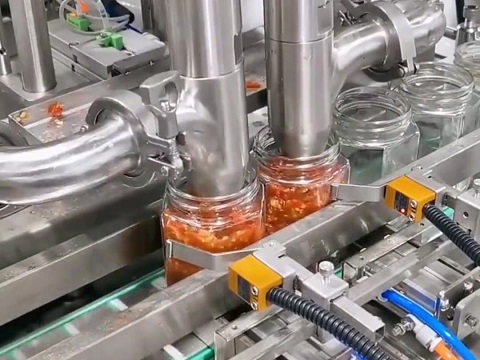
How to choose a paste filling machine for sauce and ketchup
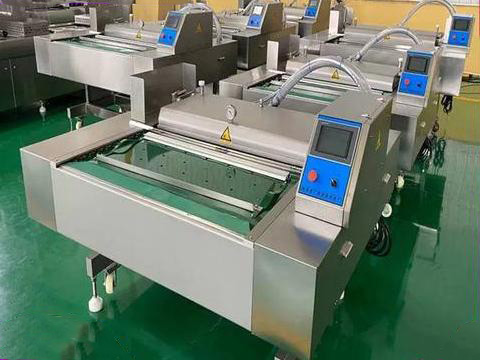
Vacuum packaging machine buying guide
High Shear Emulsifier
Colloid mill for peanut butter, tomato sauce and chili paste
Latest Products
Product Categories
Colloid Mill
- Vertical Colloid Mill
- Split Colloid Mill
- Horizontal Colloid Mill
- Commercial Peanut Butter Machine
- Tahini Machine
- Chili Sauce Grinder
- Nut Butter Grinder
Stainless Steel Tank
- Milk Cooling Tank
- Stainless Steel Mixing Tank
- Cylindrical Stainless Steel Insulated Water Tank
- Horizontal Stainless Steel Water Tank
- Vertical Stainless Steel Water Storage Tank
- Stainless Steel Reactor
- Conical Fermentation Tank
Extraction Machine
Filling Machines
Tomato sauce Production Line
Contact Us
- Mobile/Wechat: +8618595716541
- Whatsapp: +8618736065220
- Email: info04@wanzhisteel.com
- Address: 10F, Building B, Erqi Center, Erqi District, Zhengzhou City, Henan Province, China