
Horizontal vs vertical stainless steel storage tanks: how to choose for a plant or a home
what separates the two layouts
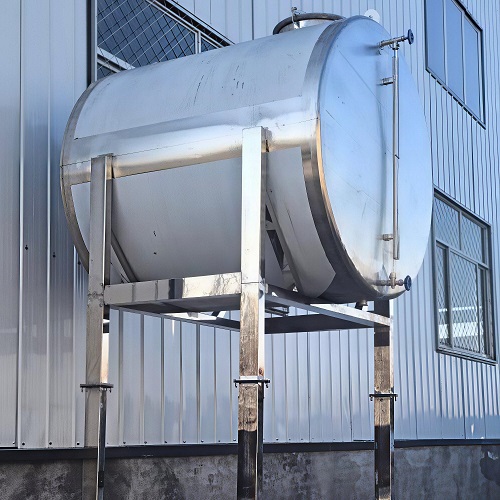
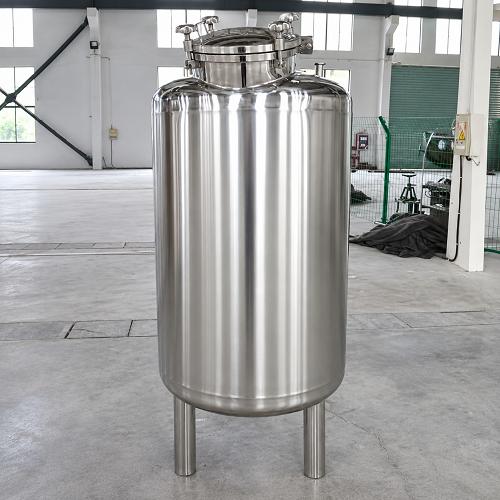
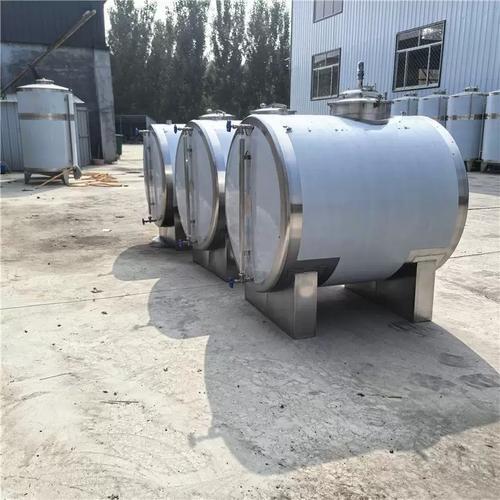
Buyers comparing a horizontal vs vertical stainless steel storage tank usually arrive with a capacity in mind and no drawing of the room, which is where most wrong orders start. Lay the same cylinder on its side and it needs more floor but less headroom, drains from a different place, and sits on saddles instead of legs. Our horizontal stainless steel water tank lies on its axis and rests on two to four saddle supports, while the vertical stainless steel water storage tank stands on legs or a round flange base.
Both shells come from the same 304 or 316L sheet, so grade is not what you choose here. Shape decides the installation, not the water. The water storage tank category lists vertical, horizontal and mobile builds. Our welded round tanks run from 200 L to 10 tons, as the 304 stainless steel water tank page states, and that band covers homes, small workshops and plant utility loops. Above 10 tons we quote bolted square modular tanks, assembled on site from panels rather than welded as one shell.
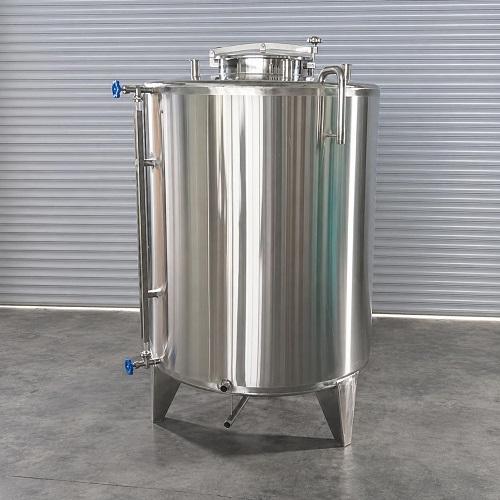
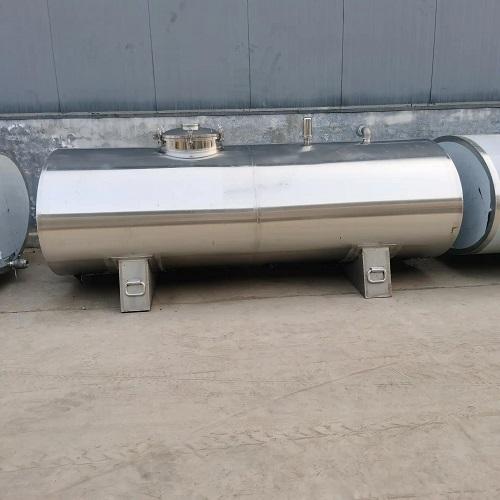
the numbers side by side
| Item | Horizontal water tank | Vertical water tank |
|---|---|---|
| Capacity in regular supply | 0.5 to 10 tons | 0.3 to 10 tons |
| Overall height | 1.0 to 4.0 m | 1.0 to 2.46 m for 500 L to 10 t |
| Tank length | set by capacity | set by diameter and height |
| Wall thickness | 1.5 to 3 mm for 1 to 10 t | 1.2 to 2 mm for 500 L to 10 t |
| Bottom | cylindrical shell with end caps | flat, conical or beveled |
| Support | 2 to 4 saddle sets | legs or round flange base |
| Connections | DN25 to DN200 | DN25 to DN200 |
| Working pressure | mainly atmospheric, up to 0.1 MPa | atmospheric as standard |
| Basic fittings | manhole, inlet, outlet, drain, vent | sanitary manhole, cleaning ball, level gauge |
Read the capacity row first. Most tanks we build sit below 10 tons, and within that band both layouts are open, so the room decides the shape more often than the volume does. Wall thickness, support count and nozzle sizes follow from the capacity, so we size those after the volume is fixed rather than quoting a brochure maximum. Our 5000L storage tank sits near the middle of that band: 304 sheet at 2 mm, 1.8 m diameter, 2.7 m high, offered in both layouts. Larger volumes move to bolted square modular tanks or a custom drawing.
common sizes up to 10 tons
These are the welded 304 round tanks we quote most often, taken from the 304 stainless steel water tank parameter table. Figures describe the vertical build; horizontal shells of the same volume run longer and lower.
| Volume | Plate | Diameter | Tank height |
|---|---|---|---|
| 500 L | 1.2 mm | 0.56 m | 1.00 m |
| 1 t | 1.5 mm | 1.05 m | 1.24 m |
| 2 t | 1.5 mm | 1.20 m | 1.85 m |
| 3 t | 1.5 mm | 1.45 m | 1.85 m |
| 5 t | 2 mm | 1.62 m | 2.46 m |
| 10 t | 2 mm | 2.30 m | 2.46 m |
Check the 10 t row before you approve a drawing: 2.3 m across and 2.46 m tall is already a wide load for a plant room door. Horizontal versions of the same volume need more floor and less headroom.
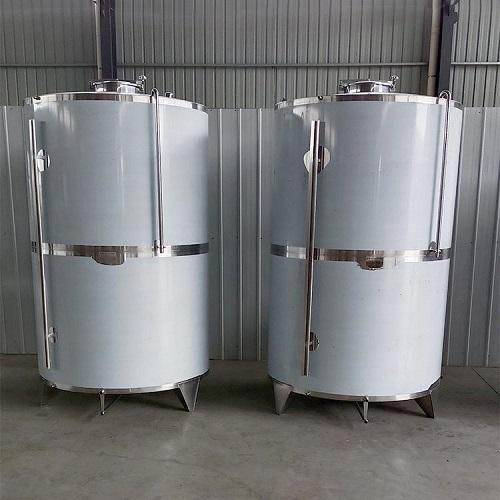
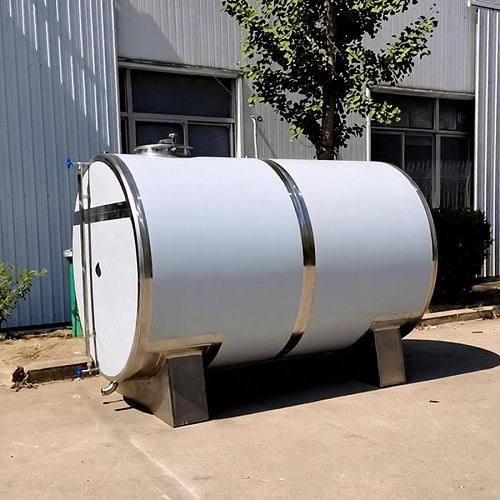
space, height, and where the tank sits
footprint and floor load
Vertical tanks win when floor area is tight. Our SS water storage tank guide puts vertical units on legs on rooftops and in machine rooms because the footprint stays small and gravity feed is easy. Load concentrates under the legs, though, so a roof slab or a concrete pad has to be checked before the tank is ordered. Horizontal units spread the same volume over a longer run of floor and need saddle foundations. Our horizontal tank weight table gives 80 to 100 kg for a 1 ton 304 shell and 700 to 850 kg for a 10 ton one, before the water is added.
ceiling height and access
Low ceilings reverse the answer. Basements, garages and plant rooms with pipe racks under the ceiling suit the horizontal layout, and our 304 stainless steel water tank page lists semi-buried installation as an option. Site delivery matters too: a long horizontal shell needs a straight access path, while a tall vertical shell needs headroom and a lifting plan. Measure the doorway and the turning radius before you approve a drawing.
gravity feed and pump head
Height helps a gravity system. Vertical tanks put the outlet higher off the floor, which gives a little more static head to a downstream line. Where that is not enough, a stainless steel pressure water tank holds line pressure and lets a pump start less often. Horizontal tanks pair with the same pressure unit when the room will not take a tall shell.
draining, cleaning, and sediment
bottom shapes and outlets
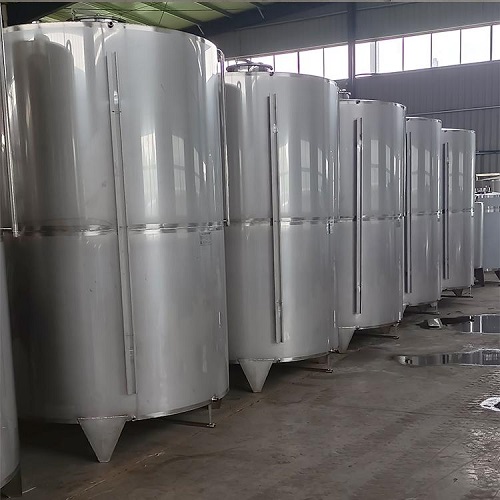
Sediment is the reason bottom shape gets its own line on the drawing. Vertical builds can be ordered with a flat, conical or beveled bottom, and the conical version directs solids toward one low point. Horizontal shells use a bottom drain plus a water flow path designed for near complete emptying, per our horizontal tank page. Either way, put the drain where a hose can reach it.
cleaning access
Cleaning needs a way in. Vertical units ship with a sanitary manhole, a cleaning ball and a level gauge as basic configuration, and CIP connections can be added for a plant loop. Our CIP cleaning tank sits in that loop on food and beverage sites. FDA safe food handling guidance sets out the familiar clean, separate, cook and chill steps; on a storage tank the relevant habit is keeping the product path clean between fills. FoodSafety.gov carries the same four steps for small kitchens and home users.
For a household tank, the 304 stainless steel water tank maintenance notes call for draining and wiping the inner wall about once a month with a soft cloth, and they warn against steel wool because scratches hold residue. Leave clearance around the shell for thermal expansion as well.
choosing for a factory or a plant
capacity tied to peak draw
Plants size from the busiest hour, not the daily average. Our SS water storage tank guide says capacity should follow draw and refill rate, because a site with a morning peak needs more buffer than a steady line. Tell us the peak hour demand and the refill rate and we size from those two numbers. Within our regular range up to 10 tons, the vertical tank and the horizontal build are both available, so floor area and cleaning access settle the shape. Bigger volumes are checked case by case.
grade, finish, and cleaning loop
Process water and food contact work push the specification up. Take the 5000L stainless steel storage tank: 304 sheet at 2 mm, a 400 mm manhole, a DN50 flange, argon arc welding and a polished interior at Ra 0.6 micrometer or better, with both builds available. Its page also lists a filter type breather and radiographic or dye penetrant testing on every critical weld. Plants that switch products between runs add CIP spray balls and keep those test records. Our transport tank page describes the mill certificate, TIG welding with argon purge, and hydrostatic checks an audited site usually asks to see.
If the stored liquid is a fuel or an oil rather than water, the horizontal oil tank and vertical oil tank pages carry their own selection rules: horizontal for height limits, frequent cleaning and sediment prone liquids, vertical for volatile fuels and open sites with room to spare.
choosing for a home or a small workshop
how much water a household needs
Home buyers work from a different number. Our water tank category groups small units under 1 ton for household use, and the 304 stainless steel water tank page gives 200 L as the smallest size with regular steps at 500 L, 1, 2, 3, 5 and 10 tons. That 10 ton ceiling is where our welded round range stops, so a rural house, a small irrigation buffer, a guesthouse or a small plant utility loop all come from the same set of shells. Pick from the outage you want to cover, then add a margin for the morning draw.
where a small tank can go
Installation usually decides the shape before capacity does. Rooftops, courtyards and pump rooms take the vertical build, while garages, basements and semi-buried spots take the horizontal one. Solar and heat pump hot water loops add another requirement, and our cylindrical insulated water tank uses a 50 mm polyurethane layer as standard, 80 to 100 mm reinforced, with a 0.6 to 1.5 mm inner tank and a 0.4 to 0.8 mm outer shell. Its 24 hour temperature drop is rated at 3 to 5 degrees Celsius. Home sizes start at 0.3 and 0.5 tons. WHO drinking water guidance notes that covering household storage containers cuts both insect breeding and fecal contamination. Our 304 stainless steel water tank page describes a fully welded sealed shell and an insect screen on the overflow pipe for the same reason.
For a shop that moves liquid between sites, the transport tank build adds baffles, lifting lugs and a skid base rather than a taller shell.
material grade: 304 or 316L
Britannica’s stainless steel entry explains the base chemistry: chromium at roughly 10 to 30 percent forms the passive film, and the common 304 grade is the 18/8 alloy used across dairy and food processing. Our welded water tanks use SUS304 or SUS316L, and the choice follows the environment rather than the tank shape. Indoor potable water and general utility water run on 304. Coastal air, chlorinated water, acidic product or a chemical site call for 316L, which adds 2 to 3 percent molybdenum for pitting resistance, as the Wanzhi Steel 316 sheet page sets out. For shell stock, 304 stainless steel coil is the grade we weld from.
Neither layout changes that rule, so decide grade first and shape second, or you will pay for 316L on a tank that never sees a chloride. The 304 tank page puts service life beyond 20 years when the shell is cleaned and the welds are inspected on a schedule.
decision table by buyer type
| Buyer | Typical need | Layout we quote | Why |
|---|---|---|---|
| Food or beverage plant | process water, peak hour buffer, CIP loop | vertical, 1 to 10 tons | small footprint, cone bottom, cleaning ball, simple line integration |
| Workshop with low ceiling | utility water under pipe racks | horizontal, 0.5 to 10 tons | fits under beams, stable on saddles, near complete drainage |
| Farm or irrigation site | open ground, seasonal or moving use | horizontal or mobile skid | low profile, easy to site and relocate |
| Rural home or guesthouse | outage buffer, 200 L to 1 ton | vertical on a roof or horizontal in a garage | follows the space you have, not the catalog |
| Solar or heat pump hot water | hot water held between cycles | insulated cylindrical, either layout | polyurethane layer limits heat loss |
| Coastal or chemical site | chloride exposure | either layout in 316L | grade matters more than orientation here |
Use the left column to find your row, then read across to the layout we would quote. Two buyers can order the same 5,000 L tank in different shapes, which is why the 5000L storage tank page lists both vertical and horizontal builds. Send a site photo with the enquiry and the shape usually settles itself.
accessories worth specifying
Nozzles cause more delays than shells. Inlet, outlet, drain, overflow and vent sizes should match your pipework, and our water tank pages list DN25 to DN200 as the working range. Our 304 tank sheet runs 0.8 to 3.0 mm with a working temperature of -10 to 120 degrees Celsius and a choice of threaded, quick clamp or flanged ports. Level gauges, manholes, ladders, insulation and agitators then follow from how the tank is used. Our SS water storage tank guide lists the common add-ons, including a level transmitter, a CIP return line and a heating jacket for cold rooms. Hot water or outdoor cold water needs insulation; the insulated tank page gives 50 mm as standard and 80 to 100 mm as the reinforced option. Pressure duty is a separate conversation, since the pressure water tank range is rated at 0.6 to 2.0 MPa while standard storage tanks sit near atmospheric pressure.
FAQ
Neither layout is better on its own. Vertical tanks save floor space and lift the outlet higher; horizontal tanks fit low ceilings and are easier to site on open ground.
Size from peak hour draw and refill rate, then check floor area, ceiling height and the cleaning loop. Within our regular range up to 10 tons, either layout can work.
Our welded round tanks run from 200 L to 10 tons, with regular steps at 500 L, 1, 2, 3, 5 and 10 tons. Small units under 1 ton cover most outage buffers. Size from the hours of supply you want to hold.
Yes. Our 304 tank page lists basements, garages and semi-buried installation for horizontal builds, provided there is a straight access path for delivery.
No. Grade follows the water and the environment. Use 304 for indoor potable water and 316L for coastal, chlorinated or acidic duty in either layout.
No. We quote per configuration, since capacity, wall thickness, grade, fittings and insulation all change the figure. Send your volume and site details for a quote.
send us your site details
We build to the drawing rather than pulling a tank off a shelf. Send the stored liquid, the volume, a site photo with ceiling height and doorway width, and the grade you need, and our engineers return a layout and a quote. The stainless steel tank category and the water storage tank category show the standard builds if you want to compare first. Contact our team with those four items and we will size the tank for the site you have.
Inquiry Form
Latest Articles
Sesame Grinding Machine for Tahini: How to Choose
Meatball Former for Fish Balls and Meat Paste
Meatball forming machine how to choose
Horizontal vs Vertical Stainless Steel Tank
Sesame Peanut Butter Machine
Latest Products
Product Categories
Stainless Steel Tank
- Stainless Steel Wine Tanks
- Stainless Steel Water Storage Tank
- Stainless Steel Fermentation Tanks
- Stainless Steel Jacketed Kettle
- Pasteurizing Machine
Meat Processing Machine
Fruit and VegetableProcessing Machinery
Oil Press Machines
Colloid Mill
Extraction Machine
Packaging Machinery
Contact Us
- Mobile/Wechat: +8618595716541
- Whatsapp: +8618736065220
- Email: info04@wanzhisteel.com
- Address: 10F, Building B, Erqi Center, Erqi District, Zhengzhou City, Henan Province, China