
Jacketed Stainless Steel Mixing Tank Choose: How It Works, Jacket Types, and How to Choose
Think of the jacketed stainless steel mixing tank as the vessel your plant relies on to heat, cool, and blend product in one closed system. We build them at Wanzhi Machinery for food, dairy, beverage, and pharmaceutical buyers in more than 100 countries. When steady temperature control and a sanitary surface both matter, one tank can replace separate kettles, chillers, and mixers.
what this guide covers
This guide walks through what the equipment is, where it fits in a production line, and the specs that matter before you request a quote. We cover heat transfer jacket types, the difference from single-wall tanks, and the mistakes that push lead time and cost up. You can open the jacketed stainless steel mixing tank product page for drawings and options, or browse our full range of stainless steel tanks for other capacities and designs.
Most buyers read this before they talk to our engineering team. The numbers below come straight from our standard build sheet, so you can size and specify with confidence rather than guessing from a catalog.
what is a jacketed stainless steel mixing tank?
Jacketed stainless steel mixing tank is a closed stainless vessel with a double-wall shell, the jacket, wrapped around the inner tank, where a heat-transfer medium flows to heat or cool the product and an agitator keeps it moving for precise temperature control.
The jacket is the gap between the inner tank and an outer shell. Instead of wrapping a heating element against the steel, you circulate steam, hot water, thermal oil, or chilled water through that gap. Heat moves through the tank wall evenly, so the batch warms or cools without hot spots that scorch or freeze product.
We build these tanks from 304 stainless steel as standard, with 316L available for corrosive or high-purity lines. Inner surfaces are mirror polished to Ra 0.4 micrometer or better, which meets sanitary needs for food and pharma. The agitator runs from zero to 200 rpm with stepless control, so you can gentle-stir a sauce or torque through a thicker paste.
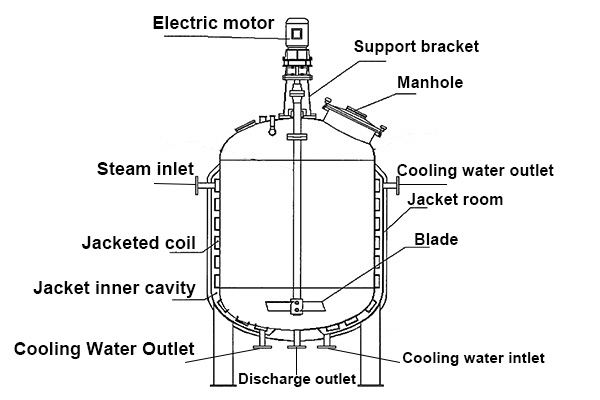
anatomy of the tank
A few parts define the build. Inside, the tank holds the product. Around it, the jacket wraps tight. From the top, the agitator shaft drops in to drive the impeller. Top and bottom carry manways, inlets, and a discharge valve. Utilities connect at the side for the heat medium in and out, and a CIP spray ball sits near the top for cleaning.
Stainless is the right base material because it resists rust, tolerates daily washdown, and keeps a food contact surface that passes audit. The polish on the inside is not decoration. It removes crevices where bacteria hide, which is why sanitary codes treat surface finish as a requirement, not a preference.
what is a jacketed mixing tank used for?
Temperature control is the reason plants buy this equipment. For food, dairy, and beverage production, a jacketed mixing tank holds product in the right temperature band, which stops bacterial growth and protects texture, color, and flavor. The principles of food preservation apply directly here: heat or cold, applied and held correctly, keeps a batch safe and saleable.
- Dairy: pasteurizing, yogurt set, heating cheese milk. Plants use the jacket to bring milk to pasteurization temperature and hold it, then cool before the filler.
- Sauces and dressings: cook, blend, and cool in one tank. Ketchup, mayonnaise, and salad dressing all need heat to develop and cold to stabilize.
- Beverages: syrup prep, juice blending, cold stabilization. Sugar syrups dissolve faster under heat, and chilled juice stays clear.
- Confectionery: caramel, chocolate, gummy mass. These recipes scorch easily, so even wall heat protects them.
- Pharma and cosmetics: emulsions, gels, active blends, handled well in a stainless steel vacuum mixing tank. A held set point keeps potency and viscosity in spec.
Without a jacket, you depend on ambient cooling or separate kettles, and batches drift out of spec. A jacketed tank holds the set point so your QA team signs off without rework.
Maria runs a hot-sauce line in Guadalajara. Before she bought a jacketed tank, she cooked in open kettles and cooled in a walk-in, losing two or three batches a month to uneven temperatures. After installing a 2,000 L coil-jacket unit, her spoilage dropped to near zero and her fill rate climbed because every batch held the same set point.
how does jacketed mixing tank work?
Every batch moves through four steps. Each one maps to a part of the tank.
- Fill the inner tank with your product through the top manway or the inlet line.
- Circulate the medium in the jacket. Pump steam, hot water, thermal oil, or chilled water through the outer shell. For heating, the hot medium raises the wall temperature. For cooling, chilled water or glycol pulls heat out of the batch.
- Agitate the batch. The shaft-driven impeller turns from zero to 200 rpm, moving product across the heated or cooled wall so every part of the batch reaches temperature evenly.
- Discharge the finished product through the bottom outlet once it hits the target temperature and mix.
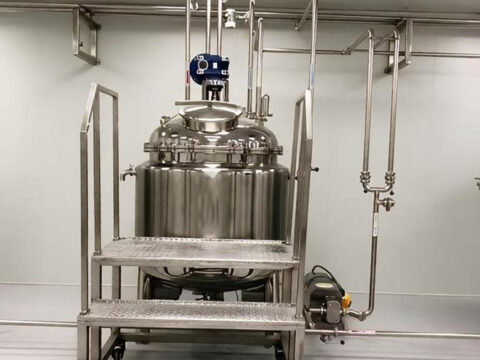
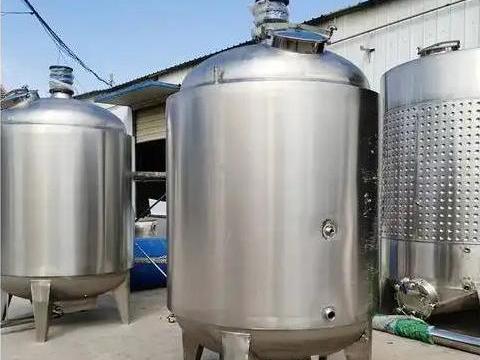
Heating and cooling share the same jacket, so one tank does both jobs. Steam and thermal oil reach high temperatures fast, which suits cook and caramelize steps. Hot water and electric elements give gentle, even heat for sensitive recipes. On the cooling side, water works for mild duty, while glycol and brine handle lower temperature holding.
Your agitator matters as much as the jacket. Slow speed keeps fragile particles intact. Higher speed breaks lumps and shortens blend time. Because the speed is stepless, your operator tunes the motion to the recipe rather than forcing the product into a fixed setting.
Efficiency comes from contact area. The more wall the medium touches, the faster the batch moves. That is why jacket type and tank size drive cycle time, not just the burner or chiller behind them.
jacket types: standard, coil, and honeycomb
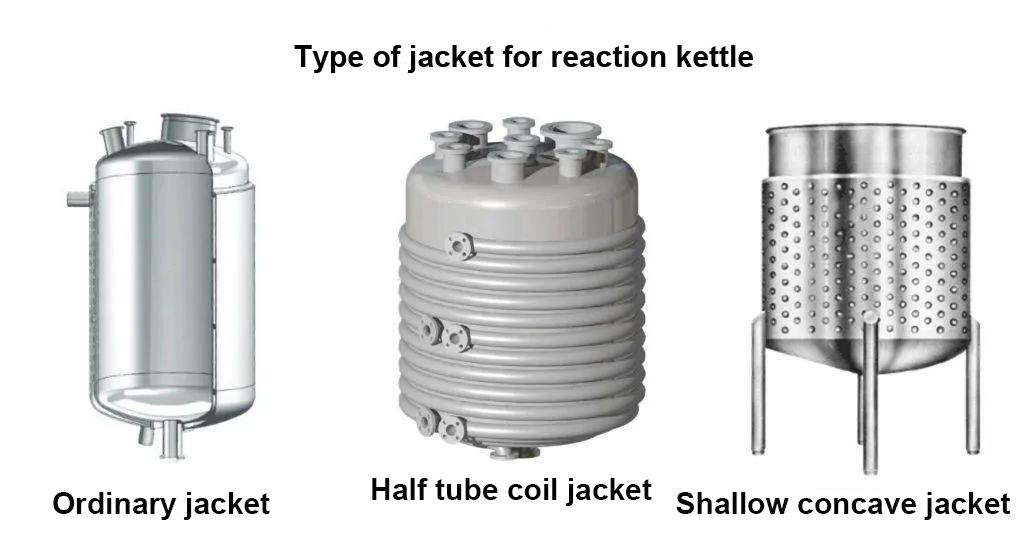
Jacket style changes how fast and how evenly the tank transfers heat. We offer three types, and each maps to a common industry term you will see in other suppliers’ quotes.
| Jacket Type | Structure | Best For | Heat-Transfer Efficiency |
|---|---|---|---|
| Standard (conventional) | Full-wrap shell around the tank; medium fills the chamber | Low to medium duty, gentle heating and cooling | Moderate |
| Coil (half-pipe coil) | Welded half-pipe coils on the tank wall, built for higher pressure | High heat duty, steam service, fast heat-up | High |
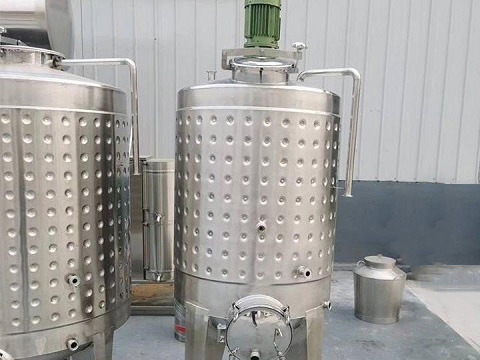
| Honeycomb (dimple) | Dimpled plate jacket, spot welded to the shell | Large tanks, even heating, lower cost per square meter | Good, even distribution |
Standard jackets are the simple choice. The outer shell wraps the whole tank and the medium fills the space. They suit lines that need steady, moderate heat without extreme pressure.
Coil jackets weld half-pipe channels to the tank wall. The smaller flow path lets you run higher pressure and pull more heat per area, which is why they fit steam and fast cook cycles. When a recipe needs to climb from ambient to 90 degrees C in minutes, coil is the type that delivers.
Honeycomb, also called dimple, uses a dimpled plate welded to the shell. The dimples create turbulence that spreads heat across a large surface at a fair price. For big tanks where wall area is the constraint, this type is usually the most cost-effective once wall area gets large. The dimple pattern also stiffens the shell, so large vessels need less added reinforcement.
single-wall vs double-wall (jacketed) mixing tanks
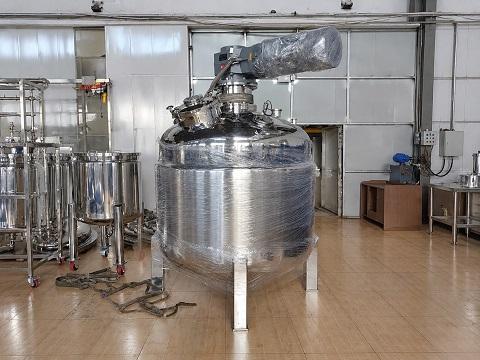
Single-wall stainless steel mixing tank has one shell and no jacket. It blends and stores but cannot heat or cool the product on its own. A jacketed, or double-wall, tank adds the outer shell for media circulation. Some buyers also call it a double jacketed stainless steel tank.
| Feature | Single-wall | Jacketed (double-wall) |
|---|---|---|
| Heating and cooling | None built in | Yes, via jacket |
| Temperature control | Ambient only | Precise, held set point |
| Best use | Blending, short holding | Cook, cool, pasteurize, hold |
| Cost | Lower | Higher |
| Process steps saved | Few | Many (replaces kettles, chillers) |
Pick single-wall when your product stays at ambient temperature and you only need to mix or hold. Pick jacketed when the recipe calls for any thermal step, from warming chocolate to cooling syrup.
The same logic shows up in reactors. If you want the deeper engineering comparison, read our post on single vs double wall stainless steel reactor. The wall decision drives cost and capability in both product families.
A note on budget: single-wall tanks cost less up front, but plants often buy a separate heater or chiller to cover what the jacket would have done. For any thermal recipe, the jacketed tank usually wins on total cost.
key specifications to check before buying
These numbers sit on our standard build sheet. Confirm each one against your recipe and utility before you ask for a quote.
- Capacity: 100 L to 50,000 L
- Material: 304 stainless steel, 316L optional
- Inner tank pressure: up to 0.6 MPa
- Jacket pressure: 0.2 to 0.8 MPa
- Working temperature: minus 10 to 180 degrees C (special designs to 250 degrees C)
- Agitator speed: 0 to 200 rpm, stepless control
- Motor power: 0.55 to 45 kW
- Inner surface: mirror polished, Ra 0.4 micrometer or better (food-grade, sanitary)
- Cleaning: CIP cleaning tank compatible, food-grade finish
why these specs matter
The sanitary finish is not a nice-to-have. For food and pharma lines, a smooth, polished surface stops product from sticking and makes cleaning fast. Our mirror polish meets FDA food safety requirements for contact surfaces. CIP piping lets your crew clean the tank without opening it. Audit teams look at surface roughness first, so spec it in writing.
Pressure ratings matter because they set the media you can run. A jacket rated to 0.8 MPa handles steam without strain. The inner tank at 0.6 MPa covers most product side needs. If your process pushes past these, tell our team early so we design the shell for it instead of reworking it later.
Temperature range sets what recipes the tank can run. The standard minus 10 to 180 degrees C band covers most food and beverage work. Special designs to 250 degrees C serve processes like caramel and some pharma steps.
Motor and speed set how the tank handles viscosity. A 0.55 kW drive suits thin liquids in a small tank. A 45 kW drive moves thick pastes in a large one. Because speed is stepless from zero to 200 rpm, one tank serves both gentle and aggressive mixing within its rated load.
how to choose the right jacketed mixing tank: buying checklist
Use this step-by-step list to move from a rough idea to a clear specification. For the broader material and sizing picture, see our guide on how to choose a stainless steel tank.
- Size the capacity from batch volume and cycle time. A 100 L lab tank and a 50,000 L plant tank share the same principles but differ in footprint and price. Plan for your largest single batch, then add headspace.
- Pick the jacket type from heat duty. Low duty points to standard. Fast steam heat points to coil. Large even-heat tanks point to honeycomb.
- Select the heating and cooling medium from your available utility. Steam plants lean coil. Electric or hot water lines lean standard or honeycomb. Match the medium to what your building already supplies.
- Choose 304 versus 316L from product corrosiveness. Salt, acid, and chloride environments favor 316L. Mild food lines run fine on 304.
- Confirm the sanitary finish, CIP, and compliance with FDA food safety requirements. Put the Ra value in the purchase order so the shop builds to it.
- Match agitator speed and motor power to viscosity. Thin liquids need less power. Pastes and gels need the upper motor range.
Daniel manages procurement for a beverage bottler in Vietnam. He first sized a 3,000 L standard tank, then our team flagged his steam pressure and fast cook need. Switching to a coil jacket at 5.5 kW saved roughly 40 minutes per cycle, which added up to a full extra batch each day.
Send us your recipe, temperature band, and utility list. We return a drawing and a quote, not a catalog guess. The earlier we see your real numbers, the closer the first proposal lands to what you build.
where a jacketed mixing tank fits in a production line
Map the tank to the flow rather than dropping it in alone. A typical line runs in four stages.
- Receiving: raw material comes in and gets measured into the tank.
- Mixing and heating: the jacket brings the batch to temperature while the agitator blends it.
- Holding: the tank keeps the product at set point until the next stage is ready.
- Downstream fill and pack: product discharges to a filler, depositor, or packaging line.
Placing the tank between receiving and filling removes the separate kettle and chiller steps. That shortens the line, cuts transfer losses, and gives your QC team one temperature record to review. Fewer transfers also mean fewer clean points and less chance of contamination between stages.
In a dairy plant, for example, milk enters, gets heated for pasteurization in the jacket, holds briefly, then moves to the filler. One tank does the work that used to need three pieces of equipment. The same pattern holds for sauce kitchens and syrup rooms, where cook, hold, and cool all happen in the same vessel.
Think about utilities when you place the tank. The jacket needs steam, water, or electric nearby, plus a drain for the medium loop. Leave clearance for the agitator removal and the manway swing.
common mistakes to avoid when specifying a jacketed tank
These four errors show up in most rejected first drafts we receive.
Wrong jacket type. Buyers pick standard because it is cheapest, then find the heat-up time too slow for a steam recipe. Match the jacket to the duty before you weigh price. The type sets your cycle time more than any other single choice.
Undersized heat-transfer area. A small jacket on a viscous product cannot move heat fast enough, so batches run long. Larger wall area or a coil type fixes it. Size the area from your heat load, not from the tank diameter alone.
Ignoring polish and CIP. A rough interior traps product and fails audit. Specify mirror polish to Ra 0.4 micrometer and CIP from the start. Adding them later means pulling the tank apart, which stops production.
Pressure mismatch. Running steam through a jacket rated below 0.8 MPa risks the shell. Confirm utility pressure against the jacket rating before fabrication. A mismatch is the one error that can turn a spec change into a safety review.
Get these right on the first pass and your lead time stays on schedule. Get them wrong and you face a rebuild or a field fix that stops production.
FAQ
It is a closed stainless vessel with a double-wall shell, the jacket, around the inner tank, so a heat-transfer medium can heat or cool the product while an agitator blends it. When you size one, start from your largest batch plus headspace rather than your average, because the jacketed tank we build runs from 100 L to 50,000 L.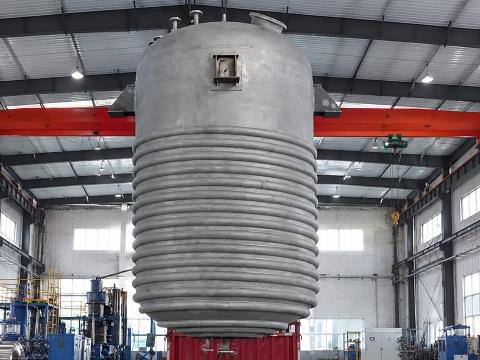
On its own, a single-wall tank blends and stores but cannot heat or cool the product. A jacketed tank wraps the inner tank in a jacket for media circulation and precise temperature control. Pick jacketed whenever the recipe needs a thermal step, and keep single-wall only when product stays at ambient and you just need to mix or hold. Watch the total cost: a single-wall tank plus a separate heater often costs more than one jacketed unit over a year.
Standard suits low to medium duty with gentle heat. Coil, or half-pipe, suits high heat duty and steam with fast heat-up. Honeycomb, or dimple, suits large tanks that need even heating at a fair cost. Pick by heat duty and tank size, not by price alone, and size the jacket area from your real heat load.
Our standard range runs from 100 L to 50,000 L. Small units serve labs and pilots. Mid and large units serve plant production. We build to your batch volume and footprint, so confirm cycle time with our team when sizing to avoid paying for unused capacity.
304 is the standard for most food and beverage lines. Choose 316L when the product is salty, acidic, or exposes the steel to chlorides, since 316L resists corrosion better. The higher grade adds cost but extends service life in harsh recipes, and it often pays back where washdown chemicals are aggressive.
This tank earns its place when temperature control drives your product quality. Match the jacket type to your heat duty, confirm the pressure and finish, and size from your real batch cycle. Get those three right and the tank pays for itself in saved rework and shorter cycles.
Ready to spec your tank? Open the jacketed stainless steel mixing tank page to see options, or browse our full range of stainless steel tanks for the full lineup. Send us your recipe and utility details, and our engineering team will return a drawing and a quote.
Inquiry Form
Latest Articles
Bubble Washing Machine for Vegetables vs Brush Washer
Stainless Steel Spherical Evaporator vs Other Methods
Honey Concentrator Machine: Uses, Types & How It Works
Herb Extraction Machine: How It Works and Types
Jacketed Stainless Steel Mixing Tank: How to Choose
Latest Products
Product Categories
Stainless Steel Tank
- Stainless Steel Wine Tanks
- Stainless Steel Water Storage Tank
- Stainless Steel Fermentation Tanks
- Stainless Steel Jacketed Kettle
- Pasteurizing Machine
Meat Processing Machine
Fruit and VegetableProcessing Machinery
Oil Press Machines
Colloid Mill
Extraction Machine
Packaging Machinery
Contact Us
- Mobile/Wechat: +8618595716541
- Whatsapp: +8618736065220
- Email: info04@wanzhisteel.com
- Address: 10F, Building B, Erqi Center, Erqi District, Zhengzhou City, Henan Province, China