
Stainless Steel Heating and Cooling Tank
Introduction
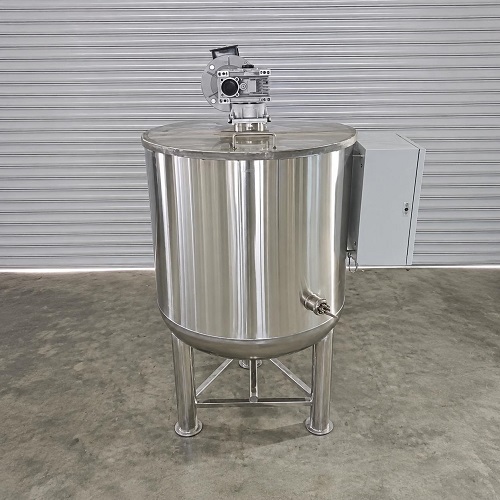
A stainless steel heating and cooling tank—also called a hot and cold tank, jacketed mixing tank, or aging vat —is one of the most versatile pieces of hygienic process equipment in the food, dairy, beverage, pharmaceutical, and chemical industries. It is the workhorse vessel used whenever a liquid or semi-liquid product must be heated, cooled, held at temperature, pasteurized, or gently agitated during storage.
A stainless steel heating and cooling tank is a triple-wall (inner shell + jacket + insulation + outer cladding) vessel that circulates a heating or cooling medium through the jacket to precisely control the temperature of the product inside, usually with an integrated agitator.
What Is a Stainless Steel Heating and Cooling Tank?
The heating and cooling tank—colloquially known in Chinese manufacturing as a lengre gang ( literally “cold-hot vat”) or laohua gang ( aging vat )—is a sanitary stainless steel container engineered for thermal treatment of flowable materials. Its core advantages are energy efficiency, low noise, corrosion resistance, high production capacity, and easy cleaning (CIP-compatible).
It serves as the essential equipment for heating, cooling, heat preservation, sterilization, and storage of slurries and liquids, and it is especially suited to:
- Milk pasteurization and holding (the classic dairy application)
- Ice cream mix aging (hence the “aging vat” name—it is a mandatory vessel on any ice cream production line)
- Syrup, juice, and beverage heating/cooling
- Sauce, dairy, and cosmetic emulsion preparation
Because the same vessel can heat, cool, hold, and agitate, it replaces several single-function tanks and simplifies hygiene and validation.
How a Stainless Steel Heating and Cooling Tank Works
The operating principle is indirect heat exchange through a jacket. The tank has an inner shell (product contact) and a surrounding jacket. A heating or cooling medium circulates inside the jacket, transferring energy through the tank wall to the product—without the medium ever touching the product.
Heating modes
- Steam heating – low-pressure steam (jacket working pressure typically 0.08–0.3 MPa) flows through the jacket. This is the most common industrial method and reaches jacket temperatures up to ~138 °C.
- Electric heating – electric heating elements (or a thermal oil loop) warm the jacket; ideal where no steam source exists.
- Gas heating (natural gas) – a burner/gas stove assembly under the jacket heats the medium; popular for smaller plants.
Cooling modes
- Cold water / chilled water – flows upward through the jacket (no pressure) to draw heat out of the product, giving efficient cooling and temperature pull-down.
- Glycol or refrigerant loop – for precise low-temperature holding.
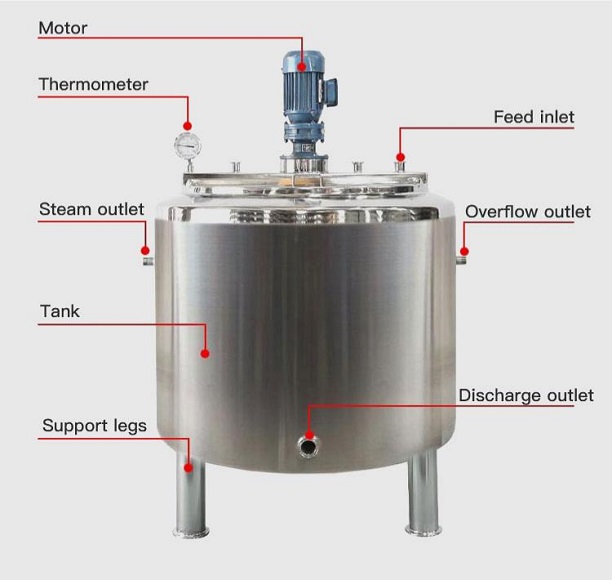
Agitation – a top-mounted reducer drives a mixing paddle through a live-sleeve coupling, keeping the product uniform in temperature and composition. The thermometer reaches down to the lowest product level, so temperature is indicated accurately even when the tank is nearly empty—critical for correct pasteurization and aging.
Core Components of a Stainless Steel Hot and Cold Tank
Understanding the build quality of each component helps you compare suppliers. A standard jacketed heating and cooling tank consists of:
| # | Component (EN) | Material / Notes |
|---|---|---|
| 1 | Inner shell (product contact) | Stainless steel SUS304 (or SUS316L for corrosive/pharma use); surface polished |
| 2 | Jacket (heat transfer) | A3 carbon steel or 1Cr18Ni9Ti / SUS304; spiral stiffener; medium flows bottom-to-top |
| 3 | Insulation layer | Polyurethane or glass wool; outer skin brushed into fish-scale pattern |
| 4 | Outer cladding | SUS304 stainless steel sheet |
| 5 | Reducer / gearbox | Cycloidal pin-wheel planetary reducer on a beam bracket; live-sleeve coupling to paddle for easy disassembly & cleaning |
| 6 | Agitator paddle | Paddle type; removable for CIP |
| 7 | Thermometer | 0–100 °C; extends to lowest media level |
| 8 | Safety & instrumentation | Safety valve, pressure gauge, thermometer (basic fittings) |
Types of Stainless Steel Heating and Cooling Tanks
Combining the classification systems from leading Chinese manufacturers, the equipment is categorized three ways:
1. By heating method
- Steam heating tank – most efficient for medium/large plants with boiler capacity.
- Electric heating tank – self-contained; no steam infrastructure required.
- Gas (natural gas) heating tank – burner assembly under jacket; lower CAPEX.
2. By material inlet/outlet (open vs. closed)
- Open-type – open lid, easier manual feed/cleaning; suited to batch dosing.
- Closed-type – fully enclosed; better for aseptic/controlled atmosphere and CIP.
3. By structure / head shape
- Standard cylindrical
- Top-and-bottom conical – aids complete drainage.
- Top-and-bottom dish-head – best for pressure rating and residue-free cleaning.
Tip: For dairy and ice-cream aging, a closed, dish-head, steam- or electric-jacketed model with CIP spray balls is the industry default.
Technical Specifications (Steam-Heated, 304 Stainless)
The table below reflects the standard steam-heated, jacketed, agitated configuration (304 material) offered by leading suppliers. Capacities range from 100 L to 5000 L.
| Spec | 100L | 200L | 300L | 600L | 1000L | 2000L | 3000L | 4000L | 5000L |
|---|---|---|---|---|---|---|---|---|---|
| Heating area (㎡) | 0.7 | 1.1 | 1.6 | 2.5 | 4.5 | 7.5 | 8.5 | 10.5 | 13.3 |
| Motor power (kW) | 0.37 | 0.37 | 0.55 | 0.75 | 1.1 | 1.5 | 1.5 | 1.5 | 2.2 |
| Nominal volume (L) | 100 | 200 | 300 | 600 | 1000 | 2000 | 3000 | 4000 | 5000 |
| In/outlet DN | 40 | 40 | 40 | 40 | 40 | 50 | 50 | 50 | 50 |
Common parameters across all sizes
- Working temperature: jacket < 138 °C; inner shell < 100 °C
- Working pressure: jacket 0.08–0.3 MPa; inner shell 0.09 MPa
- Test pressure: 0.15 MPa; jacket pressure 0.09 MPa
- Agitator speed: 36 rpm standard (optional 17 / 32 / 48 / 60 / 82 / 127 / 155 rpm, or variable-frequency / stepless speed control)
- Wall thickness: inner 3 mm · jacket 3 mm · cladding 0.6 mm
- Insulation: asbestos / polyurethane / glass wool
- Basic fittings: thermometer, safety valve, pressure gauge
- Vessel class: atmospheric or Class I pressure vessel (by design pressure & medium)
Dimension Reference (300–3000 L Series)
For layout and line-integration planning, the following diameters and heights are typical for the 300–3000 L range:
| Nominal volume (L) | Shell Ø (mm) | Shell height (mm) | Motor (kW) |
|---|---|---|---|
| 300 | Φ800 | 600 | 0.55 |
| 400 | Φ800 | 800 | 0.55 |
| 500 | Φ900 | 800 | 0.55 |
| 600 | Φ1000 | 800 | 0.55 |
| 800 | Φ1000 | 1000 | 0.55 |
| 1000 | Φ1000 | 1220 | 0.75 |
| 1500 | Φ1200 | 1220 | 1.5 |
| 2000 | Φ1300 | 1500 | 2.2 |
| 3000 | Φ1600 | 1500 | 3.0 |
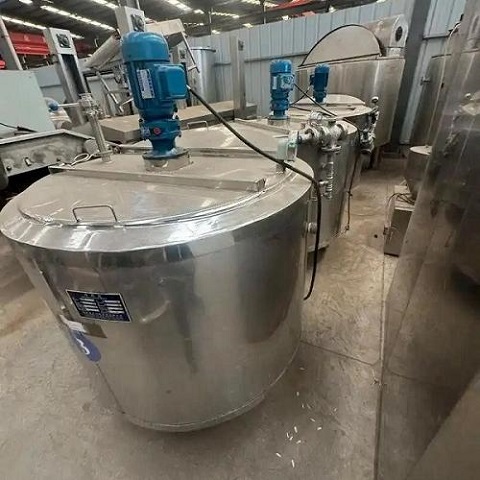
*Note: custom volumes up to 30,000 L+ and bespoke dimensions are available on request.
Material Grades: 304 vs. 316L
| Factor | SUS304 | SUS316L |
|---|---|---|
| Corrosion resistance | Excellent for most food/dairy | Superior; resists chlorides & acids |
| Cost | Lower (standard) | Higher |
| Best for | Milk, juice, syrup, general food | Salty, acidic, pharmaceutical, high-purity |
| Jacket / cladding | SUS304 or Q235-B (jacket) | SUS304 (cladding) |
Selection rule: choose 304 for standard dairy, beverage, and food slurries; upgrade to 316L inner shell when processing high-salt, acidic, or pharmaceutical-grade media.
Applications by Industry
A stainless steel cooling and heating tank is genuinely cross-industry:
- Dairy – milk pasteurization, cream heating, ice-cream mix aging (aging vat), yogurt base holding.
- Food & beverage – syrup heating, juice cooling, sauce/emulsion prep, beverage blending.
- Pharmaceutical & biotech – sanitary heating/cooling of extracts, buffers, and intermediates (316L preferred).
- Condiments & oils – seasoning heating, edible-oil blending and temperature control.
- Chemical & pigments – resin, coating, and pigment slurry heating/mixing.
- Wine & fruit wine – fermentation temperature management when paired with a stainless steel fermentation tank.
For heated mixing duties that need intensive emulsification, pair the tank with a colloid mill to refine particle size after thermal treatment.

How to Choose the Right Stainless Steel Heating and Cooling Tank
When requesting a quotation, provide these process parameters so the manufacturer can size correctly:
- Material properties – viscosity, acidity, solids content, whether corrosive.
- Required capacity – working volume (e.g., 1000 L) and batch vs. continuous mode.
- Heating/cooling medium – steam, electric, or gas; available utility specs.
- Target temperature range – e.g., heat to 85 °C for pasteurization, cool to 4 °C for aging.
- Agitation requirement – fixed 36 rpm or variable speed.
- Open vs. closed – depending on hygiene/CIP needs.
- Head shape – dish-head for pressure rating and clean drainage.
- Material grade – 304 standard, 316L for aggressive media.
- Certifications – ISO 9001, or others required for your market.
If you need intensive heating with scraping (e.g., jam, caramel), a stainless steel jacketed mixing tank or an electric heating jacketed kettle may be the better fit—browse the full stainless steel tank category for the complete range.
Installation, Cleaning & Maintenance
- CIP-ready – equip with spray balls and fully drainable design; run an automated clean-in-place cycle between batches.
- Daily – rinse jacket connections, check thermometer reading, verify no leaks at seals.
- Weekly – inspect agitator coupling, safety valve function, and insulation skin.
- Monthly – check jacket pressure relief, tighten bracket bolts, verify reducer lubrication.
- Pressure vessel compliance – if classified as a Class I pressure vessel, keep test records per local regulation.
Why Source From Wanzhi Machinery
Wanzhi Machinery (wz-mach.com) manufactures hygienic stainless steel process tanks to ISO 9001 and CE standards, with 15+ years of export experience to 100+ countries. Our heating and cooling tanks are built with polished SUS304/SUS316L inner shells, cycloidal reducers with live-sleeve agitator couplings for fast cleaning, and can be configured for steam, electric, or gas heating in capacities from 100 L to 30,000 L+. Every unit is FAT-tested before shipment.
Frequently Asked Questions
A: They are essentially the same class of equipment. “Heating and cooling tank” (aging vat) emphasizes the thermal function, while “jacketed mixing tank” emphasizes the jacket + agitator build. Most units do both—heat/cool and mix—in one vessel.
A: Yes. The jacket circulates steam or hot medium for heating and cold/chilled water for cooling. Switching the medium lets the same vessel pasteurize then cool/age the product.
A: Use SUS304 for standard milk, juice, syrup, and food slurries. Choose SUS316L for salty, acidic, or pharmaceutical-grade media where chloride corrosion is a risk.
A: Standard models run 100 L–5000 L, with dimensioned series from 300 L–3000 L shown above. Custom tanks up to 30,000 L+ are available on request.
A: Yes. We configure the jacket for steam, electric heating elements, or a natural-gas burner assembly depending on your utility availability.
A: Absolutely. The stainless steel heating and cooling tank is the classic milk pasteurization and holding vessel, and it is a mandatory aging vat on ice-cream production lines.
Request a Quote
Tell us your material, capacity, heating medium, and target temperature, and our engineering team will size a stainless steel heating and cooling tank to your process—with FAT testing, documentation, and global shipping. Contact Wanzhi Machinery for a tailored quotation.
Related Products

CIP cleaning tank
Stainless Steel CIP cleaning tank CIP on-site cleaning tank Introduction A CIP cleaning tank, short…

Stainless steel sterilization tank
Stainless steel sterilization tank Stainless steel sterilization tank Introduction If your line handles anything a…
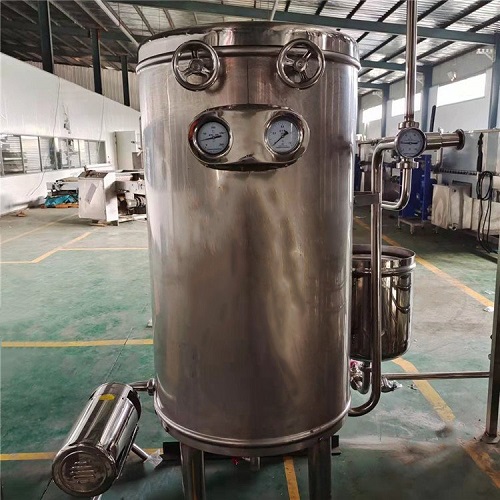
UHT sterilization tank
UHT sterilization tank UHT sterilization tank Introduction Every liquid food line eventually hits the same…
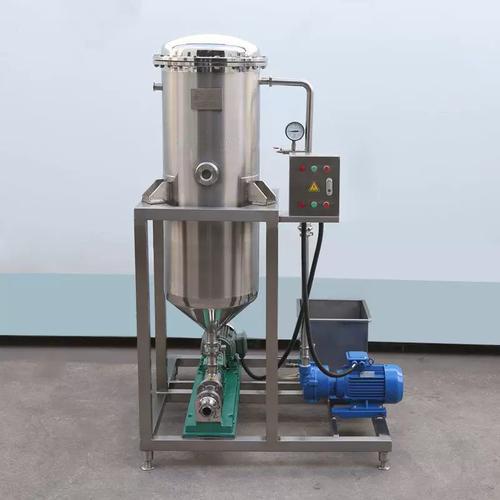
Vacuum degassing tank
vacuum degassing tank vacuum degassing tank Introduction If you run a juice, dairy, or soy-milk…
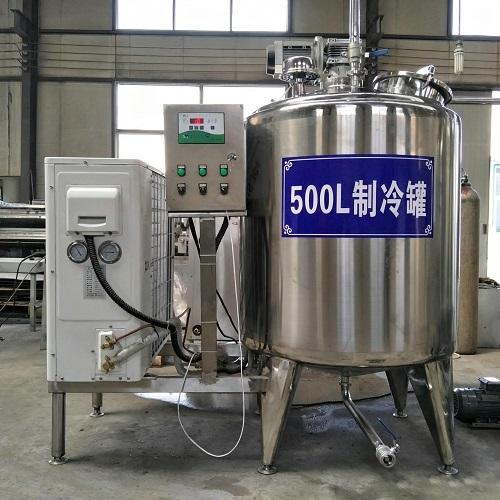
Stainless Steel Vertical Cooling Tank
Stainless Steel Vertical Cooling Tank Stainless Steel Vertical Cooling Tank Introduction A stainless steel vertical…
Contact Us