
Fresh milk pasteuriser
Introduction
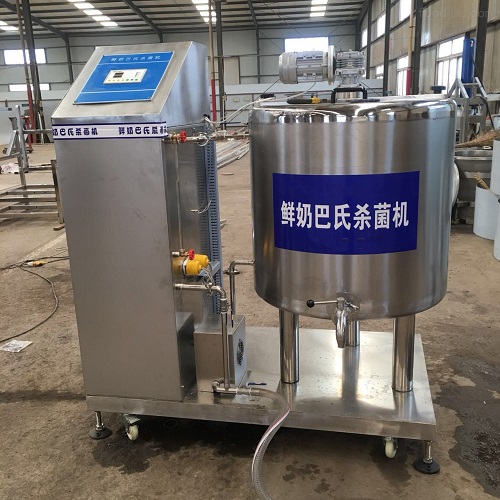
Stainless steel pasteurizers are core equipment widely used in the food processing industry. They utilize the principle of pasteurization, using gentle heating to kill harmful microorganisms while preserving as much of the food’s original flavor and nutrients as possible.
Fresh milk pasteuriser are specifically designed for small-batch, intermittent production scenarios, making them ideal for users such as fresh milk bars, small farms, and laboratories. Their core feature is the integration of heating, sterilization, and cooling, functioning like a fully-equipped “milk processing station.”
pasteuriser Introduction
A milk pasteurizer is a device that uses pasteurization to sterilize food. The principle of pasteurization is to kill pathogens in food within a certain temperature range through appropriate temperature and holding time, while preserving a small number of harmless or beneficial bacteria or bacterial spores.
The principle of sterilization is that within a certain temperature range, the lower the temperature, the slower the bacterial reproduction; the higher the temperature, the faster the reproduction. However, if the temperature is too high, the bacteria will die. Different bacteria have different optimal growth temperatures and different heat and cold resistance. Pasteurization essentially utilizes the fact that pathogens are not very heat-resistant, using appropriate temperature and holding time to kill them all. However, even after pasteurization, a small number of harmless or beneficial, heat-resistant bacteria or bacterial spores are still retained.
Technical parameters
| Parameter Items | Typical Range/Options |
| Effective Volume | 20L – 500L, (common 100L, 150L, and 200L) |
| Equipment Material | SUS304 / SUS316L food-grade stainless steel |
| Inner Tank Thickness | 2mm |
| Heating Medium | Electric heating, Steam heating |
| Cooling Medium | Cold Water And Air Compressor |
| Working Temperature | 50-99℃ |
| Temperature control accuracy | ±1°C |
| Heating power | 9kw |
| Pasteurizing Time | 10-30minutes |
| Control system | Fully automatic PLC control, Semi-automatic |
| Surface Treatment | Inner Mirror Polished (Ra≤0.4μm), Outer Matte or Brushed |
| Supply Ability | 100 sets/month |
| Out Of Warranty Service | Video Technical Support, Online Support |
What is more, we also have the Yogurt Production Line, this line mainly includes Milk Pasteurizer, Milk Cooling Tank, Milk Homogenizer, Milk Cream Separator and Filling Machine.
How a Fresh milk pasteuriser Works
The core task of a fresh milk pasteurization machine is to heat and cool the product under precisely controlled temperature and time. For liquid products (such as milk and juice): this is mainly achieved through a plate heat exchanger. Driven by a pump, the material sequentially passes through preheating, heating and sterilization, heat preservation, and cooling stages. The system precisely controls the temperature and automatically “recirculates” products that have not reached the sterilization temperature for further processing, ensuring that the final product meets standards.
Working principle and process
- Preheating (Regeneration Section): Cold raw materials first enter the regeneration section of the plate heat exchanger. Here, they are preheated by the sterilized hot material just exiting the insulated pipe. This step recovers most of the heat, resulting in a heat recovery rate of 94%-95%, which is very energy-efficient.
- Heating (Heating Section): The preheated material enters the heating section, where hot water (or steam) rapidly heats it to the set pasteurization temperature (usually between 72-95°C).
- Insulation (Insulation Pipe): The heated material enters a specific length of insulated pipe, ensuring it remains at the sterilization temperature for a sufficient time (usually 15-30 seconds) to complete sterilization.
- Cooling (Cooling Section): The insulated material returns to the regeneration section of the heat exchanger, transferring its heat to the cold material for precooling. It then enters the cooling section, where cooling water (or ice water) rapidly cools it to an outlet temperature of approximately 5°C to maximize product freshness.
- Reflux Control: The system monitors the temperature throughout the entire process. If the final discharge temperature does not meet the standard, the diversion valve will automatically “return” the material to the balance tank for reprocessing, ensuring that only qualified products can proceed to the next process.
Main components
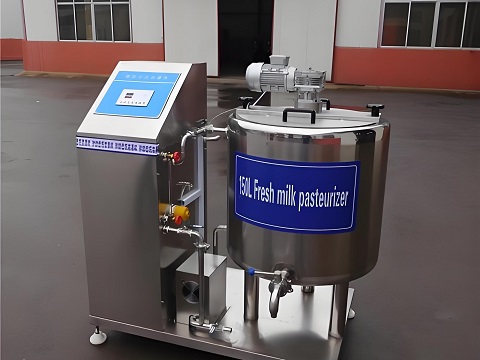
Its structural design is intuitive and can be understood as: a stainless steel tank with a water bath jacket, equipped with a heating, circulation and control system, to complete the sterilization process.
- Three-layer tank structure: This is the core of the design. Milk is stored in the innermost tank, which is surrounded by a jacket (water bath). Hot or cold water is circulated into the jacket to indirectly heat or cool the milk. The outermost layer is an insulation layer, usually made of polyurethane foam to reduce heat loss and improve energy efficiency.
- Heating Methods: Primarily electric heating and steam heating, with electric heating being more common in smaller equipment.
- Circulation System: The machine is usually equipped with a sanitary circulation pump that circulates the hot water or milk within the jacket during sterilization, ensuring uniform temperature and preventing localized overheating.
- Stirring Device: Many models are equipped with a paddle stirrer, which prevents milk from sticking to the bottom and ensures more even heating.
- Intelligent Control: Modern models mostly use PLC or intelligent temperature control systems, which can precisely control the sterilization temperature (accuracy up to ±1℃) and time, and are equipped with a display panel for intuitive operation.
Advantages of Fresh milk pasteuriser
- Freshness-Locking Technology, Quality Assurance: Employing pasteurization at temperatures below 100℃ with temperature control accuracy of ±1℃, this method effectively sterilizes while maintaining the original flavor and nutritional value of fresh milk, resulting in a superior taste compared to products sterilized at high temperatures.
- Superior Materials, Durable: The entire machine is constructed from food-grade SUS304/SUS316 stainless steel, with finely polished inner walls. It is corrosion-resistant, easy to clean, and fully complies with international food safety standards, ensuring long-term stable operation of the equipment.
- Highly automated, worry-free and labor-saving: Equipped with a PLC intelligent control system and frequency converter, it achieves precise automated control of temperature and time, greatly reducing labor costs and operational error rates. It can be integrated with a CIP automatic cleaning system, ensuring hygiene and safety.
- Continuous operation, high-efficiency production capacity: The continuous pasteurization line achieves integrated automated production line operation of sterilization, cooling, and drying, offering high efficiency and suitability for large-scale production. It is an ideal upgrade solution for traditional sterilization tanks.
Application Scenarios
1. Commercial Retail
Fresh milk bars, community fresh milk shops, farm-to-market stores (100L – 200L)
This is the most typical application. Fresh milk is pasteurized in the store and sold directly after pasteurization, or made into yogurt, ice cream, milkshakes, etc. on-site, realizing a “front store, back factory” business model.
2. Production and R&D End
Small-batch production lines in dairy/beverage plants, and laboratories in universities and research institutes (10L – 500L)
Used for new product development, formula testing, taste evaluation, and shelf-life testing. Its key feature is its ability to completely simulate industrial production conditions; experimental data can be directly scaled up to large-scale production lines, making it a crucial piece of equipment for pilot and intermediate-scale testing.
3. Other food processing
Soy products, liquid condiments, traditional Chinese medicine/biopharmaceuticals, fruit and vegetable processing
The equipment’s low-temperature sterilization principle is also suitable for the sterilization and processing of heat-sensitive liquid materials such as soy milk, soy sauce, vinegar, medicinal liquids, and fruit juices.
FAQ about Fresh milk pasteuriser
A: Although both pasteurization tanks and pasteurization machines are used for pasteurization, the key difference is that a “tank” is usually a single, independent container, while a “machine” more often refers to a complete processing system.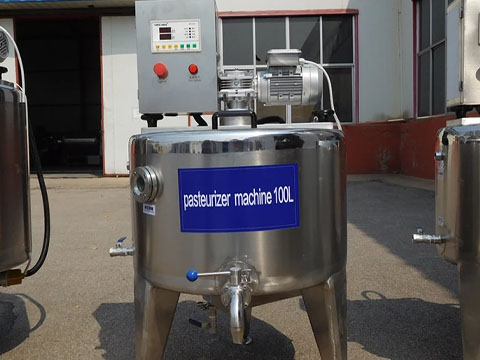
A: You can order as little as 1 unit, and bulk purchase discounts are available.
A: Yes, we support customization based on your requirements for capacity, voltage, color, etc.
A: Delivery time for customized orders needs to be negotiated based on the specific configuration.
Related Products

CIP cleaning tank
Stainless Steel CIP cleaning tank CIP on-site cleaning tank Introduction A CIP cleaning tank, short…

Stainless steel sterilization tank
Stainless steel sterilization tank Stainless steel sterilization tank Introduction If your line handles anything a…
UHT sterilization tank
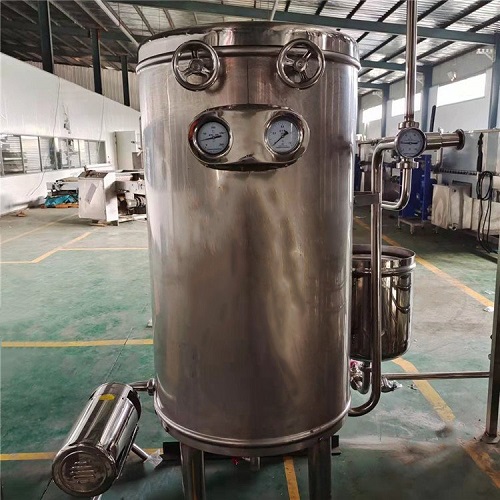
UHT sterilization tank UHT sterilization tank Introduction Every liquid food line eventually hits the same…
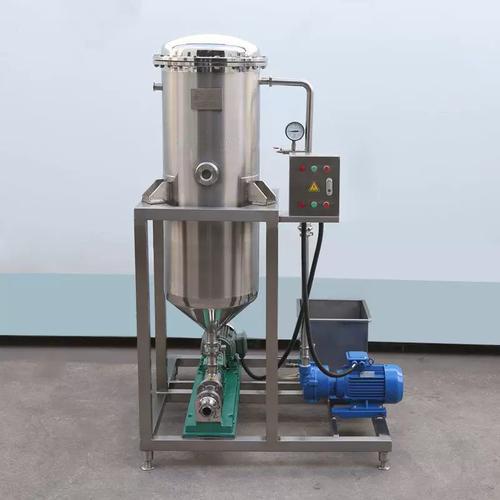
Vacuum degassing tank
vacuum degassing tank vacuum degassing tank Introduction If you run a juice, dairy, or soy-milk…
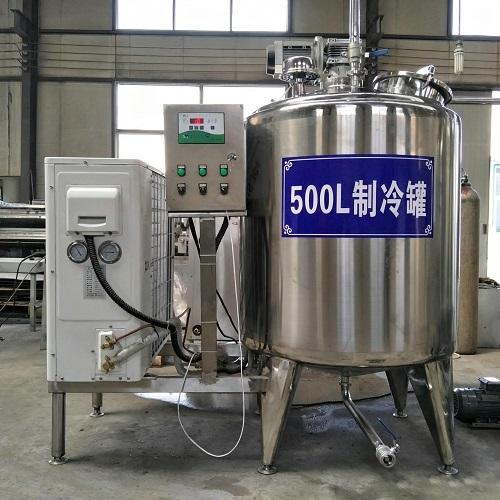
Stainless Steel Vertical Cooling Tank
Stainless Steel Vertical Cooling Tank Stainless Steel Vertical Cooling Tank Introduction A stainless steel vertical…
Contact Us