
Bubble washing machine for vegetables vs brush washer: which one fits your line
Most produce washing lines that go wrong share one cause, which is the cleaning method not matching the crop. Run a brush washer over lettuce and the leaves come out bruised and brown in the cooler. Run a bubble washer over field potatoes and caked soil stays on the skin. Settling the bubble washing machine for vegetables vs brush washer question turns on two things: the skin you are cleaning and the volume you need to move.
We build both machines at Wanzhi Machinery, and customers keep asking for a straight comparison instead of two separate sales pitches. This guide puts the real specifications side by side, then maps them onto the produce you process. Our industrial fruit and vegetable bubble washer and bristle roller washing machine are the two platforms covered here, and both sit inside our wider fruit and vegetable washing machine range.
what is a bubble washing machine for vegetables
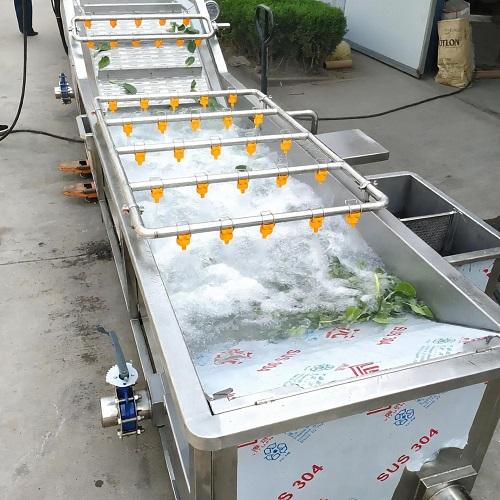
Aerated water plus movement of the product is the whole idea. Nothing in the machine presses against the produce, which is why it handles soft items that a bristle roller would mark up. The core of the system is a wash tank, a bubble generator, a mesh belt, and a spray bar, and the method scales from 300 kg/h to 2000 kg/h.
how a bubble washer works
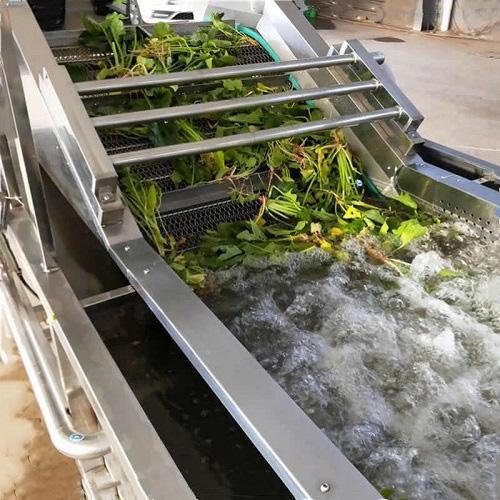
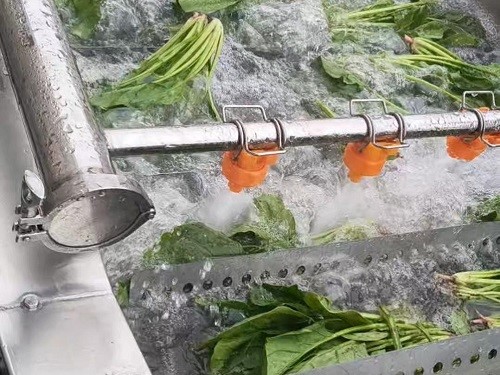
Product enters the wash tank through the feed inlet. A bubble generator at the bottom pushes air through the water, and as those bubbles rise and burst their impact tumbles the produce so surfaces rub against each other. That movement lifts adhering mud, impurities, and some pesticide residue without any hard component touching the skin. A stainless mesh belt carries the product forward at an adjustable speed, which keeps cleaning time repeatable batch to batch. High-pressure nozzles above the tank rinse the product as it surfaces, and heating elements set the water temperature. Wash water recirculates through a pump rather than running to drain once.
where the bubble washer earns its keep
Models run WZ-XCJ300B through WZ-XCJ600B. The 300B and 400B carry a 600 mm belt, the 500B and 600B an 800 mm belt. Total power goes from 2.25 kW to 5.25 kW at 380V/50Hz on 50 x 50 x 1.5 mm square tube, and the frame is food-grade SUS304. Bubble penetration plus high-pressure jets takes the large majority of surface contaminants off, and since the only contact is water and foam the damage rate on soft produce stays low. Typical work includes leafy greens, berries, melons, and desanding for clams and shrimp.
what is a brush washer
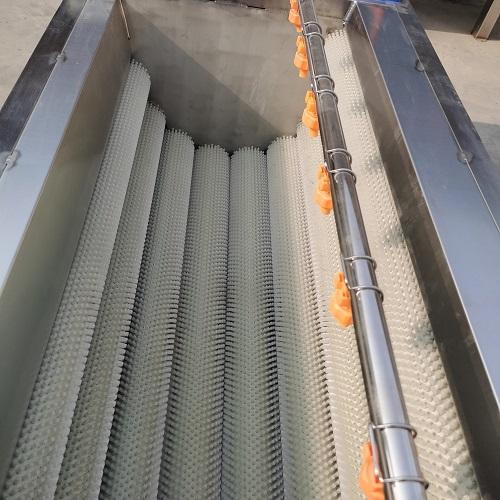
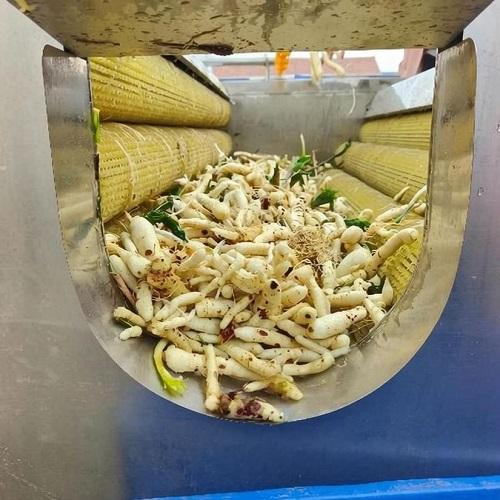
Aerated water cannot handle what a brush washer handles. Soil and skin that have dried and bonded onto a firm root crop need friction, and eight nylon bristle rollers tumble the produce while spray rinses from above, so scrubbing and peeling happen in a single chamber. It is the machine for potatoes, carrots, ginger, and other tubers, and the one most often quoted for distribution centers.
how a brush washer works
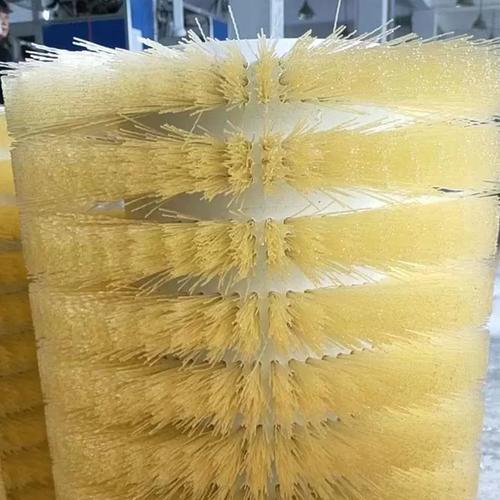
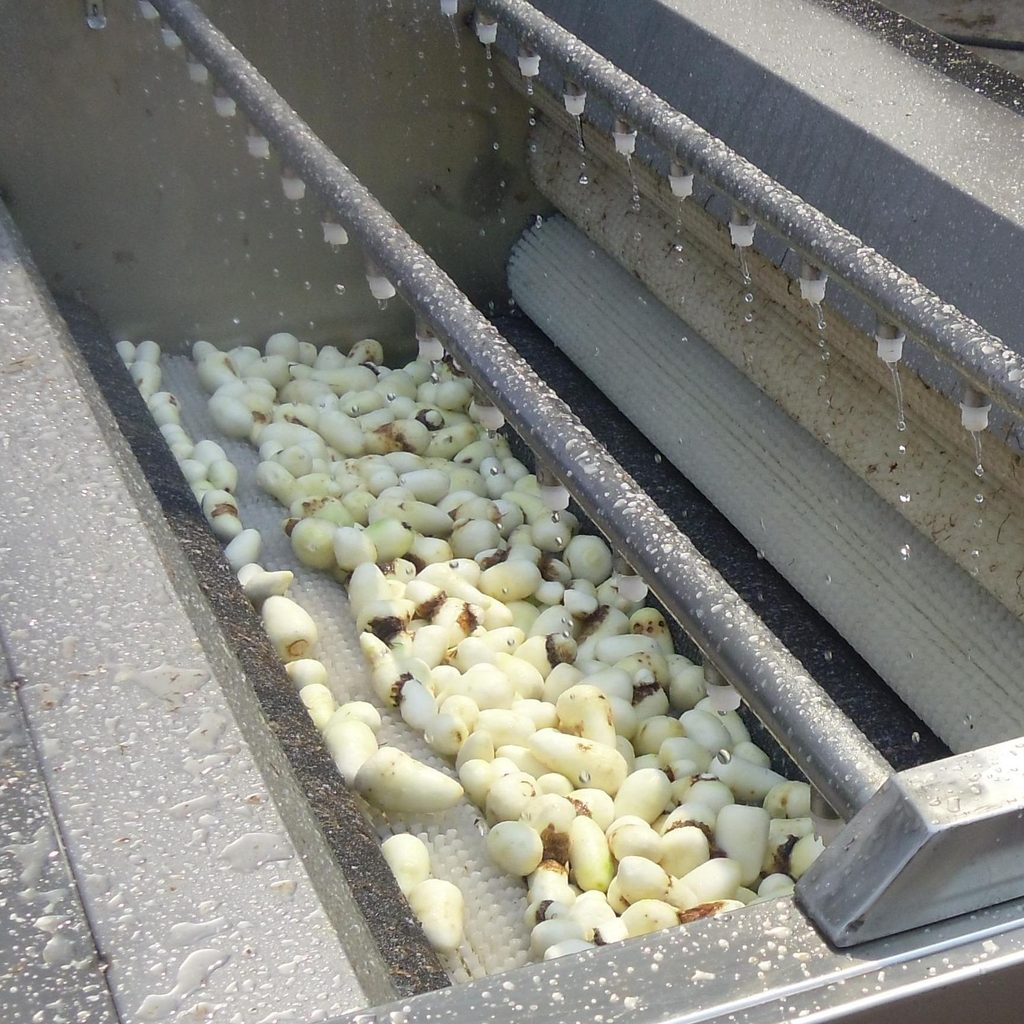
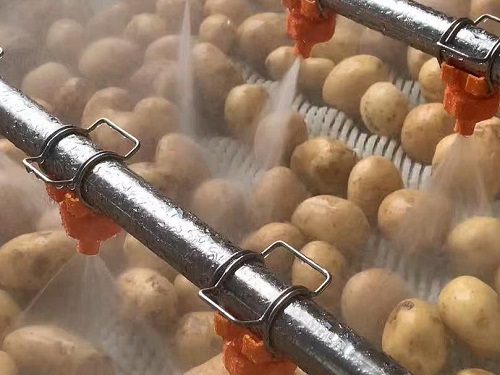
Product enters the bristle roller chamber through the feed inlet. An electric motor drives the rollers, and they turn at the same speed or at different speeds, so the produce tumbles randomly and every surface meets a bristle. The dense nylon bristles scrape away soil and thin skins through physical friction. The sprinkler system above sprays water evenly, which rinses the loosened soil and skin away and lubricates the contact so the bristles do not gouge the flesh. A residue filtration screen at the bottom separates debris from the water.
where the brush washer earns its keep
The WZ-600B through WZ-2000B range covers seven sizes with output of 800 to 1200 kg/h. Motor power runs 1.1 kW to 2.2 kW at 220V/380V 50Hz, the frame is 304 stainless steel, support tubes are 38 x 38 mm, and machines weigh 300 to 400 kg. Peeling comes out uniform in a single pass, and skinned-off waste stays low enough to matter on a root line, while the spray also clears pesticide residue from the skin. The produce list is roots and tubers: potatoes, cassava, yams, carrots, daikon, lotus root, taro, onions, ginger, and garlic. The FDA tips for cleaning fruits and vegetables recommend scrubbing firm produce with a clean vegetable brush, the principle this machine applies at production speed.
bubble washer vs brush washer: spec comparison
Here is where the comparison gets concrete. Two machines can both turn up a clean-looking surface, but they reach it with different forces, different water use, and different footprints, and those differences decide which one belongs in your building.
side-by-side comparison table
Specifications come from our build sheets for the WZ-XCJ series and the WZ bristle roller range.
| Specification | Bubble washer, WZ-XCJ series | Brush washer, WZ-600B to WZ-2000B |
|---|---|---|
| Cleaning principle | Air bubbles plus high-pressure spray | Nylon bristle friction plus spray |
| Contact with produce | Water and foam only | Bristles rub every surface |
| Capacity | 300 to 2000 kg/h | 800 to 1200 kg/h |
| Power | 2.25 to 5.25 kW at 380V/50Hz | 1.1 to 2.2 kW at 220V/380V 50Hz |
| Material | Food-grade SUS304 | 304 stainless steel |
| Key structure | 50 x 50 x 1.5 mm square tube, mesh belt | 8 nylon rollers, 38 x 38 mm tubes |
| Dimensions | 3100 x 1450 x 1400 to 6100 x 1600 x 1400 mm | 930 x 850 x 1100 to 2350 x 900 x 1100 mm |
| Machine weight | Not rated on the build sheet | 300 to 400 kg |
| Water use | Wash water recirculates | Continuous spray, residue drains |
| Peels in the same pass | No | Yes |
| Control | PLC, one-touch start, stepless speed | Plug and play |
| Damage on soft produce | Low, no abrasion | Noticeable on leaves and fruit |
| Best suited to | Leafy greens, berries, melons, seafood | Potatoes, carrots, ginger, tubers |
| Optional modules | Brush rollers, heating, filtration | Pasteurization module |
damage rate and produce quality
Putting a brush washer on lettuce or berries is a mistake. Nylon bristle friction softens and tears thin leaf tissue, and the damage shows up as brown edges and limp leaves after a day in the cooler, not on the line where you can still catch it. Soft fruit takes the same kind of marking. The bubble washer leans on tumbling in water, so contact damage stays minimal on tender greens.
The brush washer wins the opposite problem. Bubbles lift loose surface soil and floating debris, but they do not shift caked mud that has dried and bonded to a potato skin. That takes friction, and friction is what the bristles supply.
which one fits your produce
Produce type settles most of these decisions, because the skin of the crop decides how much mechanical action it can take without losing value. Match the method to your toughest crop, not your average one.
leafy greens, berries and soft produce go to the bubble washer
Lettuce, spinach, cabbage, strawberries, blueberries, mushrooms, and herbs all need a wash without abrasion. Leafy vegetables are damaged easily during handling, and the standard post-harvest route is to cool them quickly to shed field heat, sort out debris, and wash away field dirt before packing, which Britannica’s guide to fresh and minimally processed vegetables describes. The bubble washer fits that sequence, since the belt gives controlled dwell time and the spray handles the final rinse without a bristle touching the leaf.
potatoes, carrots, ginger and root crops go to the brush washer
Root and tuber crops come out of the ground with soil bonded to the skin, and that soil has to come off before the product is cut, cooked, or brined. Potatoes, cassava, yams, carrots, daikon, lotus root, taro, onions, ginger, and garlic all benefit from washing and peeling in the same chamber. A foam wash alone will rinse a potato and leave the muddy patches in the creases, so on root-heavy lines the bristle roller earns its space.
mixed product lines (two-stage setup: brush first, bubble second)
Lines that handle both roots and greens usually end up with both machines, and the order matters. Root crops run through the brush washer first, where the rollers strip soil and skin. They then move to the bubble washer for a final gentle rinse and, with the heating module, a cool-down step before packing. Greens bypass the brush entirely and enter at the bubble stage. Where the line also cooks and cools, our fruit and vegetable blancher takes the heat and the cold in one frame.
Running greens through the brush to save a machine is where damage rates climb, and once that damage appears in the cooler the whole batch gets discounted. Two stages cost more in floor space and capital. On most mixed lines the extra yield on greens pays for the second machine fairly quickly, but run your own numbers on your own crop before you commit.
which one fits your volume and budget
Once the crop type is settled, the next question is how much product moves through the line and what it costs per hour to run it. Most buyers look at purchase price first. That is the wrong number to lead with.
capacity and throughput matching
The bubble washer covers 300 to 2000 kg/h across four models, and the brush washer runs 800 to 1200 kg/h across seven sizes. Sizing against peak demand rather than the average week matters more here than on most lines, because produce arrives in waves after harvest and a short harvest window is exactly when a bottleneck hurts. Leave headroom of roughly 15 to 20 percent above your busiest day, which keeps the line off its limit when supply comes in heavy.
running costs
Water is the line item most buyers underestimate. The bubble washer recirculates its wash water through a pump and filtration loop, so the same water serves many batches, and a stainless steel water storage tank for holding that water is simple to plan into the layout. The brush washer sprays continuously and drains residue-laden water, so it uses more fresh water per hour and puts a heavier load on your wastewater system.
Power tells a similar story. The bubble washer draws 2.25 to 5.25 kW, the brush washer 1.1 to 2.2 kW, so on electricity alone the brush machine costs less. Against that, nylon bristles wear and get replaced, and brush sets over the life of the machine are a consumable you should price into the comparison.
when each one wins (the verdict)
Soft product, tight damage tolerance, or expensive water, and the bubble washer is the answer. Roots and tubers, a peeling step in the same pass, or a tight floor, and the brush washer wins. Running both crops? Brush first, bubble second.
where each machine is used
Installations give a good picture of where each machine earns its return. Our fruit and vegetable washing machine range covers the wash, peel, and sort stages around the washers, and our food processing solutions build runs from washing through to packing.
bubble washer applications
Pre-washed vegetable lines are where most of these machines end up. Produce that reaches retail already washed, sorted, and packed needs field dirt and insects removed on a continuous belt. Central kitchens and prepared meal plants run the same equipment on a smaller footprint, and the compact vortex bubble washer handles 100 to 300 kg/h on 220V with ozone added to the water, sized for supermarkets and cafeterias. The same tank handles seafood desanding for clams, scallops, and shrimp, plus a pre-clean pass for chicken and pig trotters. Washing is a food safety step, and FoodSafety.gov guidance on cleaning produce sets out why rinsing and scrubbing firm produce matters.
brush washer applications
Root crop work points straight at the bristle roller. Large distribution centers, dehydrated vegetable plants, canneries, pickle plants, and starch and tuber production bases all need soil and skin off incoming potatoes and sweet potatoes before the next step. School and corporate cafeterias use it for the same reason at smaller scale. Once the crop is clean, it feeds a commercial vegetable slicer or a multi vegetable cutter for shredding, and a potato chip production line runs a bristle wash first.
how to choose a supplier and configuration
With the machine type decided, the quote turns on configuration, material, and what the supplier will stand behind.
specs to check
Material comes first. Food-grade SUS304 on the bubble washer and 304 stainless steel on the brush washer, applied to every part that touches product and not just the tank. Then control, where the WZ-XCJ series runs a PLC with one-touch start and stepless conveyor speed adjustment, and the brush washer needs no training beyond plug and play.
Belt width decides what you can run. The 300B and 400B use a 600 mm belt for narrower product and lighter loads, while the 500B and 600B use 800 mm for wider melons and higher throughput. Belt width also sets the line length, from 3100 x 1450 x 1400 mm up to 6100 x 1600 x 1400 mm. Brush washer dimensions run 930 x 850 x 1100 mm to 2350 x 900 x 1100 mm at 300 to 400 kg, so check the floor carries the load and the door passes the roller section. Confirm supply voltage early, 380V/50Hz for the bubble line and 220V/380V 50Hz for the brush machines.
customization, MOQ and certification
Ask what ships as standard and what gets built to order. The WZ-XCJ bubble washers are built around your process, since belt speed, cleaning section length, brush rollers, heating, and filtration are specified per line, which means a minimum order and a lead time worth planning around. The bristle roller range ships in seven standard sizes, so most buyers land on a catalog model.
For export, check certification against your destination market, our equipment carries ISO 9001, ISO 14001, and CE, and food contact material grades belong in the documentation.
frequently asked questions
The difference is contact. A bubble washer relies on aerated water and spray, so the product is tumbled in foam with no solid part touching the skin. A brush washer uses eight nylon bristle rollers that rub the surface, which strips soil and skin in the same pass. The brush machine wins on roots and loses on anything tender.
Partly. A bubble washer rinses and tumbles root vegetables and will carry away loose soil, and the mesh belt handles them without damaging the skin. Caked mud that has dried onto the surface needs friction to shift, and only the bristle roller supplies that. If roots make up most of your volume, pair a brush washer ahead of the bubble stage.
Yes, and it is the most common way buyers damage a crop. Bristle friction softens and tears thin leaf tissue, and the marks appear as brown edges after a day in the cooler. Berries and soft fruit take the same kind of damage. Send that product to a bubble washer.
Our WZ-XCJ series runs 300 to 2000 kg/h, with the 300B and 400B on a 600 mm belt and the 500B and 600B on an 800 mm belt. A bristle roller brush washer handles 800 to 1200 kg/h, and a compact vortex bubble washer covers 100 to 300 kg/h.
For a fresh-cut vegetable processing line, the bubble washer is the right machine. Cut greens and soft products cannot take bristle contact, and the combination of tumbling, controlled belt speed, and spray rinse is what fresh-cut packing needs. A brush washer only earns a place in the same plant if root crops arrive there too.
Only when the line handles both product types. Greens alone need one bubble washer, and root crops alone need one brush washer. Mixed lines need both, with the brush washer upstream on roots and the bubble washer on the final rinse and cooling pass.
Tell us which crops you run and the volume you need, and we will quote the machine that fits along with the supporting equipment around it.
Inquiry Form
Latest Articles
Bubble Washing Machine for Vegetables vs Brush Washer
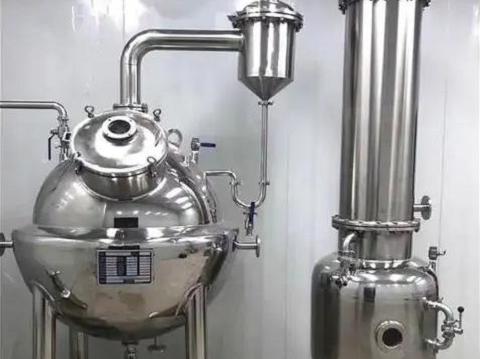
Stainless Steel Spherical Evaporator vs Other Methods
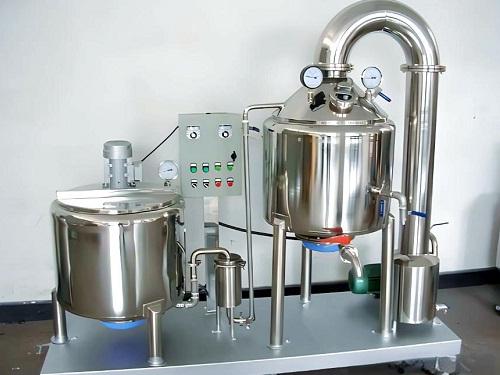
Honey Concentrator Machine: Uses, Types & How It Works
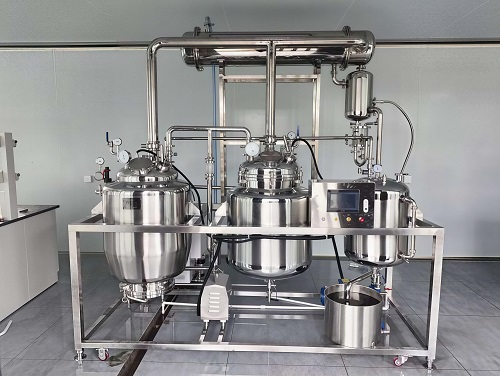
Herb Extraction Machine: How It Works and Types
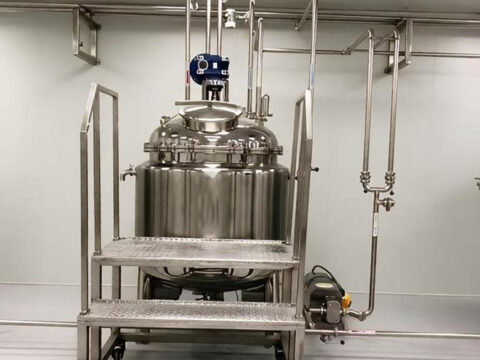
Jacketed Stainless Steel Mixing Tank: How to Choose
Latest Products
Product Categories
Stainless Steel Tank
- Stainless Steel Wine Tanks
- Stainless Steel Water Storage Tank
- Stainless Steel Fermentation Tanks
- Stainless Steel Jacketed Kettle
- Pasteurizing Machine
Meat Processing Machine
Fruit and VegetableProcessing Machinery
Oil Press Machines
Colloid Mill
Extraction Machine
Packaging Machinery
Contact Us
- Mobile/Wechat: +8618595716541
- Whatsapp: +8618736065220
- Email: info04@wanzhisteel.com
- Address: 10F, Building B, Erqi Center, Erqi District, Zhengzhou City, Henan Province, China