
How to choose a stainless steel reactor: single vs double wall
Think of a stainless steel reactor as the vessel where a food, pharma, or chemical batch gets mixed, heated, cooled, or held under control. Your first real decision is the wall: a single-wall standard reactor, or a double-wall jacketed one. That one call sets the price, decides which processes you can run, and changes how much steam, cooling, and floor space you need. Here we walk through how each type works, where it fits, and how to pick between them using the reactors Wanzhi builds.
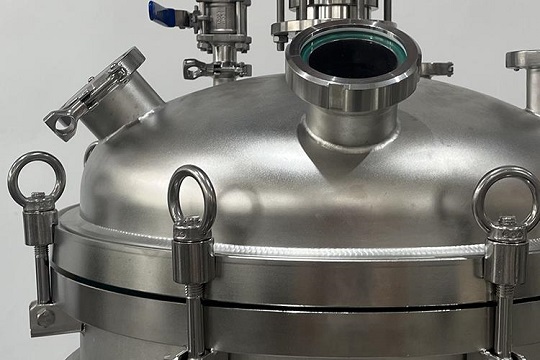
What a stainless steel reactor is for
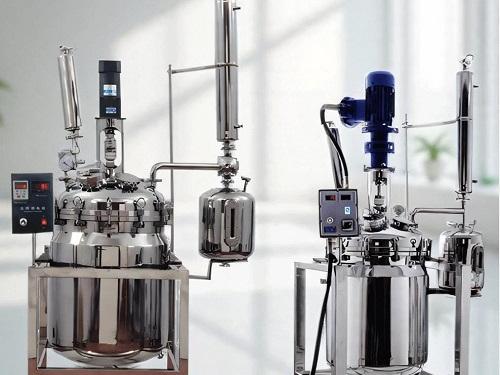
At its core, a reactor holds and treats a batch. It blends a sauce, heats a drink, cools a dairy mix, or runs a controlled reaction. On food and drink lines you will see them working on ketchup, juice, yogurt, and condiments. The same idea backs emulsions, extracts, and resins in pharma, cosmetics, and fine chemical plants. Wanzhi builds these vessels in 304 or 316L stainless steel, from pilot units up to full production volumes, and we make them as jacketed (double-wall) and standard (single-wall) vessels. Our jacketed stainless steel mixing tank is the double-wall model, and the stainless steel mixing tank is the single-wall one, and both serve as reactors.
Single wall vs double wall: the core difference
The wall is the whole argument here. Picture a single-wall reactor as one shell with no second chamber: you blend, hold, or circulate the batch, and if you need heat or cold you either bring it in another way or you simply do not need it. Now picture a double-wall reactor, which wraps that shell in a jacket, a second chamber that circulates steam, hot oil, glycol, or chilled water so you heat or cool the batch through the wall. The trade-off is plain to see: the double wall costs more steel and takes more space, but it unlocks temperature control, while the single wall is cheaper and simpler and does the job whenever temperature is not part of the process. If your batch just sits and stays cold on its own, that jacket is money you will never use.
How a double-wall (jacketed) reactor works
The jacket is where the control lives. A medium such as steam, hot water, thermal oil, or brine circulates in the jacket, and a temperature probe inside the tank feeds a controller that opens or closes the jacket valves to hold the batch at the set point. Meanwhile an agitator keeps the temperature even, so there is no hot or cold spot, and the finished batch leaves through a bottom valve when it is done. On the double-wall model Wanzhi builds, effective volume runs from 100 liters to 50,000 liters. The tank itself is 304 stainless steel with a 316L option, and the jacket comes as a standard, coil, or honeycomb type. Inner tank pressure reaches 0.6 MPa at atmosphere and the jacket 0.2 to 0.8 MPa; working temperature spans minus 10 to 180 degrees C, with special designs to 250. Agitator speed runs 0 to 200 rpm with stepless control, and the motor spans 0.55 to 45 kW. For clean, easy draining, the inner surface is mirror polished to Ra 0.4 micron or better.
When you need the double wall
You reach for the double wall any time temperature is part of the process. Pasteurization, crystallization, fermentation control, holding a product at a set point, and cooking all call for it. A jacketed reactor carries a sauce through a heat step, holds a fermentation batch steady, or cools a dairy mix without touching the product directly. If your product just sits and stays cold on its own, skip the jacket and put that money into capacity instead. For processes that swing between heat and cold, a honeycomb jacket responds faster, so ask for that if your cycle changes temperature often.
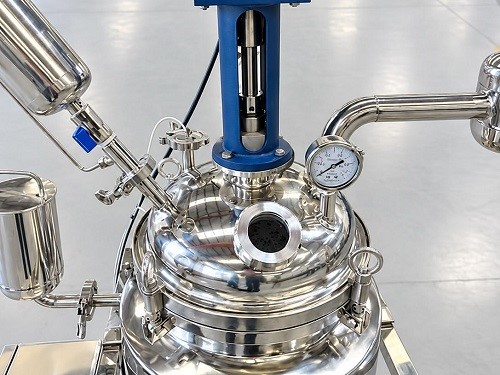
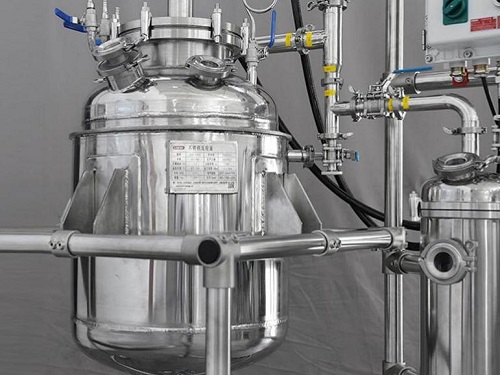
The single-wall reactor and where it still wins
The single-wall reactor still earns its place because most batches do not need active heating or cooling. Wanzhi builds the standard platform from 50 liters to 4000 liters across models WZ01-50 through WZ01-4000, in 304 or 316L, with motor power from 0.37 to 4 kW, a fixed agitation speed near 36 rpm, an operating pressure up to 0.09 MPa, and a working temperature under 160 degrees C. Mirror polishing brings the inner surface to Ra 0.28 to 0.6 micron. It wins on cost and simplicity for blending, temporary storage, and formulation where the temperature is already right or does not matter. If you later need heat, the same platform can take a jacket, but adding one after the fact is expensive, so decide the wall before you order.
Key specs to check before you buy
Size the capacity against your largest batch plus headspace of about 15 to 20 percent, so it will not boil over or pull in air. Look at the material grade next, because 316L resists salt and acid where 304 will eventually pit. Then settle the wall, single or double, and if double, which jacket type suits your pressure and heat load. Mind the pressure rating if you run CIP at pressure or pull a vacuum, since you cannot retrofit the shell afterward. Match the agitator to your viscosity, because a thin juice and a thick paste need different impellers. Last, watch the surface finish, because a polished interior cuts cleaning time and residue on each run.
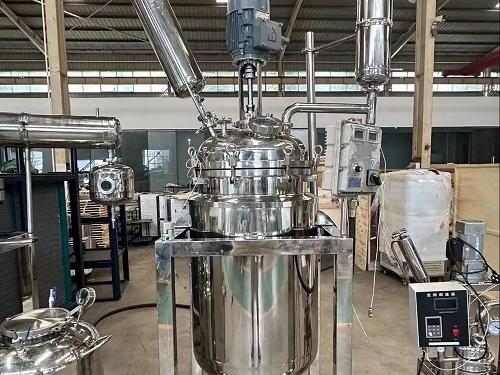
How to choose: a buying checklist
Start with the process: does temperature drive the batch? If yes, go double wall. For blending or storage only, the single wall is enough. Next, set the grade, 304 for neutral products and 316L for salt, citrus, wine, or brine. After that, size the capacity for your peak batch, not your average, then weigh the pressure rating, the agitator, and the finish. The guide to choosing a stainless steel tank walks through grade, capacity, and jacket in more detail, and the double-wall model and the single-wall model list the full numbers so you can set yours against them before you order.
Where the reactor fits in your line
A reactor usually sits after a mixer and before a filler, or runs on its own for a heat or hold step. Because it runs on a controller, it can start and stop with the rest of the line and tie into your CIP cycle. For lines that pack for resale, both the vessel and the cleaning have to meet the rules where you sell. In the US, the FDA food program sets the baseline for handling and packaging, and most export buyers expect that level of control wherever they operate. The wider point, keeping packaged food safe and stable, is the same one covered under food preservation.
Common mistakes buyers make
Some buyers pay for a double wall when a single wall would do, then sit with a jacket that never runs. Others buy the single-wall version and find temperature is part of the process, with no way to retrofit the shell. Skipping 316L for a salty or acidic product means watching 304 pit within a year. Ignoring the pressure rating when you planned to run CIP or a vacuum is another common miss. Picking the wrong agitator for the viscosity leaves the batch mixing unevenly. Most of these surface in the first month, which is why the checklist above is worth a few minutes before you sign.
Conclusion
Pick by process first. Temperature-driven batches want the double-wall reactor; blends and storage are fine on the single-wall reactor. Then set the grade to the product, size for the peak batch, and confirm pressure, agitator, and finish. Tell us your product, your batch volume, and whether you need heating or cooling, and we’ll size the shell, the jacket, and the agitator and quote the vessel with the rest of your line.
Inquiry Form
Latest Articles
Stainless Steel Reactor: Single vs Double Wall Guide
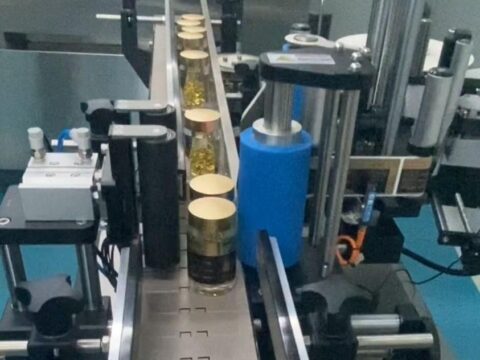
Round bottle labeling machine: how it works and how to choose
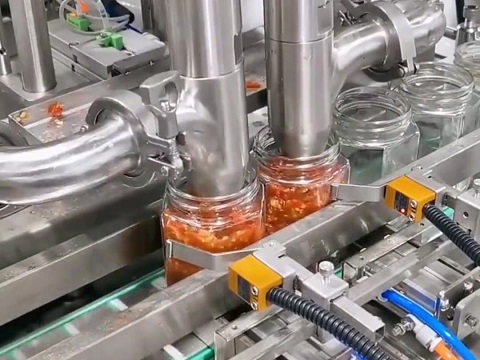
How to choose a paste filling machine for sauce and ketchup
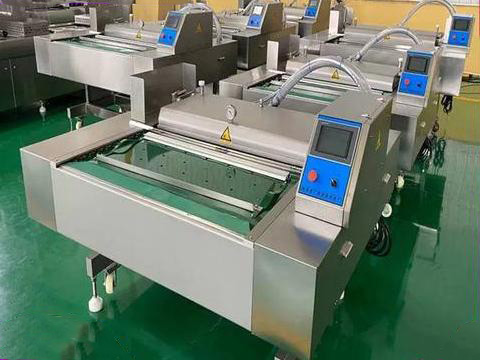
Vacuum packaging machine buying guide
High Shear Emulsifier
Latest Products
Product Categories
Stainless Steel Tank
- Stainless Steel Wine Tanks
- Stainless Steel Water Storage Tank
- Stainless Steel Fermentation Tanks
- Stainless Steel Jacketed Kettle
- Pasteurizing Machine
Meat Processing Machine
Fruit and VegetableProcessing Machinery
Oil Press Machines
Colloid Mill
Extraction Machine
Packaging Machinery
Contact Us
- Mobile/Wechat: +8618595716541
- Whatsapp: +8618736065220
- Email: info04@wanzhisteel.com
- Address: 10F, Building B, Erqi Center, Erqi District, Zhengzhou City, Henan Province, China