
Argentine Customer Orders 2000L & 4000L Starch Mixing Tanks
Project Overview
| Item | Contents |
| Customer Country | Argentina |
| Industry | Made with biodegradable materials |
| Product Name | Stainless steel mixing tank |
| Capacity | 2000L, 4000L |
| Material to be Mixed | Thermoplastic starch (TPS) |
| Main Raw Materials | Glycerin, water, potato starch |
| Mixing Method | Stirring + high-speed dispersion |
| Dispersion Speed | 1600 rpm |
| Customization Required | Yes |
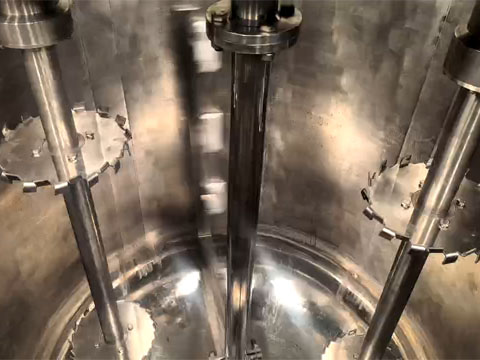
Project Background
A client in Argentina, primarily engaged in the research, development, and production of thermoplastic starch (TPS), is looking to purchase two stainless steel mixing tanks of different capacities—2,000 L and 4,000 L—for mixing and dispersing raw materials during the thermoplastic starch production process.
The main raw materials to be mixed include glycerin, water, and potato starch. These materials have high viscosity during the mixing process, and as the starch gradually absorbs water and gelatinizes, the viscosity of the system increases significantly. If the equipment is not properly configured, issues such as localized agglomeration, uneven mixing, and excessive motor load are likely to occur. Therefore, the client seeks equipment that balances mixing efficiency with operational stability.
Customer Requirements Analysis
At the beginning of the project, the customer submitted a request for quotation covering two aspects:
- The price of the complete equipment set, including the electrical control cabinet;
- The price of the equipment without the electrical control cabinet.
The customer wished to compare the overall procurement costs of the two options and make a final decision based on the factory’s existing control system.
In addition to price, the client placed particular emphasis on the following technical requirements:
- The ability to process high-viscosity thermoplastic starch materials;
- A maximum rotational speed of 1,600 rpm for the dispersion system;
- Guaranteed thorough mixing of glycerin, water, and potato starch;
- Reduced energy consumption while ensuring ease of maintenance.
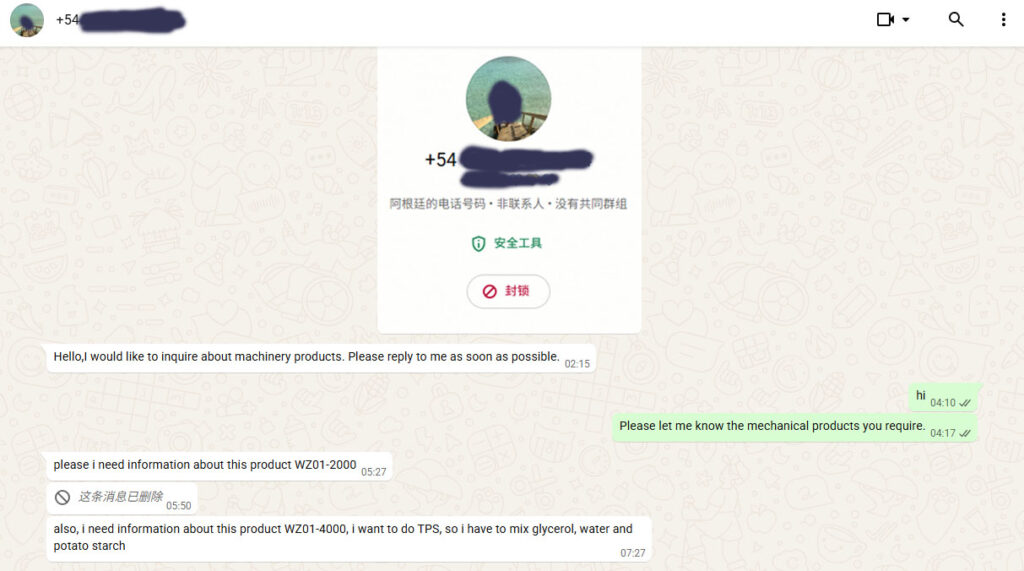
Engineering Analysis: Why Is the Three-Motor Configuration Recommended?
Based on the material information provided by the customer, we first analyzed the mixing process.
Thermoplastic starch systems are typical high-viscosity mixing applications; in particular, the system’s viscosity rises rapidly once the starch has fully absorbed water. For materials of this type, it is difficult to achieve uniform mixing using only standard mixing paddles, while using high-speed dispersion equipment alone cannot ensure stable circulation of the material throughout the entire tank.
Drawing on our experience with similar projects, we initially recommended that the customer adopt a three-motor configuration, consisting of:
- One high-power, low-speed mixing motor to drive overall circulation throughout the tank;
- Two high-speed dispersion motors to improve the dispersion efficiency between the starch and the liquid and reduce clumping.
This configuration balances macro-level circulation with local dispersion, making it particularly suitable for large-scale production of high-viscosity materials.
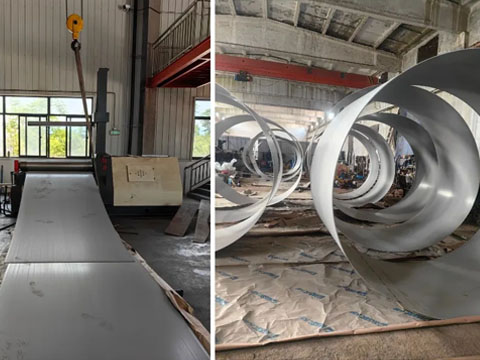
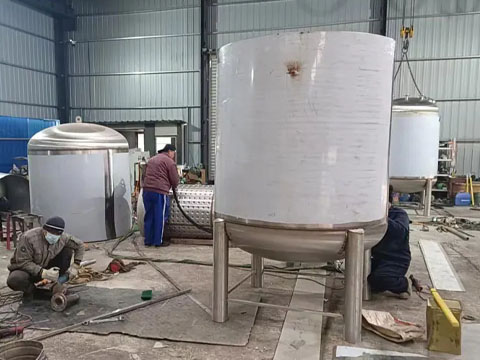
Optimizing Equipment Solutions Based on Customer Needs
During further discussions, the customer expressed a desire to minimize the number of units to reduce initial procurement costs and future maintenance efforts, and therefore proposed a two-motor configuration.
In response to the customer’s needs, we re-evaluated the mixing process and adjusted the equipment configuration. The final solution consists of:
- One high-power mixing motor responsible for overall circulation;
- One high-speed dispersion motor responsible for material dispersion.
This configuration not only meets the client’s production process requirements but also effectively controls equipment costs, striking a balance between performance and investment.
Throughout the adjustment process, we did not simply reduce the number of motors; instead, we re-optimized the motor power, mixing methods, and equipment structure to ensure the equipment remains capable of handling the high-viscosity conditions associated with thermoplastic starch.
Final Equipment Configuration
2000L mixing tank
| Configuration | Parameters |
| Capacity | 2000L |
| Dispersing motor power | 18.5 kW |
| Agitating motor power | 11 kW |
| Dispersing speed | 1600 rpm |
4000L mixing tank
| Configuration | Parameters |
| Capacity | 4000L |
| Dispersing motor power | 22 kW |
| Agitating motor power | 15 kW |
| Dispersing speed | 1600 rpm |
Customization Highlights of This Project
Compared to standard equipment, the core value of this project lies not merely in providing a set of mixing tanks, but in the targeted optimizations made during the equipment selection phase based on the customer’s production process. Specifically, this includes:
- Re-matching the motor power based on the high viscosity characteristics of thermoplastic starch;
- Optimizing the originally recommended three-motor configuration to a two-motor configuration while meeting the client’s cost-control requirements;
- Maintaining high-speed dispersion capability at 1,600 rpm to meet the client’s process requirements;
- Providing two quotation options—one including a control cabinet and one excluding it—to allow the client to choose based on their existing factory automation system.
This equipment customization, based on actual operating conditions, not only enhances the solution’s applicability but also helps the client achieve a more reasonable balance between equipment investment and production efficiency.
Project Summary
For the production of high-viscosity materials, the selection of mixing equipment cannot be based solely on volume or standard configurations; instead, it requires a comprehensive consideration of multiple factors, including material characteristics, production processes, speed requirements, equipment energy consumption, and the customer’s budget.
In this project, by analyzing the mixing characteristics of thermoplastic starch, we optimized the number and power of the motors. While meeting the customer’s requirement for high-speed dispersion at 1,600 rpm, we adjusted the design to a two-motor configuration that better aligns with actual needs. The result is a customized solution that balances mixing performance, equipment cost, and operational stability, providing reliable equipment support for the customer’s future production.
Related Products
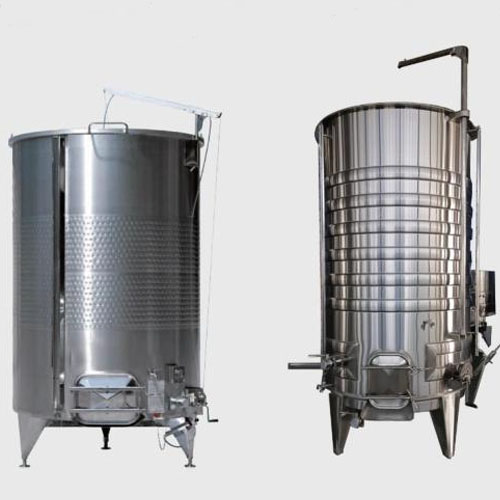
Stainless Steel Floating Roof Tank
Stainless Steel Floating Roof Tank Stainless Steel Floating Roof Tank Introduction In winemaking, the thoroughness…
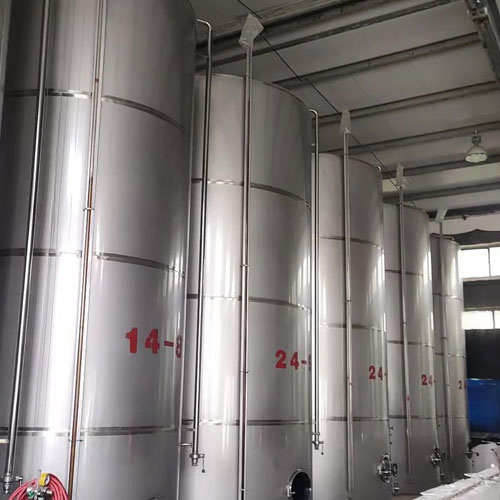
Stainless Steel Wine Storage Tanks
Stainless Steel Wine Storage Tanks Introduction Wine storage tanks are indispensable storage equipment in the…
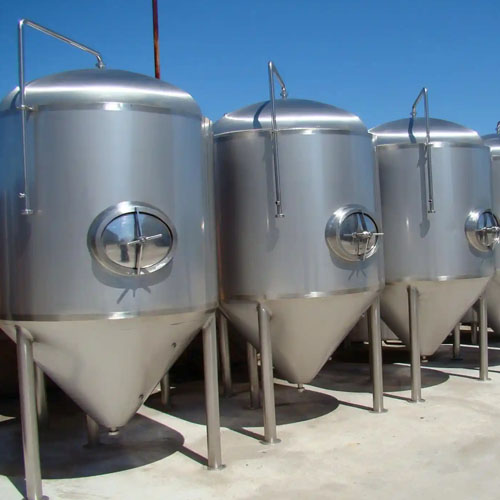
Conical Wine Fermentation Tanks
Conical Wine Fermentation Tanks Stainless steel conical wine fermentation tank Introduction Stainless steel conical wine…
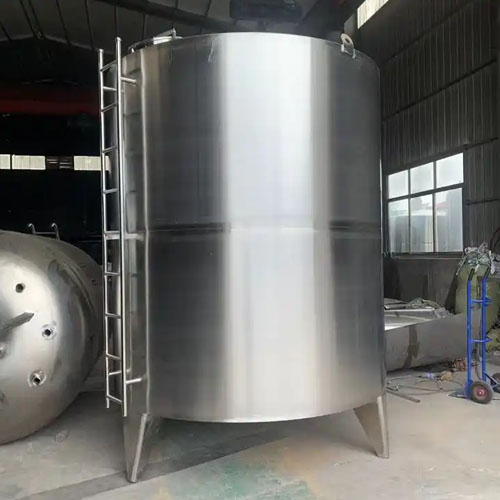
5000L Stainless Steel Storage Tanks
5000L Stainless Steel Storage Tanks 5000L Stainless Steel Storage Tank Introduction Our 5,000-liter stainless steel…
Stainless Steel Wine Fermentation Tanks
Stainless Steel Wine Fermentation Tanks Introduction Stainless steel wine fermentation tanks are essential equipment for…
Contact Us