
Stainless Steel Spherical Evaporator vs Other Concentration Methods
Most buyers pick a concentration method by habit. They keep ordering the same industrial evaporator their old supplier sold them five years ago, even when their feedstock changed. That habit gets expensive when you move from a thin broth to a heat-sensitive herbal extract or a sticky jam. This guide breaks the habit with facts. We compare a stainless steel spherical evaporator against falling film, thin film, rotary, membrane, freeze and single-effect vacuum concentrators using real specs, not marketing claims. You will see where each method wins on heat sensitivity, viscosity, batch size and scale. By the end you get a decision table you can take to your purchaser.
Wanzhi Machinery builds these units in SUS304 and SUS316L for pharma, food and chemical plants in more than 100 countries. We also sell a honey concentrator and an integrated extraction and concentration unit for full lines.
The goal here is simple. Match the right concentration method to your material so you protect quality and cut energy cost. You also get a model table with real evaporation rates from 70 kg/h on the WZ-300 to 350 kg/h on the WZ-2000, so you can size the unit before you ask for a quote. We keep the tone plain because you are a buyer who needs answers, not a textbook reader.
what is a spherical evaporator
definition and alternate names
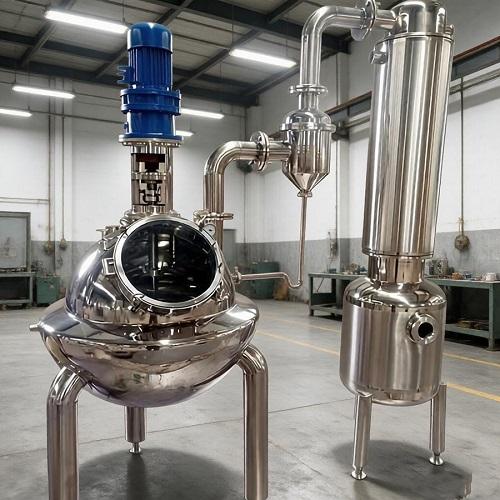
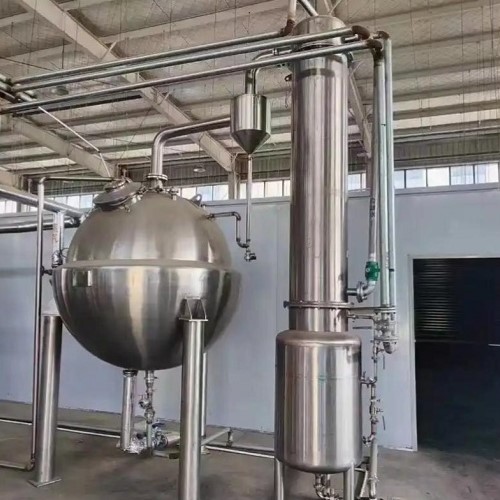
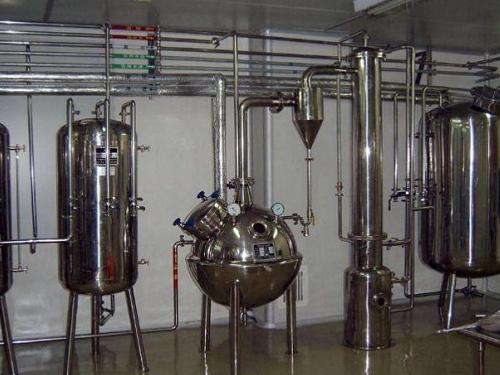
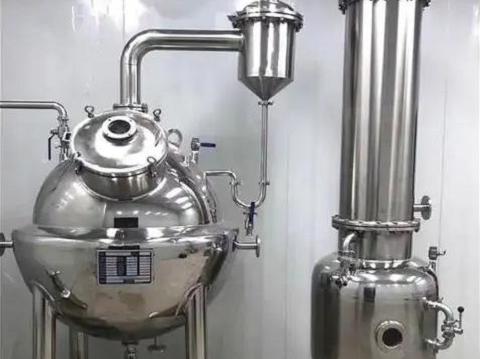
A stainless steel spherical evaporator is a batch vacuum concentration vessel built as a spherical tank. Under reduced pressure the liquid boils at a lower temperature, so heat-sensitive materials keep their active compounds. Buyers also meet this machine under other names. It is called a spherical concentrator, a vacuum concentrator tank, or simply a vacuum evaporator in many spec sheets. The spherical shape is not decoration. It spreads the heating surface evenly and gives the vapor room to separate from the liquid, which raises efficiency versus a straight-walled kettle. Wanzhi Machinery builds six models from 300 L to 2000 L volume. The spherical form also cuts the floor space a straight column would need for the same hold. You can review the full spec sheet on the stainless steel spherical evaporator page.
core structural components
The unit is built from a few parts that work together:
- Spherical concentration tank body in SUS304 or SUS316L, mirror-polished inside and matte outside.
- Tube-type condenser that turns vapor into liquid.
- Gas-liquid separator that vents uncondensed gas.
- Cooler plus receiving tank with a sight glass for visual check.
- Auxiliary interfaces: feed port, manhole, steam inlet, jacket, and condensate or vacuum ports.
These parts are GMP-compliant and rated for food and pharma duty. The body, condenser and separator form a closed loop, so the process stays clean and the operator can watch the condensed liquid collect. Every unit carries ISO 9001, ISO 14001 and CE marks, which matter when you export to regulated markets. Wanzhi Machinery offers this equipment as part of its broader industrial extraction equipment range.
how a spherical evaporator works
vacuum concentration principle
Evaporation is the change of a liquid into vapor at its surface. Under vacuum the boiling point drops, a fact explained well by the physics of evaporation at Encyclopaedia Britannica. A spherical evaporator runs at vacuum degree from -0.05 MPa to -0.08 MPa depending on model. Lower pressure means lower boiling temperature, so the material concentrates without scorching. That matters for herbal extracts, enzymes and flavors that break down above certain temperatures. Steam enters the jacket at 0.15 MPa while jacket pressure stays around 0.09 MPa, delivering gentle heat through the sphere wall. Plants see lower steam use than open kettles because the lower boiling point needs less heat per liter removed. This is the same physics that lets water boil below 100 degrees at altitude, only here we control it with a vacuum pump.
the condensation and separation cycle
The vapor-liquid mix leaves the sphere and enters the tubular condenser. There, vapor becomes condensed liquid and the gas-liquid separator vents the uncondensed gas to vacuum. The condensed liquid drops into the receiving tank, which has a sight glass for level checks. A reflux option lets you send part of the condensate back for alcohol recovery or cleaner separation. The cycle repeats until the batch reaches target density. Because evaporation happens at low temperature under vacuum concentration, you save energy versus open boiling and protect product quality. Operators watch the sight glass to judge when the receiving tank needs draining, which keeps the run hands-on and safe. The closed loop also means solvent vapor does not escape to the room, a real plus for alcohol recovery.
spherical evaporator vs film, thin film and rotary evaporators
Picking the right method depends on your feed, your volume and how gentle the heat must be. The table below gives a fast read, then we go method by method. We ranked each method on five points so you can scan the table and skip the parts that do not apply to your plant.
at-a-glance comparison table
| Method | Best for | Heat | Viscosity | Mode | Scale |
| Spherical evaporator | Herbal, juice, solvent | Low-temp safe | Medium | Batch | 300 to 2000 L |
| Falling film | Water-like, high volume | Moderate | Low | Continuous | High |
| Thin film | Sticky, heat-sensitive | Heat-safe | High | Continuous | Medium |
| Rotary | Lab, pilot | Safe | Low | Batch | Small |
| Membrane | Salt, protein | Cold | Low | Continuous | Medium |
| Freeze | Premium flavor | Cold | Low | Batch | Low |
| Single-effect vacuum | General broth | Low-temp safe | Medium | Batch | Small to mid |
vs falling film evaporator
A falling film evaporator pumps feed down tubes, so it suits high-volume, low-viscosity liquids. The spherical evaporator is batch and gives flexible reflux for solvent recovery.
vs thin film evaporator
A thin film evaporator handles sticky, heat-sensitive product with a wiper on a heated wall. The spherical concentrator is simpler and cheaper to maintain for medium batches.
vs rotary evaporator
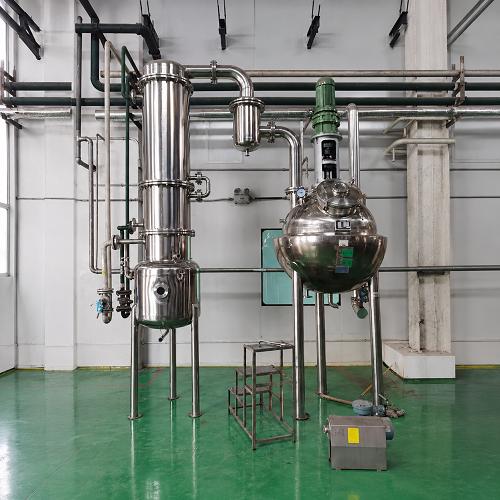
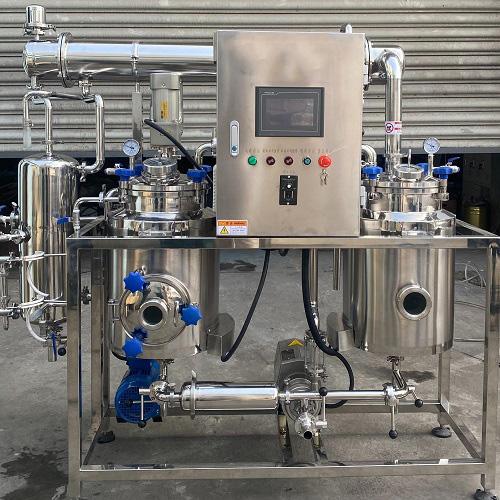
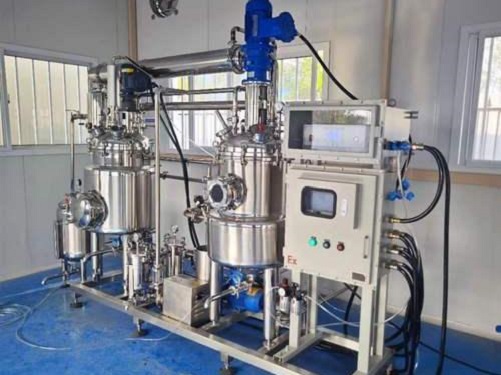
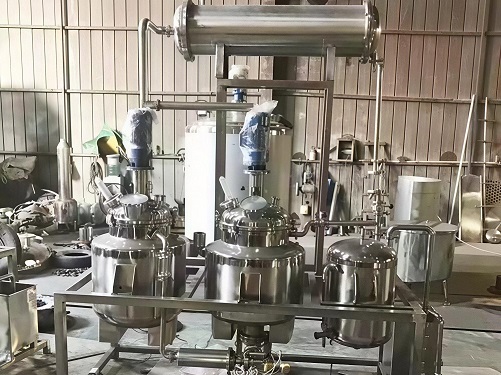
A rotary evaporator is a lab tool that spins a flask under vacuum to strip solvent. The stainless steel spherical evaporator scales that idea to 300 to 2000 L. Lab and pilot buyers who want extraction, concentration and filtration in one closed skid can use our small extraction and concentration machine.
spherical evaporator vs membrane, freeze and vacuum concentrators
The next group covers cold and batch methods that compete with the sphere on gentle heat or simple duty. Read each one against your feed to see where it fits.
vs membrane concentration
Membrane concentration filters water out near cold temperature but clogs with solids. The spherical evaporator tolerates more solids, so it suits crude extracts and pulpy juices.
vs freeze concentration
Freeze concentration removes water by ice, the gentlest route for premium flavors, yet slow and energy-heavy. The spherical evaporator uses vacuum for faster, cheaper daily runs.
vs a standard single-effect vacuum concentrator
A single-effect vacuum concentrator is a jacketed kettle with a condenser. The spherical evaporator adds a gas-liquid separator, lifting efficiency and making alcohol recovery cleaner. If you already own a jacketed kettle, the sphere is the upgrade step before you jump to a film system.
pros and cons of spherical evaporators
advantages
The stainless steel spherical evaporator brings clear wins for batch plants. Vacuum concentration lowers the boiling point, so heat-sensitive extracts keep their active compounds. The SUS304 or SUS316L build is GMP-compliant and mirror-polished for clean duty. You can tune vacuum, temperature and reflux to match each batch, and the sphere shape raises heat-transfer efficiency while cutting energy use. The reflux control lets you recover alcohol from tinctures, which pays back the unit in solvent savings for some plants.
Cleaning stays simple because the mirror finish resists residue and the manhole gives full access to the sphere. Batch control means you can stop, sample and adjust without losing a full continuous line. Most buyers recover the cost through energy and solvent savings within the first year. The short heat path from jacket to product means less fouling, so runs stay productive across the day.
limitations
The unit is batch, not continuous, so high throughput may need multiple tanks or a film system. Viscosity above a certain point slows evaporation, and electric models top out at 36 kW heating. It also needs a stable vacuum source and condenser water. For straight water concentration at huge scale, a falling film line is often cheaper per ton. Plan for condenser cooling water or a chiller, since the system cannot condense without it.
Lead time runs longer than off-the-shelf kettles because each tank is built to order. High daily tonnage may need two spheres in rotation or a different method. Operators need basic vacuum training, though most plants already have this skill on site.
best-use cases and applications
pharmaceutical and herbal extracts
Pharma plants use the spherical concentrator for herbal extracts, vitamins, antibiotics and alcohol recovery. Low-temperature vacuum concentration protects active ingredients that break down under heat. The GMP build and sight-glass receiving tank suit validated lines. Common runs include elderberry, ginseng and mushroom extracts where color and potency must survive the process. Validated clean-in-place cycles fit sites that must log every run. Scale-up is straightforward because the six models share the same operating logic. See model details on the stainless steel spherical evaporator page.
food and beverage
Food makers concentrate fruit juices, jams, plant extracts, condiments, honey and purify alcoholic drinks. The low-temperature run keeps color and aroma in the final product. Honey makers use it to drop moisture without caramelizing sugar, keeping the raw flavor buyers pay more for. The same low-temperature approach suits plant protein isolates that clump under heat. Sauces and broth concentrates also hold texture better at low temperature. You protect volatile top notes that open kettles would boil off. For honey, our honey production line covers the full process from raw to packed.
chemical and solvent recovery
Chemical and light-industry users recover organic solvents, concentrate dilute solutions, purify intermediates and process cosmetic raw materials and health supplements. The reflux and gas-liquid separator make solvent recovery clean and safe. Think menthol recovery, essential-oil stripping and botanical concentrate for cosmetics, the kind of work our plant oil extractor does. The closed reflux keeps volatile fractions from venting to the room. Pair it with an integrated extraction and concentration unit for a closed process.
how to choose the right concentration method
decision factors
Start with four questions. What is your feed viscosity and solid load? How heat-sensitive is the product? What batch size and daily volume do you run? What is your budget for energy and maintenance? Answer these and the method choice gets easy. Write the numbers down. A one-page spec beats memory when three suppliers quote different methods. Do not forget install cost, since a sphere needs less civil work than a tall falling-film tower. Match the method to the worst case in your mix, not the average, so you are never stuck on a tough batch. Bring a sample to the test, since a 20 liter trial beats a spreadsheet guess.
when the spherical evaporator wins (and when it does not)
Choose the spherical evaporator for heat-sensitive, medium-viscosity batches from 300 L to 2000 L, especially with solvent recovery. Skip it for continuous mega-volume water concentration, where a falling film evaporator wins on cost. For sticky high-solid streams, a thin film evaporator may serve better. It also shines when you run many small changeovers a day, because a batch sphere cleans faster than a film system that needs a full flush. If your feed is mostly water with low value, the payback on a sphere may be weak. A sphere is the safe middle ground between a kettle and a film line for mixed product plants. Talk to our team with your feed sample and we will size the model, usually WZ-500 to WZ-1000 for most mid plants.
frequently asked questions
Yes, in most cases. A spherical evaporator is a type of vacuum concentrator tank built with a spherical body. Buyers also call it a spherical concentrator or vacuum evaporator. The spherical shape improves vapor-liquid separation versus a straight-walled vacuum kettle.
Wanzhi Machinery models run at vacuum degree from -0.05 MPa to -0.08 MPa depending on size. This reduced pressure lowers the boiling point so the material concentrates at low temperature. Higher vacuum means lower temperature and gentler treatment of heat-sensitive feeds. Most plants run near -0.06 MPa for a good speed and gentle-heat balance.
It handles medium-viscosity liquids well, such as juices, extracts and syrups. Thick or high-solid feeds slow evaporation and may need a thin film evaporator instead. For pulpy or suspended loads, the spherical body still outperforms a flat-bottom kettle. Run a sample if unsure, since viscosity shifts with solids and temperature.
For large, continuous, water-like volume, a falling film evaporator is cheaper per ton and runs nonstop. The spherical evaporator is batch and best up to 2000 L per run.
Yes. The tank is SUS304 or SUS316L stainless steel, mirror-polished inside and GMP-compliant, with CE, ISO 9001 and ISO 14001 certifications. For food duty the design follows thermal-processing hygiene principles outlined by the U.S. FDA FSMA program. Ask for the material certificate if your feed is corrosive.
Both options exist. Most models use a steam jacket at 0.15 MPa with jacket pressure around 0.09 MPa. Some units offer electric heating at 24 kW, 27 kW or 36 kW. Steam suits plants with boiler capacity, and electric fits sites without steam.
Inquiry Form
Latest Articles
Bubble Washing Machine for Vegetables vs Brush Washer
Stainless Steel Spherical Evaporator vs Other Methods
Honey Concentrator Machine: Uses, Types & How It Works
Herb Extraction Machine: How It Works and Types
Jacketed Stainless Steel Mixing Tank: How to Choose
Latest Products
Product Categories
Stainless Steel Tank
- Stainless Steel Wine Tanks
- Stainless Steel Water Storage Tank
- Stainless Steel Fermentation Tanks
- Stainless Steel Jacketed Kettle
- Pasteurizing Machine
Meat Processing Machine
Fruit and VegetableProcessing Machinery
Oil Press Machines
Colloid Mill
Extraction Machine
Packaging Machinery
Contact Us
- Mobile/Wechat: +8618595716541
- Whatsapp: +8618736065220
- Email: info04@wanzhisteel.com
- Address: 10F, Building B, Erqi Center, Erqi District, Zhengzhou City, Henan Province, China