
Jacketed Stainless Steel Mixing Tank Choose: How It Works, Jacket Types, and How to Choose
Herb extraction machine is industrial equipment that pulls active compounds from plant material using heat, solvent, or pressure. We build these systems at Wanzhi Machinery for pharmaceutical, food, and cosmetics factories in more than 100 countries. If you run a production line that needs consistent yield, this guide explains how the equipment works, the main types, and how to choose the right unit.
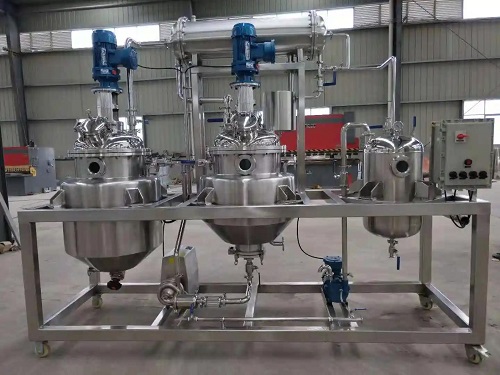
The model you choose sets your yield, your solvent bill, and your cleaning load. Our extraction and concentration unit and small all-in-one lines cover lab, pilot, and full industrial scale. See the full extraction machine range for every model we build.
what is an herb extraction machine
An herb extraction machine, also called a herbal extraction machine or botanical extraction machine, turns raw leaves, roots, and flowers into a liquid or concentrated extract. It works by contacting the plant with a solvent such as water or ethanol, then separating the liquid from the solid waste. A plant extraction equipment line does this at scale, not as a one off batch.
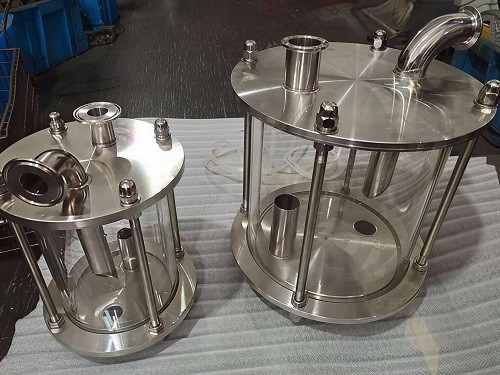
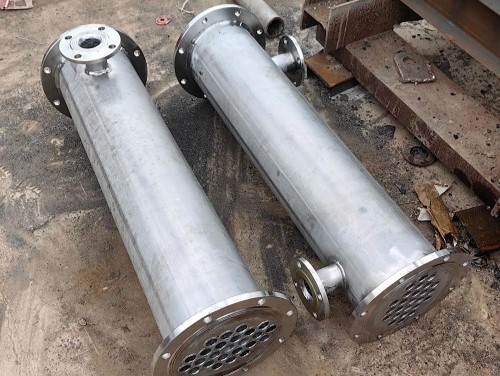
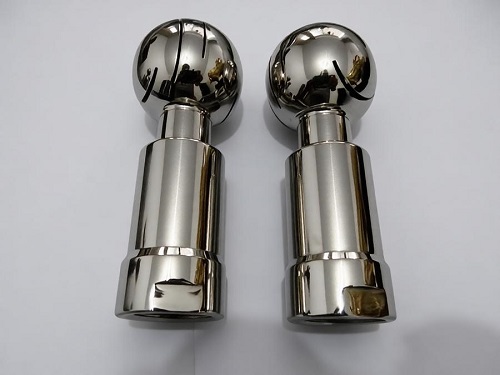
key parts of an herb extraction machine
Every complete industrial herb extractor shares five core parts:
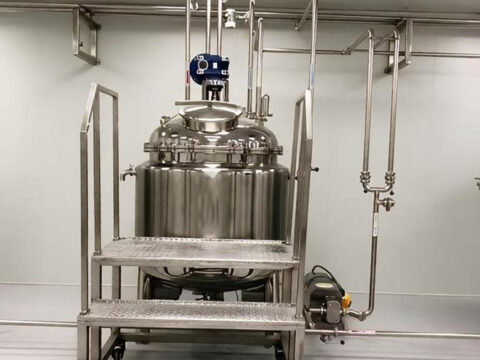
- Extraction tank. The vessel where herb meets solvent and heat. Our tanks use 304 stainless, with 316L for corrosive duty.
- Condenser. Cools vapor back to liquid so solvent is not lost to the air.
- Separator. Splits extract from water or oil phases after condensation.
- Concentrator. Removes solvent to raise the extract to target density.
- CIP system. Clean in place spray balls and piping that wash the tank without teardown.
Together these parts form a closed loop. The herb goes in once, the solvent circulates, and a clean extract comes out. That closed design is what separates an industrial herb extractor from open kettles or home infuser gadgets.
how an herb extraction machine works
The process runs in five stages from loading to finished extract.
pre-treatment and loading
You cut or grind the dried herb to a set particle size. Smaller particles expose more surface, so extraction is faster. Too fine a grind, though, clogs the filter and slows the next step. Most lines target a coarse cut of a few millimeters and keep the load below the tank’s working volume.
solvent addition and the extraction phase
You add solvent at five to ten times the herb volume. Steam jacket heating brings the mix to a boil in 20 to 30 minutes. Thermal reflux then keeps the herb bed wet and the concentration gradient high, which drives the active compound into solution. For heat sensitive actives, lines switch to ultrasonic or low temperature vacuum instead.
solid-liquid separation
Once the compound is in solution, you remove the spent herb. Plate or bag filtration catches solids. Centrifuges do the same job faster on large batches. Clean separation here protects the concentrator downstream.
concentration and solvent recovery
The extract moves to a concentrator, where target specific gravity lands near 1.2 to 1.35. The vapor is condensed and the solvent recovered for reuse. That recovery loop cuts both cost and waste on every batch.
final drying and processing
For powders, the concentrate is dried by spray or vacuum. For liquids and pastes, it is stabilized and filled. A small herb extraction machine does all of this inside one closed skid, which suits lab and pilot work.
main types of herb extraction machines
Buyers choose a type by the compound and the scale. Here are the five we ship most.
multifunction extraction tank (water/ethanol, thermal reflux)
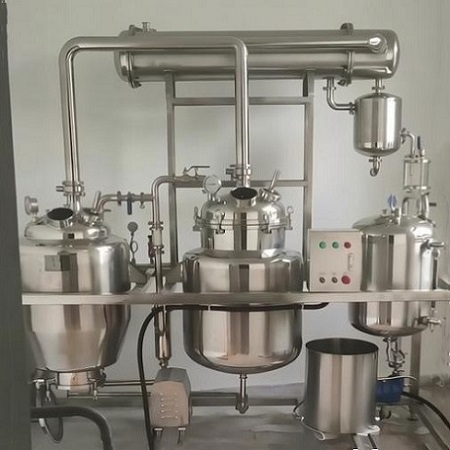
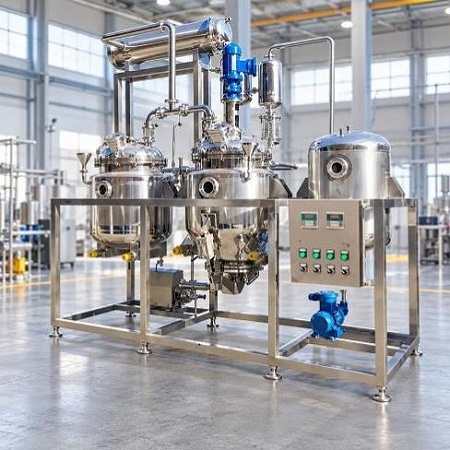
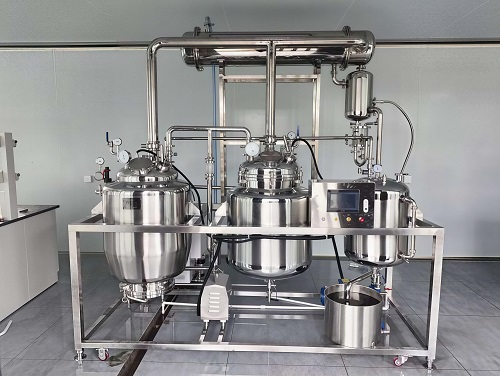
Our thermal reflux extraction and concentration unit uses steam jacket heating and circulating extraction. Tank volume runs 500 L to 6000 L, customizable, in 304 stainless with 316L optional. Models span RCN-500 through RCN-6000. It suits water and ethanol extraction of most botanicals and is the workhorse for plant scale lines.
ultrasonic extraction machine
Ultrasonic units use sound waves to create cavitation that breaks cell walls. They work at lower temperature and shorten cycle time for delicate actives.
supercritical CO2 extraction machine
This skid pushes CO2 above its critical point to pull oils and actives with no solvent residue. It fits high value essential oils and pharma grade extracts.
steam / hydrodistillation unit (essential oils, hydrosol)
A plant oil extractor steams aromatic plants to capture pure oil and hydrosol. Volume spans 50 L to 2000 L in SUS304, with water over oil, water in oil, and direct steam methods.
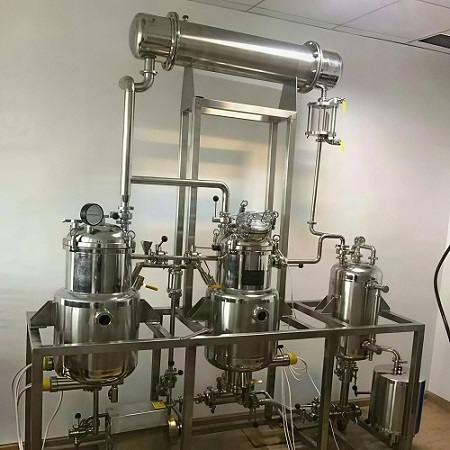
small all-in-one extraction, concentration and filtration machine
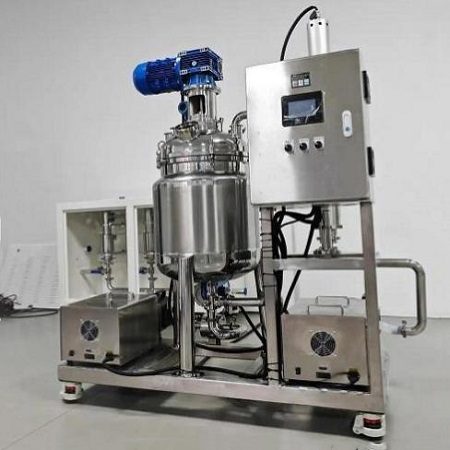
Our small extraction, concentration and filtration machine packs extraction, concentration, filtration, and solvent recovery into one closed system. Full volume is 16 L to 75 L, storage 20 L to 120 L. Vacuum concentration boils as low as 35 C, and solvent recovery reaches 95 percent or more. Models run WZ-10 to WZ-50. These are industrial lab and pilot units for R&D and small batch, not home infuser gadgets.
herb extraction methods: which one to choose
Pick a method by what you are pulling out and how much heat the compound tolerates. The table maps each method to its best use, strengths, limits, and the machine that runs it.
| Method | Best for | Pros | Limitations | Typical equipment |
| Water / thermal reflux | General botanicals, teas, ethanol extracts | Low cost, simple, scalable | Heat can degrade some actives | Multifunction extraction tank |
| Ultrasonic | Heat sensitive actives, fast cycles | Lower temp, shorter time | Lower throughput per run | Ultrasonic extraction machine |
| Supercritical CO2 | Essential oils, pharma grade | No solvent residue, clean | High capital cost | Supercritical CO2 skid |
| Steam / hydrodistillation | Essential oils, hydrosol | Pure oil, food safe | Water soluble actives lost | Plant oil extractor |
| Vacuum low temp | Heat sensitive concentrates | Protects actives, recovers solvent | Needs vacuum system | Small all-in-one machine |
Each method pairs with a machine type above. Match the compound first, then size the unit to your daily volume.
how to choose the right herb extraction machine (buying guide)
Use this guide to move from a vague idea to a clear spec. We review each order against these points before we cut steel.
define your output form (liquid / paste / powder)
Know the final form first. Liquids need only extraction and filtration. Pastes add concentration. Powders add a dryer. The small extraction, concentration and filtration machine covers liquid to paste in one closed skid.
size by capacity (lab 5 to 100 L / pilot 100 to 500 L / industrial 1000 L and up)
Lab units prove a recipe. Pilot bridges to scale. Industrial runs daily output. Our extraction and concentration unit starts at 500 L for plant scale, while the small line serves 16 L to 75 L for R&D and trial batches.
material and compliance (304/316L, CIP)
Specify 304 stainless, 316L for corrosive lines, and CIP as standard. Surface finish and cleanability fall under FDA food safety requirements for food contact surfaces.
automation and solvent recovery
PLC control cuts operator error and records each cycle. Solvent recovery above 95 percent pays back fast on ethanol lines. Closed systems also meet explosion proof needs where flammable solvents are used.
budget and total cost of ownership
Look past the sticker price. Recovery rate, energy use, and clean time drive the real cost. A pricier closed unit often beats a cheap open one across three years of running.
industries that use herb extraction machines
The same machine serves many sectors once you change the recipe and the solvent. We see three groups most.
pharmaceuticals and TCM
Traditional Chinese medicine and modern pharma use extraction for decoctions, tinctures, and standardized actives. GMP grade lines with full CIP dominate here because audit trails matter and batch records must be clean.
food, beverage and natural flavors
Flavor houses pull vanilla, tea, and botanical notes for drinks and snacks. Water and ethanol methods keep outputs food safe and label friendly. A botanical extraction machine here often runs continuous campaigns.
cosmetics, aroma and essential oils
A plant oil extractor feeds cosmetics and aromatherapy with pure oil and hydrosol. Britannica on essential oil notes their use across scent and personal care products, which explains the steady demand from this segment.
common mistakes to avoid when buying an herb extraction machine
These errors cost buyers time and money before the first batch runs.
mismatching method to compound
Picking boiling reflux for a heat sensitive oil degrades the product. Match method to compound first, as the table in the methods section shows, then size the machine.
ignoring solvent recovery and explosion-proof needs
Ethanol lines without recovery waste solvent and fail safety checks. Size recovery and explosion proof rating before you order, not after commissioning.
undersizing or oversizing capacity
Too small means repeat batches and overtime. Too large means wasted heat and capital sitting idle. Size from real daily output, not a hopeful forecast.
overlooking compliance and cleanability
A rough interior fails audit and traps residue between batches. Require CIP, food grade finish, and the right certification from the start of the spec.
faq about herb extraction machines
It is industrial equipment that uses heat, solvent, or pressure to pull active compounds from plant material. Unlike a home infuser, it runs closed, scalable cycles built for factories and consistent yield.
The terms overlap. Botanical extraction machine is the broader label covering any plant source, while herb extraction machine usually means culinary and medicinal herbs. The hardware belongs to the same family.
Steam distillation or supercritical CO2. Steam suits most oils at lower cost. CO2 gives residue free output for premium lines. A plant oil extractor handles steam distillation at 50 L to 2000 L.
Pilot lines sit between 100 L and 500 L. That range proves scale up without the cost of a full industrial tank. Lab units of 5 to 100 L come first for recipe work.
Closed systems recover most of it. Our small all-in-one reaches 95 percent or more, and large thermal reflux units recover residual solvent from the herb bed for reuse.
Inquiry Form
Latest Articles
Bubble Washing Machine for Vegetables vs Brush Washer
Stainless Steel Spherical Evaporator vs Other Methods
Honey Concentrator Machine: Uses, Types & How It Works
Herb Extraction Machine: How It Works and Types
Jacketed Stainless Steel Mixing Tank: How to Choose
Latest Products
Product Categories
Stainless Steel Tank
- Stainless Steel Wine Tanks
- Stainless Steel Water Storage Tank
- Stainless Steel Fermentation Tanks
- Stainless Steel Jacketed Kettle
- Pasteurizing Machine
Meat Processing Machine
Fruit and VegetableProcessing Machinery
Oil Press Machines
Colloid Mill
Extraction Machine
Packaging Machinery
Contact Us
- Mobile/Wechat: +8618595716541
- Whatsapp: +8618736065220
- Email: info04@wanzhisteel.com
- Address: 10F, Building B, Erqi Center, Erqi District, Zhengzhou City, Henan Province, China