
How to Choose a Colloid Mill: Vertical vs Horizontal vs Split Type
Buying a colloid mill looks simple, until you realize the same machine ships in three very different layouts. Pick the wrong one and you waste floor space, fight cleaning, or bottleneck your whole line. This guide walks through the vertical, horizontal, and split type colloid mill so you can match the right design to your product, capacity, and budget.
What a colloid mill actually does
A colloid mill is a wet ultra-fine grinder. A high-speed rotor shears material against a stationary stator and turns it into a stable emulsion or suspension, usually somewhere between 2 and 50 microns. It is the machine behind smooth nut butter, silky tahini, hot chili sauce, and plenty of creams and pastes you use every day. All three types grind the same way. The only real difference is how the stator and rotor are mounted, and that is what this guide is about.
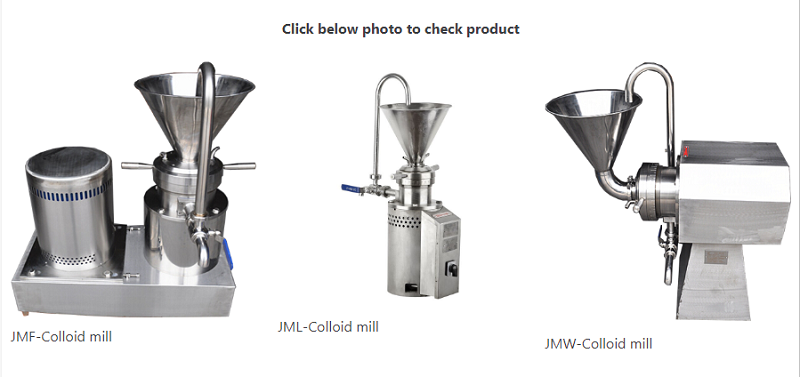
The three types of colloid mills, explained
1. Vertical colloid mill
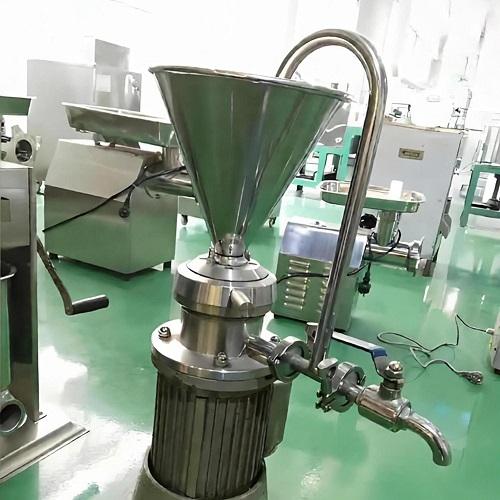
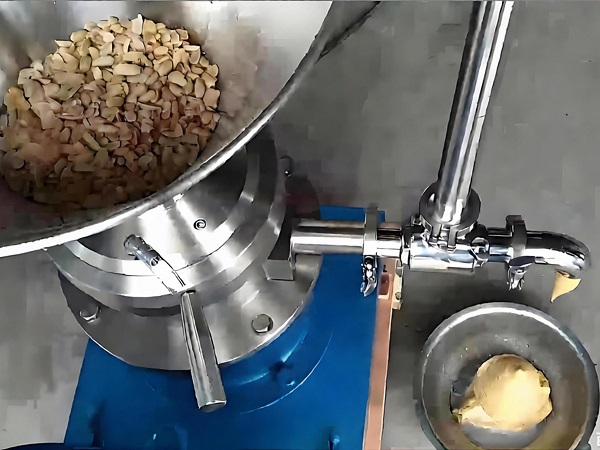
In a vertical colloid mill, the motor, rotor, and stator sit in a vertical column. Material drops in from the top and comes out the side.
It is the cheapest option, takes up the least room, and is easy to move into a small workshop. The trade-off is cleaning: the lower chamber is awkward to reach, and it is not built for very thick product or running around the clock. Most startups, labs, and low-to-medium batches of peanut butter, sesame paste, or mayonnaise start here.
2. Horizontal colloid mill
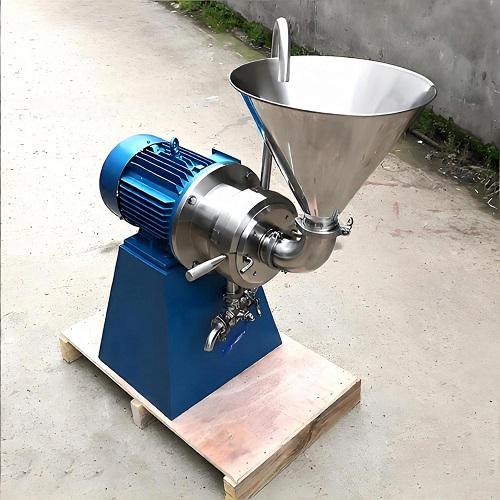
A horizontal colloid mill puts the grinding set on a horizontal shaft, usually driven by a separate motor through a coupling.
Heat dissipates better, so it stays stable during long continuous runs, and it drops neatly into an automated line. You pay for that with a bigger footprint, a higher price, and a more involved foundation. This is the choice when you are pushing hundreds of kg/h of sauce, dressing, or dairy emulsion.
3. Split type colloid mill
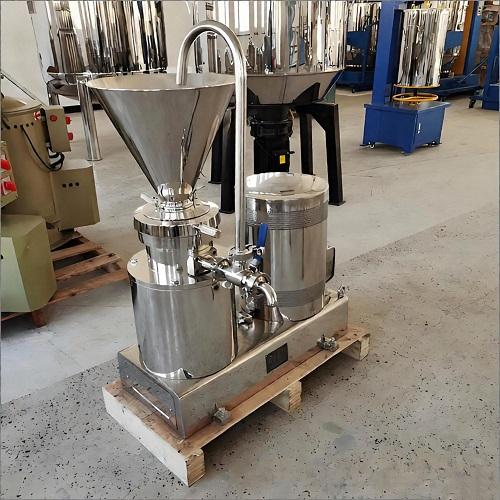
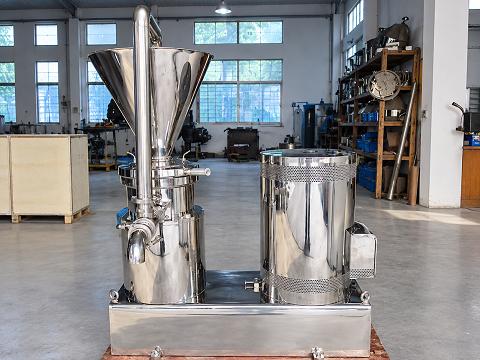
The split type colloid mill (our JMF-140 is one) keeps the motor separate from the grinding head, which you can pop open or pull off in seconds.
That makes cleaning and rotor access fast, the layout flexible, and downtime short. It costs a bit more than a basic vertical unit, and you do need to keep the coupling aligned. Plants with strict hygiene rules and several product changeovers a day tend to prefer it.
Vertical vs horizontal vs split: side by side
| Factor | Vertical | Horizontal | Split |
|---|---|---|---|
| Footprint | Small | Large | Medium |
| Capacity | Low to medium | High | Low to high |
| Cleaning ease | Moderate | Moderate | Excellent (quick-split) |
| Heat dissipation | Good | Best | Good |
| Price level | $ | $$$ | $$ |
| Best use | Startups / R&D | Mass production | Hygienic changeovers |
How to choose: 5 decision factors
- Product viscosity and abrasiveness. Thin dressings run on anything. Thick, oily, or gritty pastes do better on a horizontal or split for steady throughput.
- Daily volume. Under about 200 kg/h, a vertical is enough. Past that, look at horizontal or split.
- Floor space and integration. Cramped workshop points to vertical. An automated line points to horizontal. Mixed products point to split.
- Hygiene and changeover. Running several SKUs a day? Split type, for fast CIP.
- Budget and ROI. Vertical wins on upfront cost. Horizontal wins on output per hour. Split wins on labor and downtime.
Material matters: 304 vs 316L stainless steel
Every Wanzhi colloid mill body is food-grade 304 stainless steel as standard. We offer 316L when the product is corrosive or high in salt, think chili, citrus, or brine-based sauces. The grade you pick affects hygiene, lifespan, and whether you clear export inspections. If you want the full material spec, our sister company Wanzhi Steel publishes detailed data on 316 stainless steel sheet and other food-contact grades, which is handy when you are specifying equipment for EU or USDA lines.
Which model fits your application?
- Peanut or nut butter: a commercial peanut butter machine or nut butter grinder, vertical or split.
- Tahini or sesame paste: a tahini machine with a fine 304 stator.
- Chili or hot sauce: a chili sauce grinder in 316L to resist the acid.
- High-volume dressings and dairy: horizontal or split type for continuous runs.
Maintenance tip
Whatever you buy, a clean mill is a safe mill. Our step-by-step how to clean a colloid mill guide shows how to avoid cross-contamination and get more life out of the rotor.
Conclusion and next step
Go vertical for budget and space, horizontal for volume, split for hygiene and flexibility. Not sure which? Send us your product, target capacity, and country, and our engineers will point you to the right colloid mill model with a quote inside 24 hours.
Why Choose Us?
We are a professional colloid mill manufacturer in China, based in Zhengzhou, Henan Province, with over 14 years of production experience. Our products offer high customization. If you are interested in colloid mill solutions, please contact us.
Our extensive range of colloid mill models meets diverse production needs, including:
We also develop specialized colloid mills tailored for specific food applications, such as:
- Colloid Mills for Peanut Butter Grinding
- Colloid Mills for Sesame Paste Grinding
- Colloid Mills for Chili Sauce Grinding
- Colloid Mills for Nut Grinding
Inquiry Form
Latest Articles
How to choose a paste filling machine for sauce and ketchup
Vacuum packaging machine buying guide
High Shear Emulsifier
Colloid mill for peanut butter, tomato sauce and chili paste
How to choose a stainless steel wine fermentation tank
Latest Products
Product Categories
Colloid Mill
- Vertical Colloid Mill
- Split Colloid Mill
- Horizontal Colloid Mill
- Commercial Peanut Butter Machine
- Tahini Machine
- Chili Sauce Grinder
- Nut Butter Grinder
Stainless Steel Tank
- Milk Cooling Tank
- Stainless Steel Mixing Tank
- Cylindrical Stainless Steel Insulated Water Tank
- Horizontal Stainless Steel Water Tank
- Vertical Stainless Steel Water Storage Tank
- Stainless Steel Reactor
- Conical Fermentation Tank
Extraction Machine
Filling Machines
Tomato sauce Production Line
Contact Us
- Mobile/Wechat: +8618595716541
- Whatsapp: +8618736065220
- Email: info04@wanzhisteel.com
- Address: 10F, Building B, Erqi Center, Erqi District, Zhengzhou City, Henan Province, China