
Meatball Former for Fish Balls and Meat Paste
what the machine forms, and what it does not
Buyers often send us a photo of whole fillets and ask which former will turn them into balls. Neither machine on our meatball forming machine category page does that. Both take a prepared paste, not whole cuts. The commercial meatball forming machine page describes pre-processed meat paste and seasonings going into the chamber, while the dual-speed former page talks about filling being pushed through the die. Grinding, mincing and emulsifying happen before anything reaches the hopper.
Our meat processing solutions page sets out that order: rough processing with bone saws and meat cutters, mince fineness from meat grinders, then forming and emulsification with high-speed cutters and meatball formers. It names fish balls in that forming stage. So the question for a fish ball buyer is not whether the machine handles fish. It is whether the paste you feed is ready.
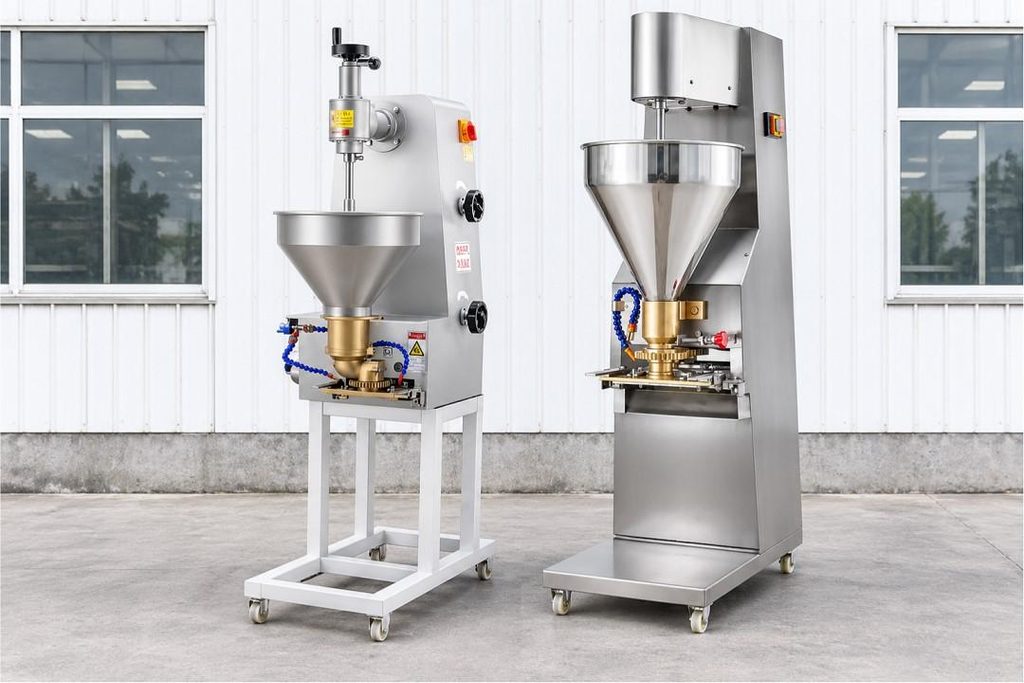
where fish balls appear on the Wanzhi site
Fish balls are not a footnote on our pages. The commercial page groups fish balls, shrimp balls and squid balls under “Fish Paste & Specialty Balls”, next to beef, pork, chicken and lamb balls. On the dual-speed page, fish balls appear in the product uses line and fish, squid and shrimp are named among the seafood varieties in its core uses section.
The meat processing machine category carries both formers alongside cutters and slicers, and our meatball forming machine how to choose guide compares the same two models on output, die sizes and footprint. Paste is where most of the questions land: what you feed, what changes between batches, and what you wash afterward.
paste handling inside the forming chamber
Both formers mix, extrude and cut in one pass. The WZ-605 family loads pre-processed paste into a chamber with multi-angle mixing blades, which the page calls mixing and toughening. Seasonings are blended in at the same time. No recipe, salt level, starch level or paste temperature is given on either machine page, and we will not supply one here.
WZ-702 splits feed and cutting across two motors with two variable frequency drives. One sets the auger speed, the other sets cutting frequency, both stepless. High-speed mode runs the two together for volume. Low-speed mode is gentler, and the page says the filling is not over-compressed, which gives denser and more uniformly rounded balls.
For buyers starting from frozen surimi blocks, Britannica’s surimi entry describes washed, minced fish flesh that gels when heated. We cite it as background reading, not as a process spec for our machines.
from screw extrusion to the cut
The commercial page describes a food-grade screw conveyor that delivers the mixed paste to the forming die at steady, uniform pressure. It says this reduces trapped air, since internal air pockets compromise ball quality. Rotating blades then cut the extruded strands into spheres, and cutting speed automatically follows the extrusion rate. That chain is the whole forming step: mix, push, cut.
WZ-702 gives the operator separate control over the two halves of that chain. Feed speed and cutting frequency can be set independently on the panel. The page describes high-speed mode as volume work and low-speed mode as the route to denser, rounder balls. We do not publish a recommended speed pair for fish paste; that is settled in a trial with your own material.
the two formers we list
Two product families sit on the category page. The table below repeats the figures printed on their own pages, with no rounding.
| Item | WZ-605 | WZ-605S | WZ-702 |
|---|---|---|---|
| Power | 1.1 kW | 2.2 kW | 1.3 kW |
| Output | 200-300 kg/h | 200-500 kg/h | 80-500 balls/min |
| Weight | 70 kg | 115 kg | about 170 kg |
| Ball diameter | 8-30 mm | 8-30 mm | 10-34 mm |
| Drive | one motor | one motor | two motors, two VFDs |
the WZ-605 family
Three versions share the 220V/380V supply. WZ-605 runs 1.1 kW at 200-300 kg/h and weighs 70 kg. Its taller version keeps the same motor and weight but changes the height to 1620 mm. WZ-605S moves to 2.2 kW and 200-500 kg/h at 115 kg. All three use one motor, with cutting speed following extrusion rate, and quick-release parts for washing. Dimensions are 680 x 380 x 1220 mm for the standard unit and 780 x 450 x 1610 mm for the WZ-605S.
the WZ-702 dual-speed former
WZ-702 is rated 80-500 meatballs per minute at 1.3 kW and about 170 kg, in a 850 x 480 x 1550 mm vertical frame. Its forming die is solid copper, and the control panel carries speed switches, output control and a safety anti-leakage switch. The page advises a low-speed trial run at start-up and even feeding to keep foreign objects out.
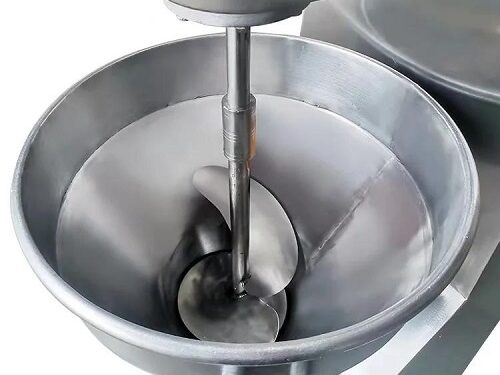
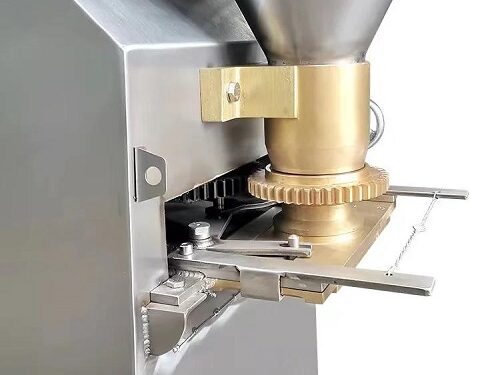
ball sizes and die sets
The commercial page supports 8-30 mm diameter customization and ships several standard molds. WZ-702 uses a solid copper forming die, with 10-34 mm given as the diameter range on its page, and lists mold changes among the ways one machine covers several products. Buyers usually order the two or three diameters they actually sell rather than the whole span.
Fish balls and meatballs often sell at different sizes, so send us the diameter for each product instead of one number. Neither page states how many dies ship in the box, and we do not publish a mold price list. Confirm the die set with the quote before the machine is built.
reading the two output ratings
WZ-605 units are rated in kilograms per hour. WZ-702 is rated in meatballs per minute. Those figures cannot be converted into each other without the weight of one ball, and no page gives that weight. It depends on the diameter you order and the paste you run, so we leave the comparison open rather than inventing a conversion.
Size from your busiest hour, not your daily average. A shop selling three ball sizes with two paste types has a different peak from a plant running one product all shift. Send the product list and the peak hour together, and our engineers will say which rating applies. Our how to choose guide walks through the same gap in more detail.
switching between fish and meat batches
The WZ-702 page says swapping molds and adjusting speeds is how one former covers several products. It lists pork, beef and chicken, then fish, squid and shrimp, then Gongwan, cashew, vegetable and tofu options. On the commercial page, fish, shrimp, squid, peanut and vegetable balls sit alongside the meat varieties. Both pages treat prepared paste as the input, so a product change is a die and a speed setting rather than another machine.
Britannica’s meat processing entry describes chopped and seasoned meat products as a broad category. We cite it for background, not to set a formulation. What we ask for is your product list and how often you switch, since that decides the die set and the cleaning routine.
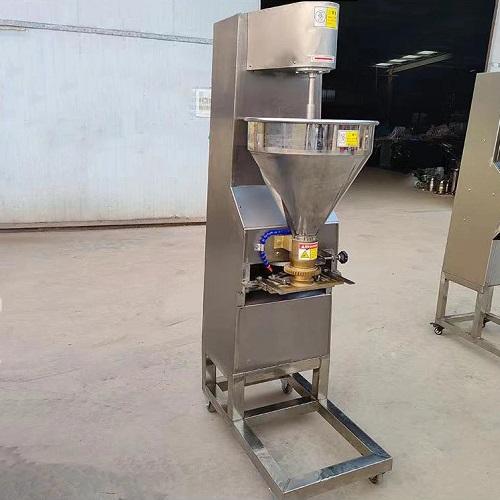
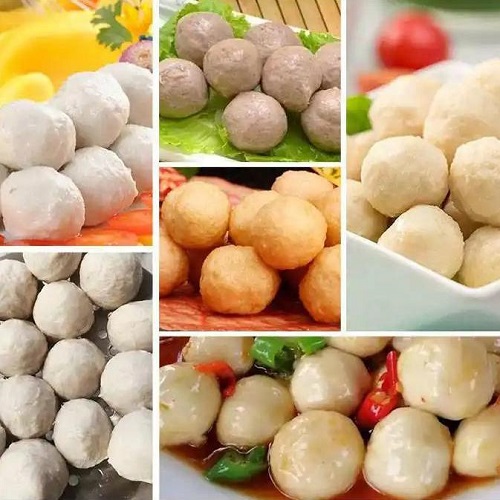
what sits before and after the former
before the former
The solution page lists bone saws and meat cutters for large-block breakdown, meat grinders for mince fineness, and high-speed cutters for emulsifying the filling before forming. It gives no fish ball recipe and no paste specification. If you start from whole fish rather than bought-in paste, our fish killing machine with open back handles descaling, opening, gutting and washing as a first station. We are not claiming it makes paste.
after the former
Formed balls go on to cooking or steaming. The commercial page calls the unit part of meatball production lines and meatball steaming lines, and the WZ-702 page shows a steaming and cooking line. Downstream, the solution page names vacuum packaging machines and quick-freezing tunnels; our rolling vacuum packaging machine is the live page in that group. Our Uzbekistan meat cutter case shows how we document a single-machine order if you want to see the shipping side.
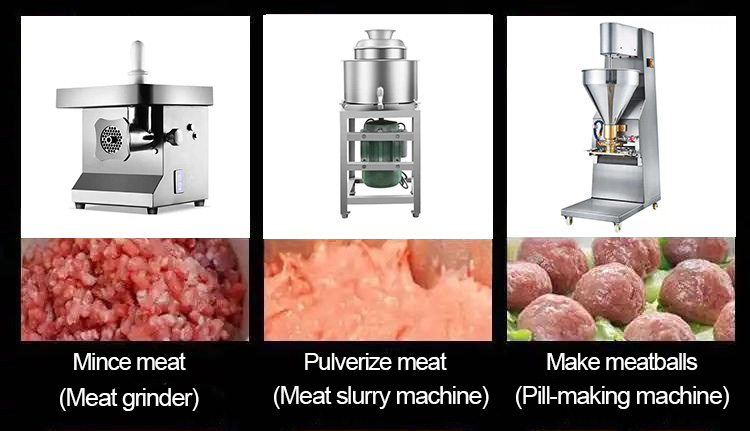
cleaning between batches
WZ-702’s usage notes call for a low-speed trial run at start-up, even feeding, and a full teardown after each day’s production: disconnect power, remove the hopper, auger and molds, wash them and dry them completely. The page also asks for regular checks on fasteners and lubrication of transmission parts. For its part, the WZ-605 page describes quick-release key components and an all-stainless build for easy cleaning.
Fish paste and meat paste are both raw animal products, so the changeover deserves the same care as any raw handling step. FDA and FoodSafety.gov both set out clean, separate, cook and chill as the basic steps, and the WHO food safety fact sheet frames safety as a shared duty along the whole chain. None of those pages sets a cleaning interval for a former, so set yours from your own hygiene plan.
food contact steel and the grade question
Both machine pages say food-grade stainless steel and do not name a grade. We will not add 304 or 316 to those two formers here. If your plant spec calls for a named grade, ask us for the material certificate with the quote rather than reading it off a blog page.
Britannica’s stainless steel entry explains that chromium gives the alloy its corrosion resistance and lists 304 as the common 18/8 grade. Our sister mill documents 304 coil and 316 sheet if you want the metallurgy before you specify. Those pages describe mill products, not the steel used in these two formers.
FAQ
Yes, from a prepared paste. The commercial page lists fish, shrimp, squid, peanut and vegetable balls alongside beef, pork, chicken and lamb balls. WZ-702 adds Gongwan, cashew, vegetable and tofu options. Swapping molds and adjusting speed covers several products.
Pre-processed paste, not whole cuts. The commercial page describes paste and seasonings blended in the chamber, then pushed by a screw conveyor to the die. Neither page gives a recipe, salt level, starch level or temperature, so we do not publish one.
Size from your busiest hour and the diameter you sell. WZ-605 units are rated 200-300 kg/h, WZ-605S reaches 200-500 kg/h, and WZ-702 runs 80-500 meatballs per minute. Those units cannot be compared without the weight of one ball.
The WZ-605 family supports 8-30 mm customization with several standard molds included. WZ-702 uses a solid copper forming die, with 10-34 mm given as the range on its page. Order the sizes you sell with the machine.
Our pages call for daily teardown of the hopper, auger and molds, plus a low-speed trial run. FDA and FoodSafety.gov set out clean, separate, cook and chill as the basic handling steps. Set your own changeover interval from your hygiene plan.
No. We quote per configuration, since the die set, voltage and line equipment change the figure. Send your product list, peak hour output, ball diameters, site voltage and switching frequency for a quote.
send us your product list and your paste
Fish ball orders start with the paste you actually run, not a catalog number. Five things settle most inquiries: the product list, the diameter you sell for each product, peak hour output, site voltage, and how often you switch between fish and meat. Send a photo or a short description of the paste as well. We do not need your recipe and will not ask for it.
Quotes are built per configuration, and no price list exists on any verified Wanzhi page, so we publish no figures here. Once we have the list, our engineers return a model, a die set and a layout for the space you have. Browse the meatball forming machine range first if you want the specs side by side, then contact our team with those five items.
Inquiry Form
Latest Articles
Sesame Grinding Machine for Tahini: How to Choose
Meatball Former for Fish Balls and Meat Paste
Meatball forming machine how to choose
Horizontal vs Vertical Stainless Steel Tank
Sesame Peanut Butter Machine
Latest Products
Product Categories
Stainless Steel Tank
- Stainless Steel Wine Tanks
- Stainless Steel Water Storage Tank
- Stainless Steel Fermentation Tanks
- Stainless Steel Jacketed Kettle
- Pasteurizing Machine
Meat Processing Machine
Fruit and VegetableProcessing Machinery
Oil Press Machines
Colloid Mill
Extraction Machine
Packaging Machinery
Contact Us
- Mobile/Wechat: +8618595716541
- Whatsapp: +8618736065220
- Email: info04@wanzhisteel.com
- Address: 10F, Building B, Erqi Center, Erqi District, Zhengzhou City, Henan Province, China