
Sesame Peanut Butter Machine: How the XM Series Grinds Smooth Paste
Introduction
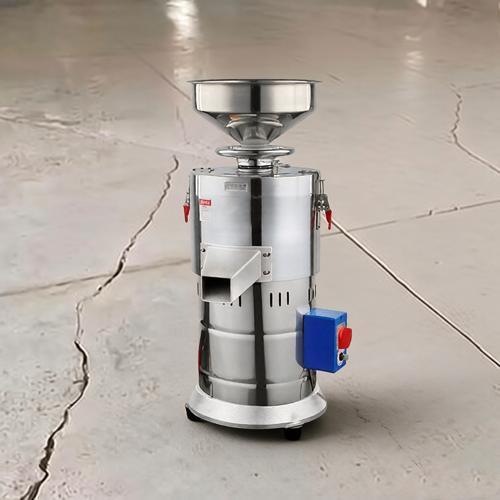
Small shops, condiment workshops, and central kitchens use this machine to turn roasted sesame seeds and peanuts into a smooth, spreadable paste. The unit sits on a bench and runs on a small motor, so it fits where a large colloid mill would be too much machine for the job.
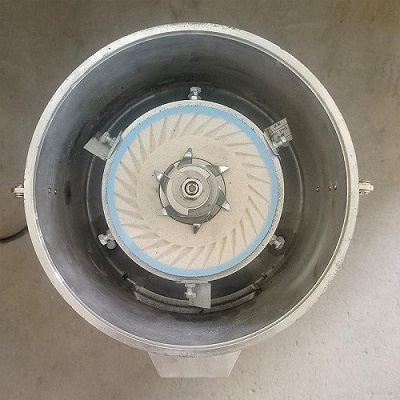
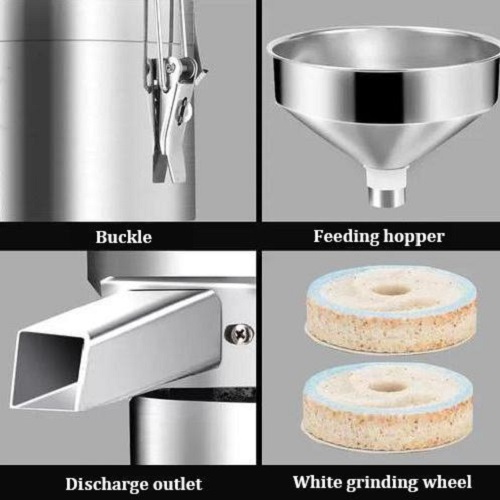
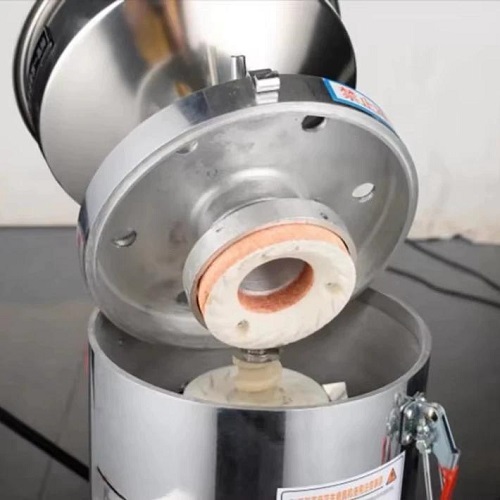
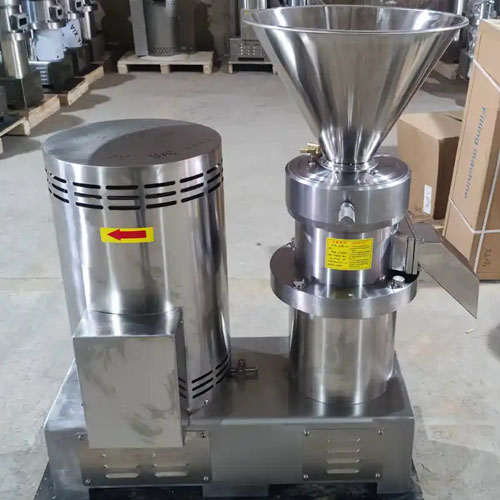
This type of grinder is built around a spinning emery wheel. Material drops in from a top hopper, meets the wheel, and leaves as finished paste at the outlet below. Because the wheel size and the gap decide the result, the same machine can give you a rustic, slightly textured peanut butter or a silky sesame paste just by changing the setting.
Buyers often compare it with a commercial peanut butter machine built on colloid-mill technology. Both make butter. The difference is scale and layout, which the later sections cover.
how the XM grinder works
Three steps turn whole seeds into paste.
feeding
Roasted, cooled seeds go into the top hopper by hand or with a small feeder. From there they fall onto the spinning wheel. No conveyor is needed, and one operator can keep the hopper fed during a run.
grinding
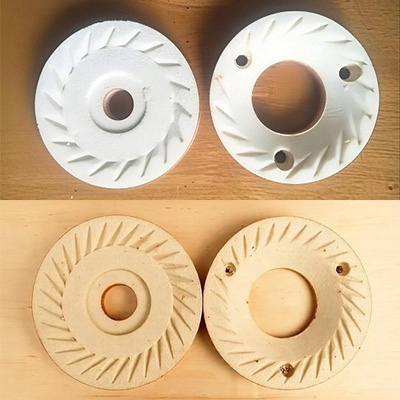
A food-grade emery wheel spins at 2800 r/min and shears the seeds against a fixed ring. The gap between wheel and ring sets the fineness. XM100 reaches about 0.1 micrometer. The XM160 and XM200 go finer still, to 0.07 and 0.05 micrometer, so the larger wheel gives the finer paste. Oil released during grinding mixes with the solids and forms a stable emulsion.
discharge
Finished paste flows out of the bottom outlet into a container placed underneath. Gravity does the work, so the machine stays compact and easy to move between stations.
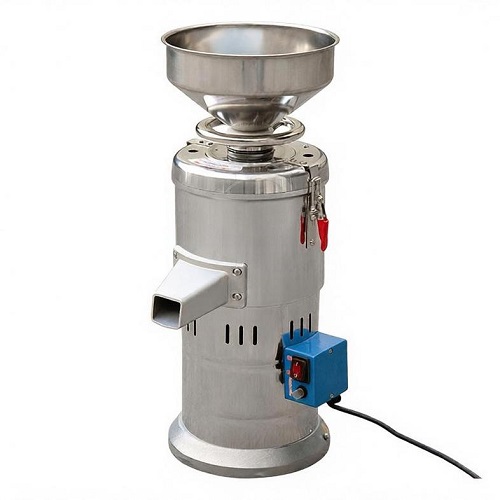
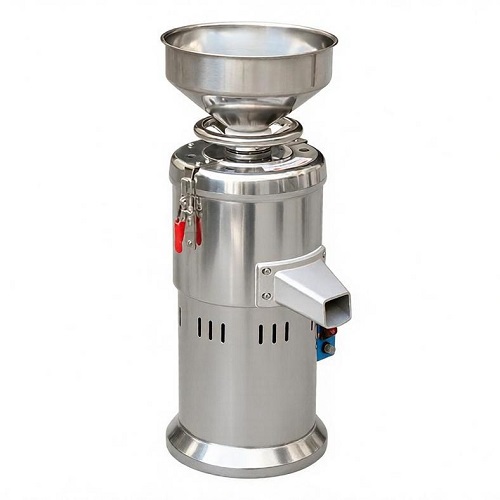
XM100, XM160 and XM200 at a glance
The three models share the same working principle. They differ in size, output, and wheel diameter.
| Model | Power | Capacity | Fineness | Dimensions (mm) | Weight | Weight | Speed |
|---|---|---|---|---|---|---|---|
| XM100 | 1.1 kW | 15 kg/h | 0.1 μm | 300 x 300 x 700 | 25 kg | 100 mm | 2800 r/min |
| XM160 | 1.5 kW | 35 kg/h | 0.07 μm | 330 x 330 x 800 | 40 kg | 160 mm | 2800 r/min |
| XM200 | 2.2 kW | 45 kg/h | 0.05 μm | 370 x 370 x 820 | 45 kg | 200 mm | 2800 r/min |
Power rises with wheel size, and so does hourly output. The XM200 nearly triples the XM100 throughput while staying light enough to lift onto a bench, because the body shell is aluminum alloy rather than a heavy steel case. Fineness improves as the wheel grows, which matters for silky sesame paste.
Numbers above come from the supplier spec sheet for this XM series. Confirm the voltage and plug type with your local supply before ordering.
choosing the right model for your shop
Match the model to your daily paste volume, not your best weekend.
A cafe or small restaurant making a few kilos of peanut butter a day fits the XM100. Its 15 kg/h rating covers light, intermittent use without taking up bench space.
Busier kitchens and condiment stalls that sell by the jar move up to the XM160. At 35 kg/h it keeps pace with a steady service window and still runs on modest power.
Workshops supplying several shops or a market need the XM200. The 45 kg/h output and 200 mm wheel suit longer runs and a finer, more uniform sesame paste.
Think about the space under the outlet too. Each model discharges into a container below, so leave room on the bench for the catch pail. If you later scale up, the colloid mill category at Wanzhi covers higher volumes with vertical, horizontal, and split layouts.
one machine for sesame paste and peanut butter
The same wheel handles more than one recipe, which is why small shops like it.
Sesame paste, or tahini, needs the finest setting. Roast the seeds, cool them, and run them through; the XM200 at 0.05 micrometer gives the smoothest result. Tahini machines from Wanzhi follow the same idea on a larger scale.
Peanut butter is more forgiving. A slightly wider gap leaves a pleasant texture, and the released oil keeps the paste spreadable. Many buyers start with peanut butter, then add sesame paste once they see the demand.
Almond, cashew, and sunflower seed pastes also work on these wheels. Cleaning between flavors matters, so rinse the wheel and outlet before switching recipes. The nut butter grinder page lists the wider range of seeds our larger units handle.
hygiene and food safety in butter making
Paste made from seeds carries the same food-safety duties as any other prepared food.
Raw seeds can carry dust, bacteria, and debris from harvest and transport. A clean grinder and a clean bench reduce that risk before the paste is packed. FDA safe food handling guidance lists four steps: clean, separate, cook, and chill, and those steps apply to a butter workshop as much as a home kitchen.
Cross-flavoring is the other risk. Tahini and peanut butter share equipment, so wash the wheel, hopper, and outlet between runs to avoid allergen mix-up. FoodSafety.gov and the WHO food safety fact sheet give plain-language rules that map well onto a small production setup.
Store finished paste in a sealed, food-grade container and keep it cool. That protects the flavor and the people who eat it.
XM grinder or a colloid mill
Buyers weighing the XM series against a commercial peanut butter machine usually decide on volume.
The XM units top out near 45 kg/h and run on small motors. They suit shops, stalls, and workshops that value a low price and a movable bench unit over raw throughput.
Colloid mills from Wanzhi start where the XM stops and climb past 10,000 kg/h. They add water cooling, quick-split cleaning, and layouts built for continuous runs. The vertical vs horizontal vs split guide explains which layout fits a given product and budget.
Pick the XM when your output fits a bench and a pail. Move to a colloid mill when the line runs for hours and needs inline integration. Both grind the same way; the right one is the one your daily volume justifies.

talk to us about your setup
Choosing a model is easier once we know your daily volume, your local voltage, and the recipes you plan to run.
Wanzhi Machinery builds grinders from small bench units to full colloid-mill lines, with 304 stainless steel in the larger mills and an aluminum alloy shell on the bench models. Contact our team for a model recommendation, a quote, and layout drawings.
If you are scaling past the XM series, the nut butter grinder and commercial peanut butter machine pages show the next steps up.
FAQ
The XM200 grinds to about 0.05 micrometer, the finest of the three models, which suits silky sesame paste.
Yes. The same emery wheel handles both; just adjust the gap and rinse the parts between flavors.
The XM100 runs on 1.1 kW. Confirm the voltage and plug with your local supply before ordering.
No. Seeds drop into the top hopper by hand or a small feeder, and paste leaves by gravity at the bottom outlet.
The XM100 at 15 kg/h fits light use; pick the XM160 or XM200 as daily volume grows.
Wash the wheel, hopper, and outlet between runs, and follow the FDA and WHO handling steps linked above.
Related Products
Nut Butter Grinder
Nut Butter Grinder Nut Butter Grinder Introduction Nut Butter Grinder Specialized for grinding various nut…
Chili Sauce Grinder
Chili Sauce Grinder Chili Sauce Grinder Introduction Our commercial-grade chili sauce grinder utilizes advanced colloid…
Tahini grinder
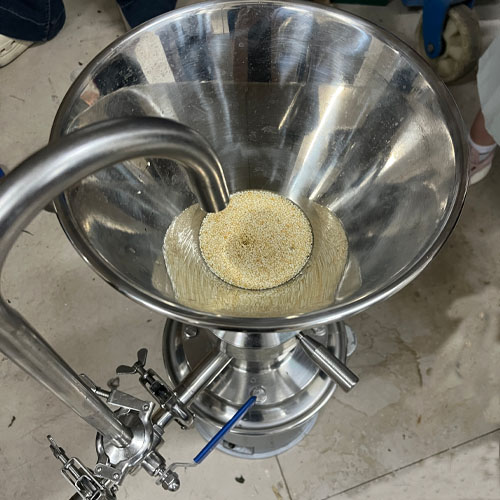
Tahini grinder Tahini grinder Introduction Wanzhi Machinery specializes in commercial tahini machine (colloid mills). Crafted…
Commercial Peanut Butter Machine
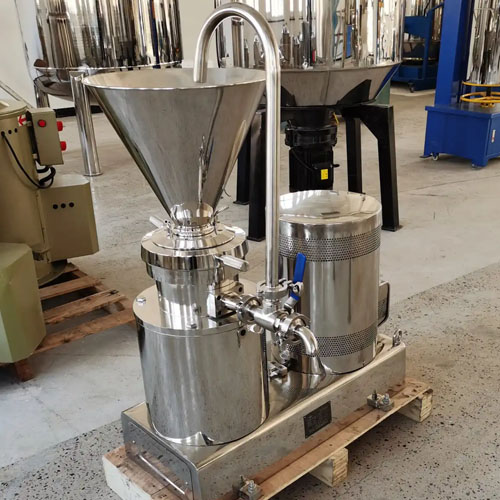
Commercial Peanut Butter Machine Commercial Peanut Butter Machine Introduction Peanut butter ground by traditional peanut…
Horizontal Colloid Mill
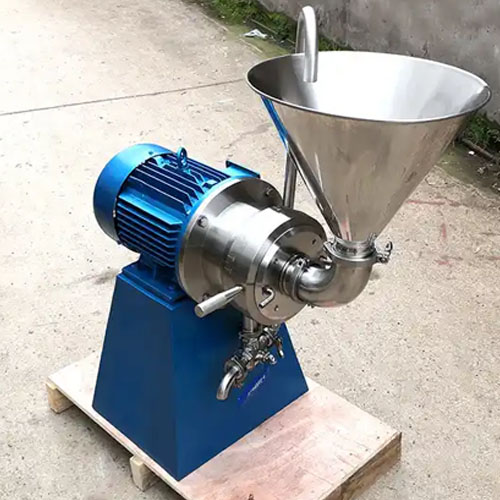
Horizontal Colloid Mill Horizontal Colloid Mill Introduction A horizontal colloid mill features core components (stator…
Contact Us