
Fish killing machine with open back
Introduction
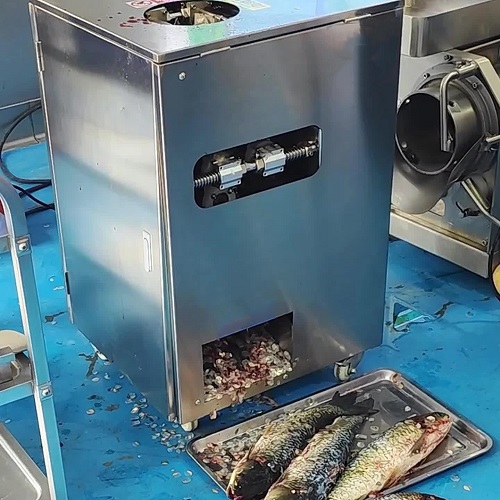
The vertical fully automatic open back descaling fish killing machine is a commercial fish initial processing equipment, positioned as an integrated machine for “descaling+open back/open belly+visceral removal+cleaning”.
Previously, it required several people to scale and gut the fish, processing only a few dozen or even a hundred fish per hour. Now, one operator simply puts the fish into the machine and collects the fully cleaned, cookable fish at the outlet.
Product Specifications
The following table outlines the core specifications of our open back descaling fish killing machine. Customized configurations can be used for specific fish species or yields – contact our team for tailored solutions.
| Project | Parameters |
| Product Name | Automatic open back descaling fish killing machine |
| Material | Stainless steel (SUS304/316L) |
| Voltage | 220V/380V |
| Total Power | 1.5kw |
| Output | 7s /piece |
| Specification | 1 ~ 4 kg |
| Weight | 140kg |
| Overall dimensions | 600×600×950mm |
| Transmission method | Standard stainless steel chain drive |
| Mobility | Four locking caster wheels |
Note:
- Personal manual measurement may have slight errors.
- Specifications may vary due to customization. This machine supports back cutting – if abdominal cutting is required, please specify your preference when requesting a quote.
Core function (completing four processes in one feeding)
Scale removal — Fish scales are automatically washed away by the water flow, requiring no manual cleaning.
Back opening/split — The fish is split open along its back.
Innard removal — Innards are automatically discharged from the outlet with the water, without damaging the gallbladder.
Fish body cleaning — The fish is clean and has a complete and beautiful appearance after processing.
Core Components
1. Stainless Steel Housing
The entire frame and all water-contact components are fabricated from 304-grade stainless steel (Customizable 316 stainless steel). This is non-negotiable for food processing equipment — it resists corrosion from water, fish blood, and cleaning chemicals, and it meets FDA and EU food-contact material standards. Cheaper machines that use carbon steel or painted frames will rust within months in a wet environment.
2. Drive Transmission System
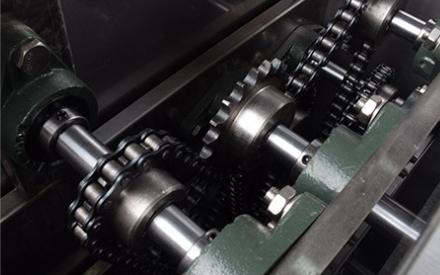
The machine uses a 428H standard stainless steel roller chain for power transmission. This heavy-duty chain minimizes torque fluctuation under high load — when a larger fish enters the cutting zone, the chain maintains consistent power delivery rather than slipping or stalling. This is a common failure point on cheaper machines that use lightweight or non-stainless chains.
3. Descaling Assembly
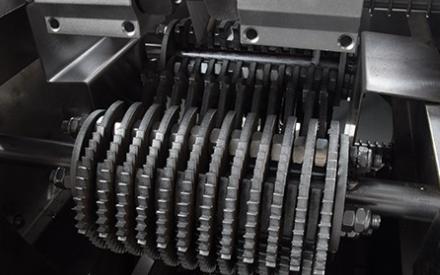
Rotating brush rollers (or blade-edge rollers depending on configuration) contact the fish body from both sides. The brush pressure is adjustable to accommodate different scale types — hard-scaled fish like grass carp need firmer contact than soft-scaled species like silver carp.
4. Cutting Blade Unit
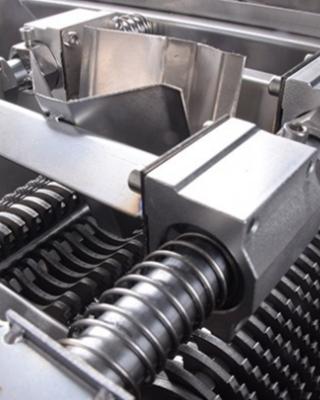
A food-grade stainless steel blade, guided by an adjustable track, performs the back-cut. The blade depth is adjustable to match fish size, ensuring the cut opens the cavity without slicing through the spine or damaging the gallbladder.
5. Water Spray System
A built-in water spray manifold runs the full length of the processing channel. It serves two purposes: flushing scales and viscera out of the machine continuously, and rinsing the cleaned fish as it exits.
6. Caster Wheels with Locks
Four heavy-duty caster wheels — two with locking brakes — allow the machine to be repositioned for cleaning and locked in place during operation. At 140 kg, the machine is stable but movable.
How a Fish Killing Machine Work Step
The operating procedure is designed for a single worker with minimal training:
Step 1: Preparation
Connect the water supply hose and confirm the drainage outlet is positioned over a floor drain or collection tank. Verify the power connection (220V or 380V) and check that the emergency stop is accessible.
Step 2: Stun the Fish
Lightly stun the fish (a quick blow to the head) before feeding. This is a standard practice in commercial fish processing — it prevents the fish from struggling during entry, which could cause injury to the operator or misalignment in the machine.
Step 3: Feed the Fish
Hold the fish with the head facing the feed opening and the back facing up toward the cutting blade. Guide the fish into the entry slot. The machine’s rollers grip the fish and pull it through automatically.
Step 4: Machine Processing (Automatic)
When fish move in the machine, they will perform the following three operations in sequence: removing fish scales, cutting the back of the fish with a cutting blade, and removing internal organs.
Step 5: Collect the Cleaned Fish
The fully processed fish exits the discharge end. It is descaled, opened, gutted, and rinsed — ready for cooking, freezing, or packaging.
Step 6: Continuous Operation
Once the tail of the current fish has fully entered the machine, the next fish can be fed immediately. This enables continuous, cyclic operation — one fish after another without stopping the machine.
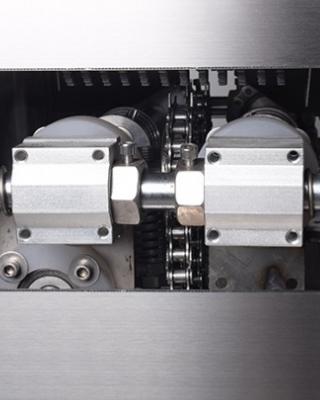
Core Components
Seafood Processing PlantsSteel Housing
High-volume fish processing facilities use fish killing machines as the first station in a production line. After killing and cleaning, fish move to portioning equipment, then to vacuum packaging for distribution. The continuous-feed design keeps the line moving without bottlenecks.
Supermarket Seafood Counters
Large supermarkets with fresh fish counters use a single fish killing machine to process customer-selected fish on demand. The compact footprint (under 0.5 m²) and caster wheels make it practical for back-of-house retail spaces.
Restaurants & Hotel Kitchens
High-volume restaurants — especially hotpot restaurants, grilled fish restaurants, and Sichuan-style boiled fish (shuizhuyu) restaurants — process dozens of fish per service. A fish killing machine reduces prep time from hours to minutes and frees kitchen staff for cooking tasks.
Wet Markets & Seafood Stalls
Fish vendors in wet markets process a steady stream of customer-selected fish throughout the day. The machine’s continuous operation handles peak-hour demand without requiring additional staff.
Institutional Kitchens
School cafeterias, hospital kitchens, military bases, and corporate dining facilities that serve fish regularly benefit from the consistency and hygiene of machine processing over manual handling.
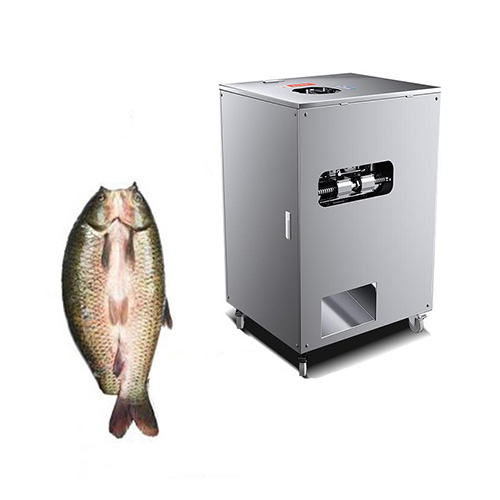
Applicable Fish Species
The fish killing machine is designed for common freshwater and near-shore species within the 0.5–4 kg weight range:
| Fish Species | Scientific Name | Typical Weight | Notes |
| Silver carp | Hypophthalmichthys molitrix | 1–4 kg | Soft scales, easy processing |
| Bighead carp | Hypophthalmichthys nobilis | 1.5–4 kg | Larger body, adjust blade depth |
| Grass carp | Ctenopharyngodon idella | 1–4 kg | Hard scales, firm brush pressure |
| Common carp | Cyprinus carpio | 0.5–3 kg | Thick scales, adjust roller pressure |
| Crucian carp | Carassius auratus | 0.5–1.5 kg | Smaller body, lower weight range |
| Snakehead | Channidae | 1–3 kg | Tough skin, firm settings |
| Mandarin fish | Siniperca chuatsi | 0.5–2 kg | Premium species, gentle handling |
| Black carp | Mylopharyngodon piceus | 2–4 kg | Large, hard scales |
| Largemouth bass | Micropterus salmoides | 0.5–2 kg | Firm scales, clean cut |
Species outside this range? We offer custom configurations for saltwater fish, eel-type species, or larger fish. Contact us with your species list and average weight.
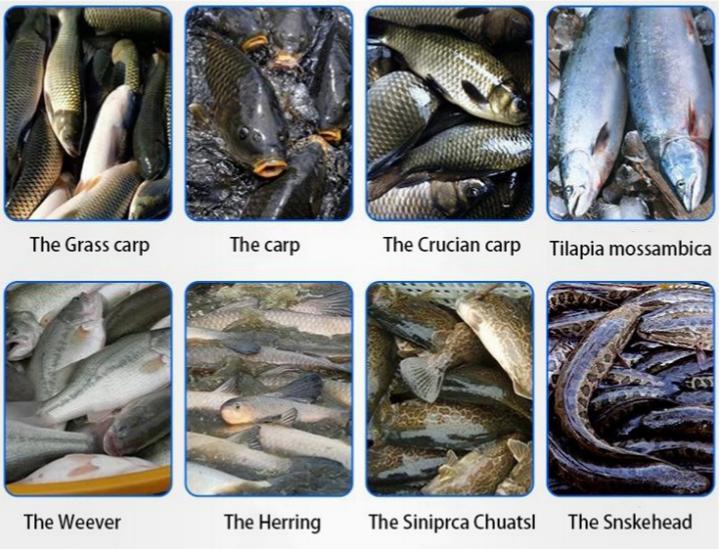
How to Choose a Fish Killing Machine: Buying Guide
1. Match the Machine to Your Fish Species
Verify that the machine’s descaling roller pressure and blade depth are adjustable for your target species. Hard-scaled fish (grass carp, black carp) require firmer brush pressure than soft-scaled species. If you process a mix of species, adjustability is essential.
2. Confirm the Weight Range
The standard machine handles 0.5–4 kg fish. If your fish fall outside this range — particularly if you process small fish (under 0.5 kg) or very large fish (over 4 kg) — you need a different model or a customized feed opening.
3. Evaluate the Transmission System
The 428H stainless steel roller chain is a proven standard for this load class. Machines using lighter chains, plastic gears, or non-stainless transmission components will fail faster under continuous use. Ask the supplier what chain standard they use.
4. Consider Back-Cutting vs. Belly-Cutting
Back-cutting opens the fish along the spine — preferred for grilling, smoking, and display. Belly-cutting opens along the ventral side — preferred for filleting and some regional cooking styles. Some machines support both; specify your preference.
5. Assess After-Sales Support
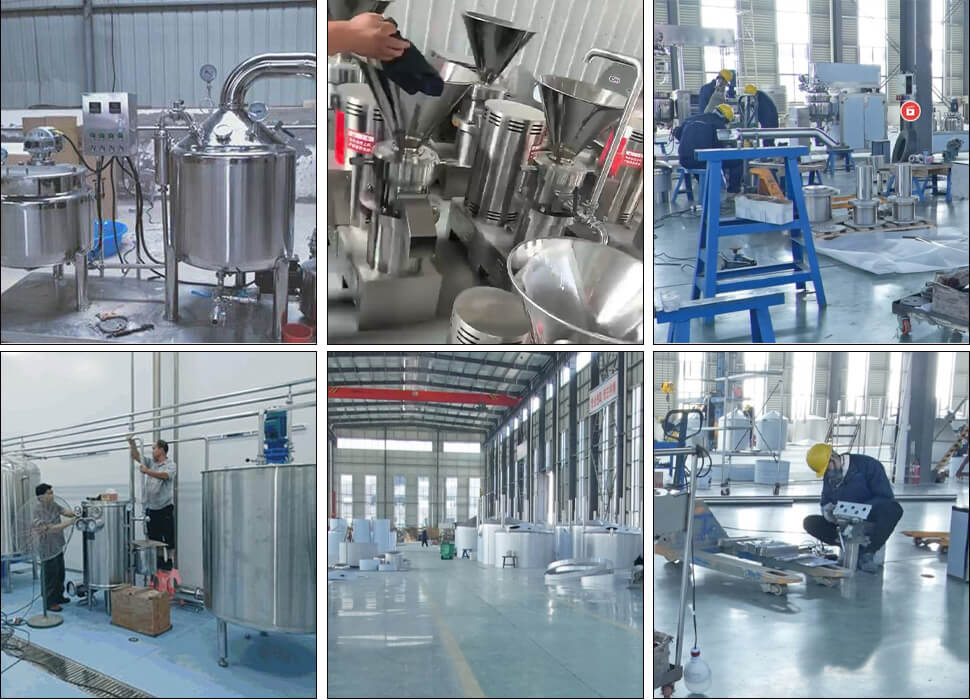
Wanzhi Machinery provides a full service process from requirements analysis through after-sales maintenance, with ISO 9001-certified manufacturing. Ask any supplier about warranty terms, spare parts availability, and remote technical support.
Maintenance & Cleaning
Daily maintenance keeps the machine hygienic and extends component life:
After Each Shift
- Flush with clean water — Run the water spray system for 2–3 minutes with no fish in the machine to flush residual scales and organic matter.
- Wipe down exterior surfaces — Use a food-safe sanitizing solution on all stainless steel surfaces.
- Inspect the cutting blade — Check for dullness, nicks, or misalignment. Sharpen or replace as needed.
- Check the drain outlet — Ensure it is not clogged with scales or viscera.
Weekly
- Inspect the drive chain — Check tension and lubrication. The 428H stainless steel chain requires minimal lubrication, but verify there is no excessive wear.
- Descale the spray nozzles — Mineral buildup can reduce spray pressure. Soak nozzles in a mild acid solution if flow is reduced.
- Check roller brush wear — Replace brushes when bristle length is reduced by more than 30%.
Monthly
- Inspect electrical connections — Verify all wiring is dry and secure. Water and electricity require vigilance.
- Test the emergency stop — Confirm it cuts power immediately.
- Check caster wheel locks — Replace if they no longer hold firmly.
Why Choose Wanzhi Machinery?
- 10+ years of manufacturing experience in food processing machinery, exporting to 120+ countries
- ISO 9001 certified manufacturing — every machine undergoes factory acceptance testing
- 304/316 stainless steel construction with Material Test Certificates provided
- Customizable configurations — back-cutting, belly-cutting, species-specific adjustments
- Full-process service — from requirements analysis to after-sales maintenance
- Engineering support within 24 hours — technical solutions including equipment selection and process flow charts
Explore our complete range of meat processing machines, or contact us for a personalized quote.
FAQ
Ready to Automate Your Fish Processing?
Wanzhi Machinery delivers fish killing machines built to ISO 9001 standards, with 304 stainless steel construction, customizable configurations, and engineering support within 24 hours.
- Request a quote: Contact our team
- Explore meat processing equipment: View all products
- See our completed projects: Case studies
- Learn more about Wanzhi: About us
Related Products

Dual-speed Meatball Forming Machine
Dual-speed Meatball Forming Machine High-speed meatball forming machine Introduction The WZ-702 Dual-Speed Meatball Former is…
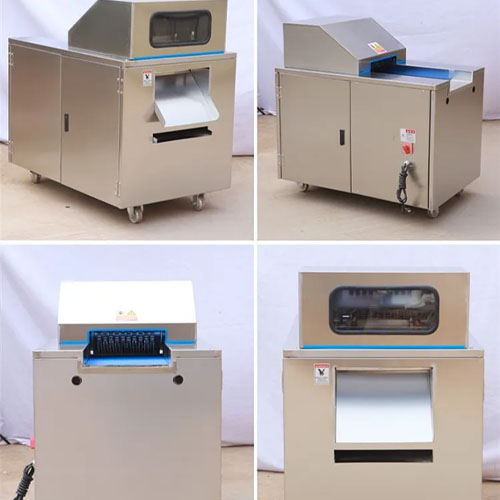
Fully Automatic Meat Cube Cutter
Fully Automatic Meat Cube Cutter Introduction This commercial fully automatic meat cube cutter efficiently processes…
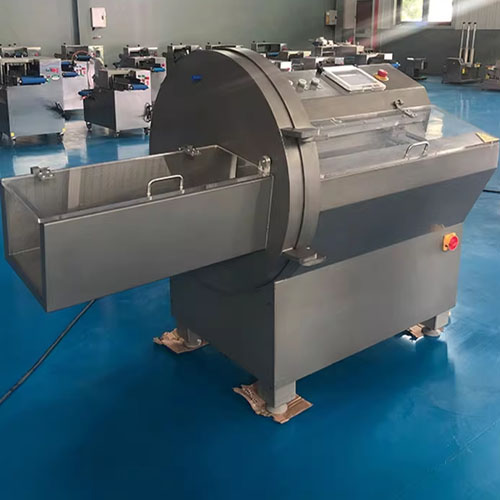
Rib/Frozen Meat Slicer
Rib/Frozen Meat Slicer Introduction The Commercial Electric Rib/Frozen Meat Slicer is a CNC fully automatic…
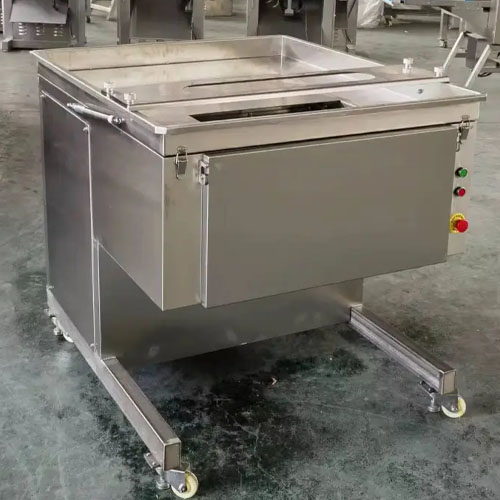
Large Rib Cutting Machine
Large Rib Cutting Machine Introduction As a core piece of equipment in commercial meat processing,…

Commercial electric chicken cutting machine
Commercial electric chicken cutting machine chicken cutting machine Introduction All Stainless steel casing, easy to…
Contact Us